
A Chinese podcast · Same story, 4 levels
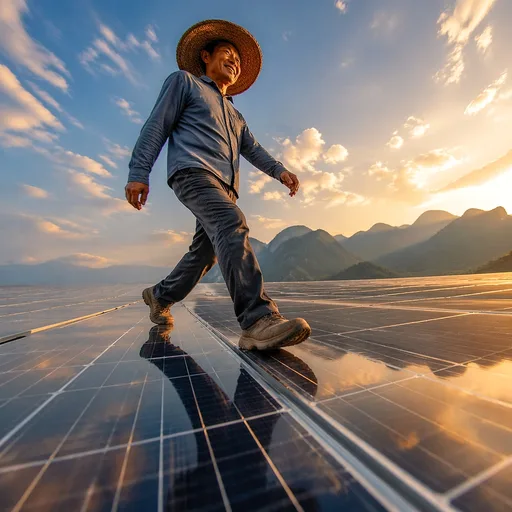
中国的新能源大计划来了
China's 15th Five-Year Plan Backs Clean Energy
About this story
China's new Five-Year Plan sets huge renewable targets — gigawatts of solar and wind, Inner Mongolia mega-bases. HSK 3 Chinese listening practice.
This is an HSK 3-4 Chinese listening episode that runs about 8 minutes. The full Mandarin script is shown with tap-for-pinyin and a line-by-line English translation, so you can listen and read at once — comprehensible input in the sense of Stephen Krashen's i+1 theory. It teaches 20 key vocabulary words such as 计划、能源、讨论 and walks through 6 grammar patterns, each explained in English with examples. The same news story is retold at 4 difficulty levels — use the level selector above to find the version that is challenging but still understandable for you.
Read at your level
原文Read the complete story in Chinese. Reveal pinyin and English only when you need them.
English transcript reference
Today we're going to talk about China's latest five-year plan.
This plan is called the 15th Five-Year Plan.
It covers the period from 2026 to 2030.
This plan was passed in March of this year.
Every March, China holds the Two Sessions.
The Two Sessions are two major conferences.
This year's Two Sessions ran from March 4th to the 12th.
At this year's Two Sessions, many topics were discussed.
The most important topic among them was energy.
What is energy?
Energy is what makes machines run.
For example, electricity, petroleum, and natural gas.
There's also solar energy and wind energy.
Solar energy means using sunlight to generate electricity.
Wind energy means using wind to generate electricity.
These are all called clean energy.
Because they don't pollute the air.
China now places great importance on clean energy.
The new five-year plan includes an important goal.
By 2030, non-fossil energy should account for 25 percent.
What is non-fossil energy?
It's energy that doesn't use coal or petroleum.
For example, solar energy, wind energy, and nuclear energy.
Nuclear energy means using nuclear reactions to generate electricity.
Currently, this proportion isn't that high yet.
So China needs to work hard to increase it.
Let's first talk about wind power generation.
There are two types of wind power.
One type is on land.
The other type is at sea.
Offshore wind power generation is called offshore wind power.
The wind at sea is stronger than on land.
So offshore wind power is more efficient.
China plans to reach 100 gigawatts of offshore wind power by 2030.
What does 100 gigawatts mean?
That's a very, very large amount of power generation.
It can supply electricity to many, many cities.
Besides wind energy, there's also nuclear energy.
China is also vigorously developing nuclear energy.
The plan is to reach 110 gigawatts of nuclear energy by 2030.
Although nuclear power plants take a long time to build, their power generation is very stable.
Whether or not there's wind, whether or not there's sun, they can generate electricity.
This point is very important.
Let's talk about an even bigger goal.
By 2035, solar plus wind energy should reach 3,600 gigawatts.
This means building about 200 gigawatts every year.
200 gigawatts per year — that speed is incredibly fast.
The whole world is watching how China will do it.
Actually, China already has a very good foundation.
In 2024, China had already reached 1,200 gigawatts.
This goal was originally planned to be completed much later.
But China completed it ahead of schedule.
So everyone is very confident about the new targets.
However, building that much solar and wind power isn't enough.
There's still a big problem to solve.
The sun isn't always there.
At night there's no sun, so there's no solar energy.
The wind doesn't always blow either.
Sometimes the wind is strong, sometimes there's no wind at all.
So just building power plants isn't enough.
You also need to store this electricity.
And you need to send it to where it's needed.
This is the focus of the new plan.
The previous focus was on building more power plants.
Now the focus has changed.
Now the goal is to connect the entire system.
To let different energy sources work together.
For example, what if there's no wind today?
Then use hydropower to make up for it.
Hydropower means using water to generate electricity.
China has many large hydropower stations.
What if the wind is strong and there's too much electricity?
Then store the excess electricity.
How do you store it?
One method is called pumped-storage hydropower.
You use the excess electricity to pump water up a mountain.
When electricity is needed, you let the water flow back down to generate power.
This method is simple but very effective.
China is building many pumped-storage power stations.
Besides storing electricity, you also need to transmit it.
China is very large, and different regions have different conditions.
The western regions get a lot of sun and have strong winds.
For example, Inner Mongolia, Gansu, and Qinghai.
And also Ningxia, Xinjiang, and Tibet.
These places can generate a lot of electricity.
But these places don't have many people.
They can't use that much electricity.
The eastern regions have many people and many factories.
They need a lot of electricity.
But the east doesn't have as much sun and wind as the west.
So you need to send the west's electricity to the east.
This requires building new power transmission lines.
These lines are called cross-province transmission corridors.
From Inner Mongolia to Beijing and Shanghai.
From Gansu to Guangdong.
From Qinghai to eastern coastal cities.
These lines are very long and cross several provinces.
They're not easy to build, but they're very necessary.
The new five-year plan also mentions some new technologies.
The first is green hydrogen energy.
Hydrogen is a very light gas.
Using clean energy to produce hydrogen is called green hydrogen.
Green hydrogen can be used in factories.
It can also be used in heavy trucks.
The second is green ammonia.
Ammonia is also a type of chemical.
Previously, producing ammonia required a lot of coal.
Now it can be produced using clean energy.
This way it won't pollute the environment.
The third is concentrated solar power.
Concentrated solar power is different from solar panels.
It uses mirrors to concentrate sunlight.
It produces very high temperatures to generate electricity.
Its advantage is that it can also generate electricity at night.
Because the heat can be stored.
The fourth is geothermal energy.
Geothermal energy is heat from underground.
The deeper underground you go, the higher the temperature.
This heat can be used to generate electricity or provide heating.
These new technologies are still developing, but their prospects are very good.
If all these technologies mature, China's energy structure will completely change.
Previously, China mainly relied on coal for electricity.
Coal power is cheap, but it causes a lot of pollution.
Now clean energy is getting cheaper and cheaper.
Solar panel prices are much lower than ten years ago.
The cost of wind power is also declining.
So it's not only good for the environment, but also economically worthwhile.
This plan isn't just about power generation.
It's also related to industry.
China wants to use clean electricity to transform industry.
For example, steel factories used to burn coal.
In the future, they can use electricity to make steel.
This is called industrial transformation.
If all factories use clean electricity, emissions will be greatly reduced.
China treats clean electricity as the foundation for future development.
Whether it's manufacturing or transportation, everything depends on electricity.
Electric vehicles need electricity.
High-speed rail needs electricity.
Data centers also need large amounts of electricity.
If all this electricity is clean, that would be wonderful.
Overall, this new five-year plan is very ambitious.
It not only aims to build more power plants, but also to upgrade the entire energy system.
From power generation to energy storage to power transmission, everything needs improvement.
This is a systemic large-scale project.
China is already leading the way in clean energy.
The next five years will be even more critical.
Let's see if China can achieve these goals.
Listen again
Try it without the transcript and notice what sounds clearer.
What vocabulary does this episode teach?
词汇Used throughout the script to refer to China's Five-Year Plan (五年计划). A very common HSK 3 word meaning 'to plan' or 'a plan'.
The central topic of the episode. Refers to sources of power like electricity, oil, solar, and wind.
Used when describing what happened at the Two Sessions (两会): 大家讨论了很多事情 (everyone discussed many things).
中国现在特别重视清洁能源 — China now especially values clean energy. HSK 4 word expressing the idea of prioritizing something.
Appears multiple times: 重要目标 (important goal), 新目标 (new target). HSK 4 word for an objective or aim.
海上风电的效率更高 — offshore wind power has higher efficiency. HSK 4 word describing how productive something is.
现在这个比例还没有那么高 — this proportion is not yet that high. Refers to the share of non-fossil energy.
还有一个很大的问题要解决 — there's still a big problem to solve. Common HSK 3 word for addressing problems.
中国已经有了很好的基础 — China already has a good foundation. Also used later: 未来发展的基础 (the basis for future development).
风力发电的成本也在下降 — the cost of wind power is also declining. HSK 4 word used in economic contexts.
它们不会污染空气 — they won't pollute the air. HSK 4 word central to the environmental theme of the episode.
非化石能源 — non-fossil energy. Beyond HSK 4; a scientific term used in energy and geology contexts.
核能就是用核反应来发电 — nuclear energy uses nuclear reactions to generate electricity. A specialized energy term beyond HSK 4.
从发电到储能,再到输电 — from power generation to energy storage to transmission. A technical term in the energy sector.
建新的输电线路 — build new power transmission lines. Technical term for delivering electricity over long distances.
一个办法叫抽水蓄能 — one method is called pumped-storage. Pumping water uphill to store energy, then releasing it to generate power.
绿色氢能 — green hydrogen energy. Using clean energy to produce hydrogen gas as a fuel source.
排放就会大大减少 — emissions would greatly decrease. Refers to greenhouse gas or pollutant emissions from industry.
这个新五年计划很有雄心 — this new Five-Year Plan is very ambitious. A literary word beyond HSK 4.
这叫工业转型 — this is called industrial transformation. Refers to shifting industry from fossil fuels to clean energy.
* beyond level超纲词
What grammar patterns appear in this episode?
语法不但……而且…… (not only... but also...)
A progressive compound sentence pattern connecting two related clauses where the second adds to the first. Very common in HSK 3-4.
所以不但对环境好,而且经济上也划算。(So it's not only good for the environment, but also economically worthwhile.)
它不但要建更多的发电站,而且要把整个能源系统升级。(It not only needs to build more power plants, but also upgrade the entire energy system.)
不管……都…… (no matter... all/still...)
Expresses that the result stays the same regardless of the condition. Used to emphasize unconditional outcomes.
不管刮不刮风,不管有没有太阳,它都能发电。(No matter whether it's windy or not, no matter whether there's sun or not, it can still generate electricity.)
不管是制造业还是交通,都离不开电。(No matter whether it's manufacturing or transportation, neither can do without electricity.)
虽然……但是…… (although... but...)
A concessive pattern acknowledging one fact while presenting a contrasting one. One of the most important HSK 3 grammar structures.
核电站虽然建设时间长,但是发电很稳定。(Although nuclear power plants take a long time to build, their power generation is very stable.)
这个办法虽然简单,但是很有效。(Although this method is simple, it's very effective.)
煤发电虽然便宜,但是污染很大。(Although coal power is cheap, it creates a lot of pollution.)
越……越…… (the more... the more...)
Expresses a proportional relationship where a change in one thing leads to a corresponding change in another.
地下越深,温度越高。(The deeper underground, the higher the temperature.)
清洁能源越来越便宜了。(Clean energy is getting cheaper and cheaper.) — Note: 越来越 is a related pattern meaning 'more and more'.
把 + Object + Verb Complement (disposal construction)
The 把 construction places the object before the verb to emphasize what happens to it. Very common and essential at HSK 3-4 level.
把多余的电存起来。(Store the excess electricity.)
用多余的电把水抽到山上去。(Use the excess electricity to pump water up the mountain.)
把西部的电送到东部去。(Send the western electricity to the east.)
把整个系统连起来。(Connect the entire system together.)
从……到……再到…… (from... to... and then to...)
Describes a sequence or progression through multiple stages or locations. Extends the basic 从...到... pattern.
从发电到储能,再到输电,都要改进。(From power generation to energy storage, and then to transmission, everything needs improvement.)
从内蒙古送到北京、上海。(Sent from Inner Mongolia to Beijing and Shanghai.)
Proper nouns
专有名词Free account
Keep learning from this story
Create a free account to keep saved words and your preferred level together.
- Keep words with their story context
- Remember your preferred level
- Build your vocabulary over time