
A Chinese podcast · Same story, 4 levels
跨越国界的生命希望与中国医疗
Mongolian Baby Shinebayar Saved at Shanghai's Renji Hospital — China's New Medical Tourism
About this story
Mongolian baby Shinebayar is saved at Shanghai's Renji Hospital — and why more foreigners trust Chinese hospitals. HSK 3 Chinese listening practice.
This is an HSK 3-4 Chinese listening episode that runs about 9 minutes. The full Mandarin script is shown with tap-for-pinyin and a line-by-line English translation, so you can listen and read at once — comprehensible input in the sense of Stephen Krashen's i+1 theory. It teaches 16 key vocabulary words such as 生命、严重、建议 and walks through 5 grammar patterns, each explained in English with examples. The same news story is retold at 4 difficulty levels — use the level selector above to find the version that is challenging but still understandable for you.
Read at your level
原文Read the complete story in Chinese. Reveal pinyin and English only when you need them.
English transcript reference
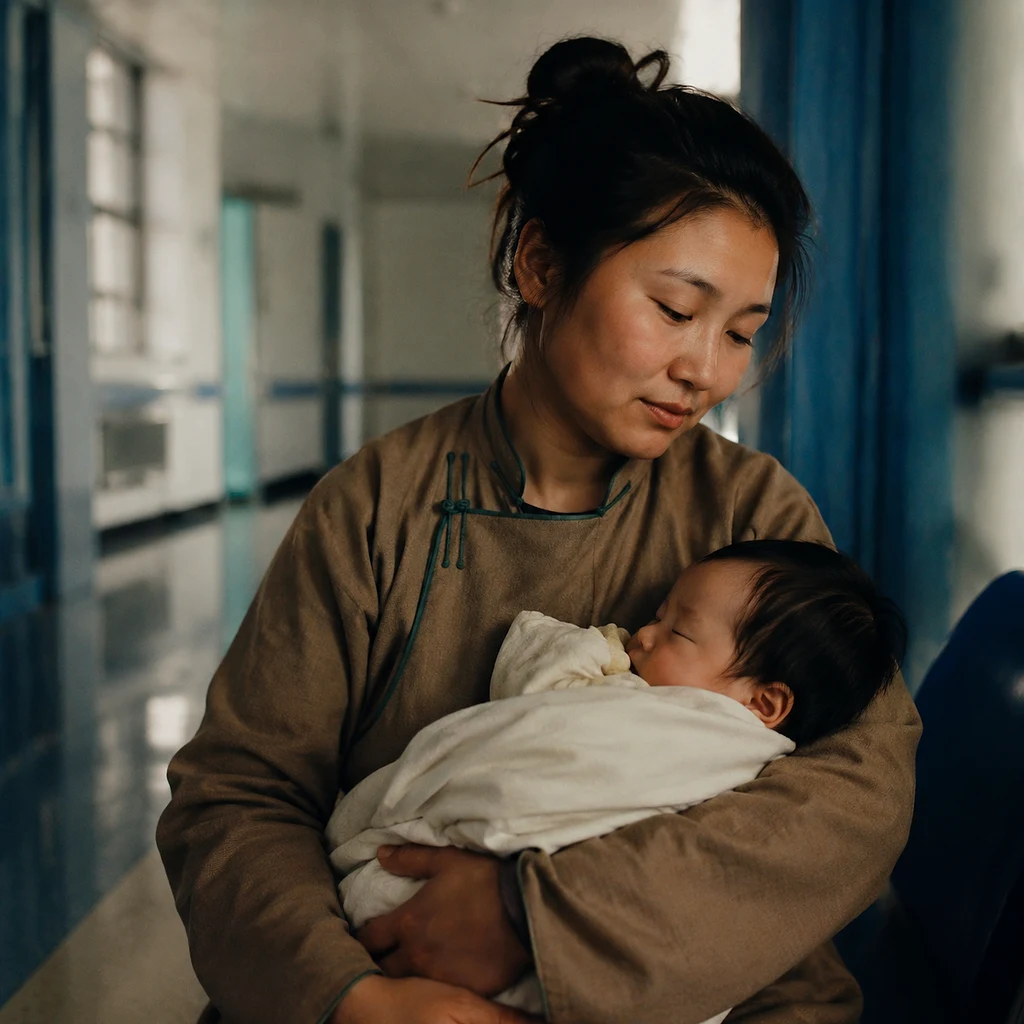
Next, we are going to tell a touching story about life and hope, which happened to a Mongolian family.
There is a little baby named Shinebayar, who was born in Mongolia.
However, when he was just a few days old, the doctor told his parents some bad news.
The doctor said that this child had contracted a very serious illness.
This disease is called biliary atresia, which is a very rare condition.
Simply put, his bile ducts were blocked, and the toxins in his body could not be discharged.
This is very dangerous for a small infant.
If not treated immediately, his life would be in danger.
The doctor told the child's parents that the only solution was to perform a liver transplant surgery.
Which is what we commonly call "swapping the liver".
Moreover, this must be a living donor liver transplant, meaning using a relative's liver to save the child.
Hearing this news, the child's parents felt very afraid and anxious.
However, they encountered a big problem in Mongolia.
Hospitals in Mongolia did not have the capability to perform this kind of surgery on such a small infant.
The situation at the time was very urgent, and the child could lose his life at any moment.
The parents had to make a decision immediately and find a place that could save the child.
So, the doctor suggested they go to neighboring China to give it a try.
They listened to the doctor's advice and immediately took the child to Shanghai, China.
They went to Renji Hospital in Shanghai, which is a very famous hospital.
After arriving at the hospital, the doctors immediately performed examinations on them.
The result of the examination was good news.
The child's father could donate his own liver to the child.
This allowed the whole family to see a glimmer of hope.
The surgery began very soon, and the doctors were very serious and careful.
This surgery was very complex and took a total of six hours.
The doctors removed two hundred and fifty grams of liver from the father's body.
This was approximately one-fifth of the father's liver.
Then, the doctors transplanted this portion of healthy liver into little Shinebayar's body.
The surgery was very successful, and the whole family breathed a sigh of relief.
Besides the surgery itself, the issue of cost was also something everyone was concerned about.
The total cost for this surgery and recovery was two hundred thousand RMB.
Although this amount of money was a considerable sum for this family.
However, relatives and friends extended a helping hand and helped them solve their difficulties.
What surprised people the most was the speed of the child's recovery.
Before the surgery, the child's condition looked very bad.
His skin was deep yellow, which is a sign of severe liver disease.
His belly was also swollen very large, and he looked to be in great pain.
But after the surgery, the situation underwent a huge change.
The yellow color of the child's skin slowly faded away and returned to a normal color.
His breathing became steady, and his belly became soft.
The child's mother recalled that he looked like a completely different person, becoming very healthy.
This story is just one of countless similar stories.
Now, more and more foreigners are choosing to come to China for medical treatment.
Shinebayar is just one of them.
According to data from the National Health Commission of China, this is indeed the case.
In 2025, China's major hospitals received 1.28 million international patients.
This number increased by 73.6 percent compared to three years ago.
Especially patients from Europe and North America, whose numbers have doubled.
Why are there so many foreigners coming to China for medical treatment?
There are many reasons; firstly, medical costs in China are relatively low.
Secondly, the waiting time is relatively short, and there is no need to queue for a long time.
In addition, China's medical technology and service levels are constantly improving.
Let's tell another story, which is about a British lady.
This lady is called Amy on social media.
Amy is British, and her stomach had been hurting for over a year.
She had been trying to see a specialist in the UK, but had to wait for several months.
This waiting made her feel very painful and disappointed.
Later, she decided to come to China to give it a try.
In a Chinese public hospital, her experience was completely different.
She finished the check-ups very quickly, and the doctor promptly provided a diagnosis and treatment plan.
The whole process was very fast, and the cost was also very cheap.
She only spent about 2,800 RMB in total.
This is much lower than the cost of seeing a private doctor in the UK.
She shared her experience online, attracting the attention of many people.
Many foreign netizens also shared their stories of seeing doctors in China.
Everyone feels that China's medical services are both fast and cheap.
The Chinese government has also noticed this trend and is very supportive.
The government is launching some special plans to develop international medical services.
Beijing started an international medical plan back in 2019.
At that time, only seven hospitals participated, but now it has increased to around twenty.
Shanghai also started a similar plan in 2023.
Shanghai selected thirteen hospitals, covering many important departments.
For example, departments treating cancer, heart disease, and nervous system diseases.
Shanghai also established China's first standard for international medical services.
Besides Beijing and Shanghai, other places are also developing specialized medical services.
For example, in Heilongjiang Province in the north, which is very close to Russia.
Hospitals there mainly provide Traditional Chinese Medicine services for Russian guests.
And on Hainan Island in the south, the environment is very good and suitable for convalescence.
Hainan mainly promotes rehabilitation treatments for chronic diseases.
These international medical services are different from ordinary public healthcare.
They are managed separately, and the fees are also somewhat higher.
However, this portion of services accounts for only a very small part of the hospital's total services.
Therefore, this will not affect ordinary people seeing doctors.
Besides foreigners coming to China for medical treatment, China's medical technology is also going global.
Chinese hospitals and technology companies are bringing technology to other countries.
Especially in Asia, Africa, and the Middle East regions.
Chinese companies have provided many advanced devices to hospitals in these places.
For example, diagnostic tools assisted by artificial intelligence.
Let's look at a specific example.
Last May, a Shanghai technology company started a project in Saudi Arabia.
This company is called SYNYI AI, and they developed a virtual doctor.
This virtual doctor is named "Doctor Hua".
It can treat patients through computer programs.
It can diagnose thirty common respiratory diseases and write prescriptions.
This system is very smart; it can speak not only English but also Arabic.
Its database contains about three hundred thousand Arabic medical vocabulary words.
This is a huge help for local doctors and patients.
Besides technology companies, China's public hospitals are doing the same thing.
Shanghai Renji Hospital showcased their "Smart Healthcare" system in Dubai.
This is a new technology utilizing the internet and artificial intelligence.
This system includes digitized operating rooms and intelligent intensive care units.
There are also internet-based hospital platforms and anesthesia management tools.
Wang Chunming, a person in charge at Renji Hospital, introduced the function of this system.
He said that this system can greatly reduce the workload of nurses.
It can reduce working time by about forty-two thousand hours per year.
This allows nurses to have more time to take care of patients.
Moreover, this system can also improve safety.
It can reduce safety incidents during shift handovers by sixty-three percent.
This is very important for ensuring patient safety.
Wang Chunming said that as long as there is internet, these medical resources can be used.
This means that even in very remote places, patients can receive good treatment.
Last year, Renji Hospital's internet hospital system handled nearly seven hundred thousand consultations.
This number is very astonishing, showing that many people are using it.
Now, some countries, including Indonesia and Mongolia, are very interested.
They hope to introduce this system to serve those people living in remote areas.
Through these technologies, China's medical experience is helping more people around the world.
Whether it's little Shinebayar's surgery or Amy's experience, both prove this point.
From traditional treatments to modern artificial intelligence, changes are happening.
This not only changes the lives of patients but also changes the future of medicine.
This kind of cross-border cooperation has made the world closer.
We see that health is a common wish of all mankind.
No matter which country you come from, you hope to receive the best treatment.
China's medical development happens to meet this demand.
For those who cannot receive timely treatment in their own countries, this is a new choice.
For those countries with insufficient medical resources, this is also a new kind of support.
Although facing language and cultural differences, the purpose of medicine is the same.
That is to relieve patients' pain and protect people's health.
With the advancement of technology, future healthcare will become more convenient.
Perhaps one day, we will be able to see famous doctors from all over the world online at home.
This was unimaginable before, but now it is becoming reality.
This progress requires the joint efforts of doctors, scientists, and the government.
Of course, it is also inseparable from the trust of every patient and family member.
Just like Shinebayar's parents, they chose to trust Chinese doctors.
This trust was exchanged for the child's health and hope for the future.
Such stories happen every day, warming our hearts.
Every successful case is proof of medical progress.
Every smile of recovery is the best reward for doctors.
Listen again
Try it without the transcript and notice what sounds clearer.
What vocabulary does this episode teach?
词汇Noun referring to the condition that distinguishes animals and plants from inorganic matter; often paired with '危险' (danger) or '希望' (hope).
Adjective used to describe illnesses, problems, or consequences. E.g., 病很严重 (the illness is very severe).
Can be used as a verb (to suggest) or a noun (advice/suggestion).
Adjective/Adverb describing doing something with great attention to detail.
Used here to describe the outcome of the surgery. Can be a verb or adjective.
Verb or noun indicating a shift in condition or situation.
Conjunction, often used in the pattern 不仅...也/还... (not only... but also...).
To trust or have confidence in someone/something.
Adjective describing something that is not common.
Medical verb/noun referring to moving an organ from one body to another (e.g., 肝脏移植 - liver transplant).
Verb meaning to give something (money, goods, organs) for a good cause.
Medical term for identifying the nature of an illness.
To restore to health; often refers to recovery training or therapy.
Technology term referring to computer systems capable of performing tasks that typically require human intelligence.
Adjective describing a place that is far from the center or difficult to reach.
To seek information or advice, often from an expert or professional service.
* beyond level超纲词
What grammar patterns appear in this episode?
语法除了... (以外),...也/还...
This pattern means 'Besides/Apart from..., ...also...'. It indicates addition.
除了手术本身,费用的问题也是大家关心的。
除了北京和上海,其他地方也在发展特色的医疗服务。
除了外国人来中国看病,中国的医疗技术也正在走向世界。
把 + Object + Verb + Complement
The 'Ba' sentence structure emphasizes the handling or disposal of an object. The subject performs an action that changes the state or position of the object.
孩子的爸爸可以把自己的肝脏捐给孩子。
医生把这部分健康的肝脏移植到了小希尼巴亚尔的身体里。
中国的医院和科技公司正在把技术带到其他国家。
Comparison using 比
Used to compare two things. Structure: A + 比 + B + Adjective (+ Degree).
这个数字比三年前增加了百分之七十三点六。
这比她在英国看私人医生的费用要低得多。
只要...就...
This pattern means 'As long as..., then...'. It introduces a sufficient condition.
王春明说,只要有互联网的地方,就可以使用这些医疗资源。
...之一
Means 'one of...'. It is placed after the noun phrase it refers to.
这个故事只是无数个类似故事中的一个。
希尼巴亚尔只是其中之一。
Proper Nouns
专有名词Sources
来源Free account
Keep learning from this story
Create a free account to keep saved words and your preferred level together.
- Keep words with their story context
- Remember your preferred level
- Build your vocabulary over time