
A Chinese podcast · Same story, 4 levels
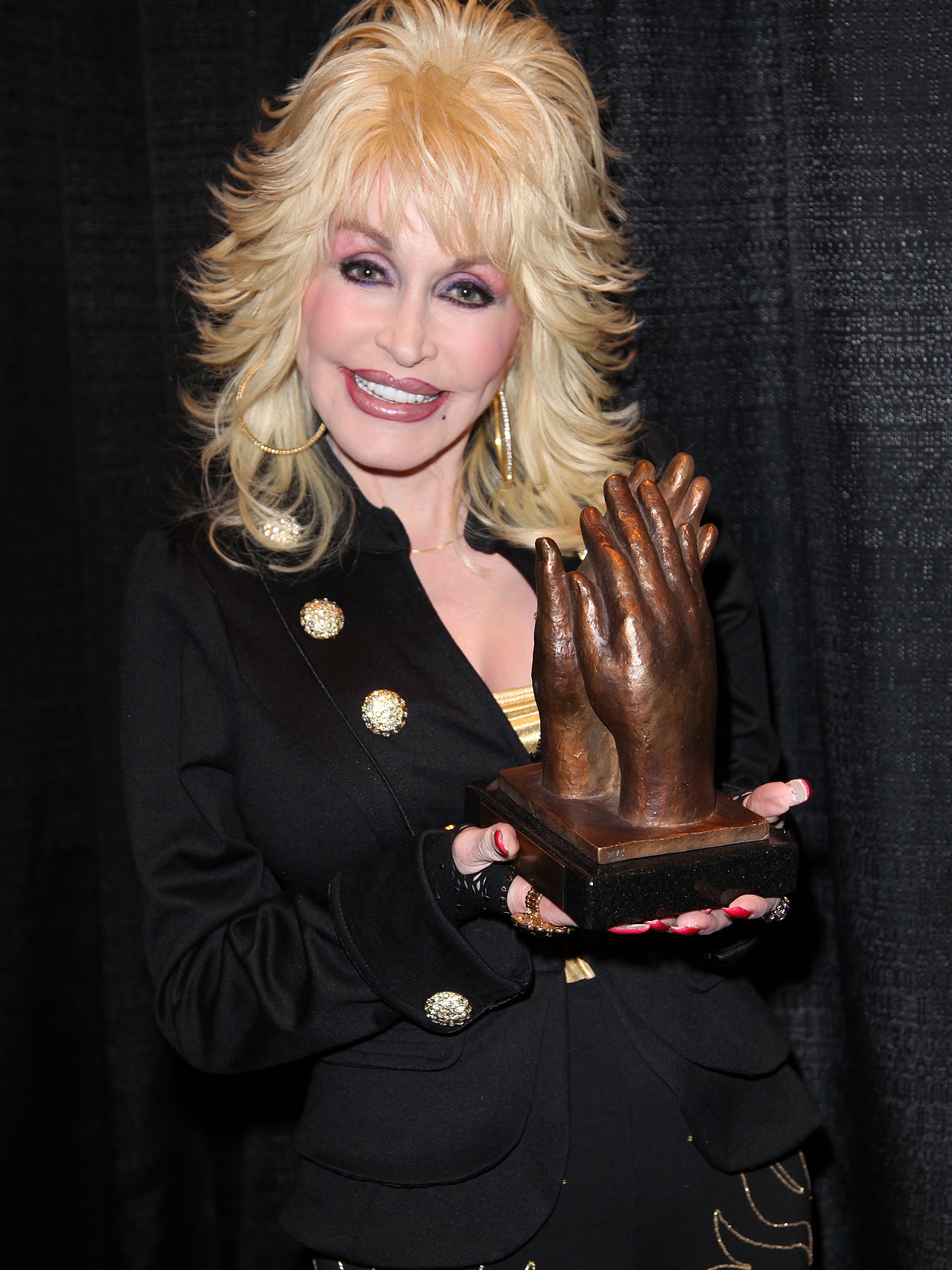
Photo: Curtis Hilbun · CC BY 3.0
多莉·帕顿去世了。她最看重的不是那几千首歌,是每个月寄到孩子门口的一本书。
Dolly Parton's Free Book Legacy After Her Death
About this story
Dolly Parton's Free Book Legacy After Her Death. HSK 3 Chinese listening practice.
This is an HSK 3-4 Chinese listening episode that runs about 2 minutes. The full Mandarin script is shown with tap-for-pinyin and a line-by-line English translation, so you can listen and read at once — comprehensible input in the sense of Stephen Krashen's i+1 theory. It teaches 6 key vocabulary words such as 聪明、名字、开始 and walks through 3 grammar patterns, each explained in English with examples. The same news story is retold at 4 difficulty levels — use the level selector above to find the version that is challenging but still understandable for you.
Read at your level
原文Read the complete story in Chinese. Reveal pinyin and English only when you need them.
English transcript reference
Last Tuesday, Dolly Parton died in the United States, aged eighty, of cancer.
She sang for more than sixty years and wrote thousands of songs.
But she said the thing she valued most was books.
In 1995, she started doing something very small.
She began mailing one book a month to every child in the county where she was born.
From the first day of life until the fifth birthday.
Five years, sixty books, all free, with no regard for whether the family had money.
The book comes from the post office with the child's own name printed on it.
For a three-year-old, that may be the first thing he has ever received with his own name on it.
Why did this start?
Because of her father.
Her father was a man from the Tennessee mountains. He never had the chance to go to school, and he could not read his whole life.
She once said: my father is the smartest man I know.
The smartest man, and he could not read a single sheet of paper his whole life.
So what she did was make sure other people's children would not have to walk his road.
Later that one county became five countries, and more than three hundred million books have gone out.
In America, of children under five, one in every six is receiving them.
Her father lived to seventy-nine.
Before that, he heard children call her, to her face, "the book lady".
She said he was over the moon about it, and felt that a part of it was his.
Now she is gone.
The program put out a statement that said only one thing: the books keep going.
Next month, still one, still free.
Think about it:
After a person is gone, what still turns up at strangers' doors every month?
Listen again
Try it without the transcript and notice what sounds clearer.
What vocabulary does this episode teach?
词汇我爸爸是我认识的最聪明的人 — my father is the smartest man I know.
上面写着孩子自己的名字 — with the child’s own name written on it.
她开始做一件很小的事 — she started doing a very small thing.
Both meanings appear here: 一份声明 (a statement) and 有他的一份 (a share of it is his).
一辈子不识字 — illiterate his whole life. Literally "to recognise characters".
全部免费 — all of it free.
* beyond level超纲词
What grammar patterns appear in this episode?
语法不看……有没有……
"Without regard to whether ..." — 看 here means "to go by / to depend on".
全部免费,不看家里有没有钱。 — All free, regardless of whether the family has money.
"As far as X is concerned" — sets whose point of view is being taken.
对一个三岁的孩子,那可能是他第一次收到写着自己名字的东西。 — For a three-year-old, that may be the first thing with his own name on it.
走……的路
To walk someone’s road — to repeat their fate. A common metaphor in spoken Chinese.
不用再走他那条路。 — They will not have to walk his road again.
Proper nouns
专有名词Sources
来源Free account
Keep learning from this story
Create a free account to keep saved words and your preferred level together.
- Keep words with their story context
- Remember your preferred level
- Build your vocabulary over time