
A Chinese podcast · Same story, 4 levels
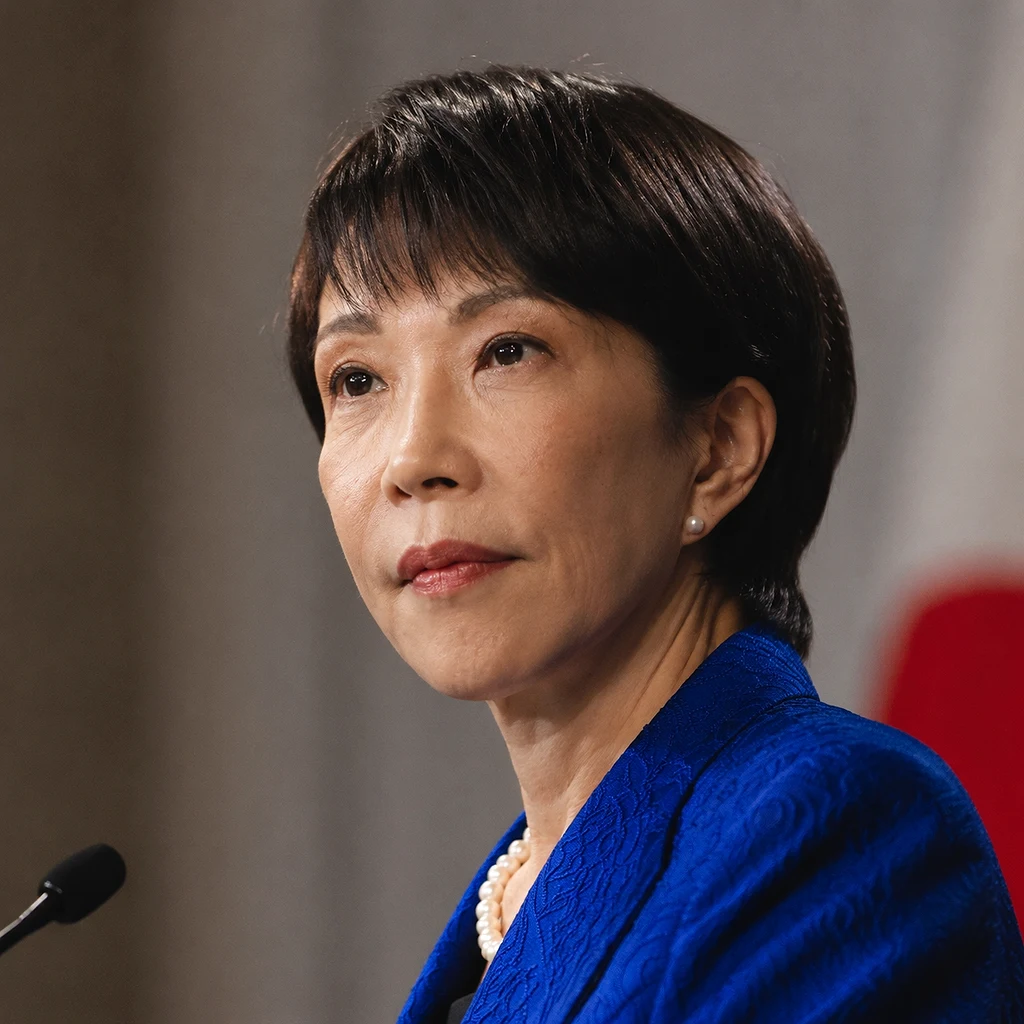
中国和日本:高市当选,生意变难了
China and Japan: Takaichi Wins, and Business Gets Harder
About this story
A simple story about flying to Beijing, visiting a friend's home and buying clothes and a computer at a Chinese store. HSK 1 Chinese listening practice.
This is an HSK 1 Chinese listening episode that runs about 1 minute. The full Mandarin script is shown with tap-for-pinyin and a line-by-line English translation, so you can listen and read at once — comprehensible input in the sense of Stephen Krashen's i+1 theory. It teaches 14 key vocabulary words such as 朋友、漂亮、坐 and walks through 5 grammar patterns, each explained in English with examples. The same news story is retold at 4 difficulty levels — use the level selector above to find the version that is challenging but still understandable for you.
Read at your level
原文Read the complete story in Chinese. Reveal pinyin and English only when you need them.
English transcript reference
Next, let's talk about going to a friend's house and buying things.
I have a friend.
He is not in Beijing.
He is also not in China.
His home is very beautiful.
We need to take a plane to go to his home.
Right now, there is a new person in his home.
That person said many words.
We don't love listening.
We are all unhappy.
There are very few planes.
We are not taking a plane to go.
Everyone is at home.
Then, we go to the store.
Inside the store, there are many things.
Those are the friend's things.
The things are very beautiful.
They are computers, and also clothes.
We look at the computers.
The computers are big and good.
We want to buy them.
We have money.
We don't look at that person.
We like the friend's things.
We buy them all.
Also, the weather is good tomorrow.
We want to go to the friend's house.
We will take a plane to go.
We go to drink tea.
We go to eat.
We are very happy.
This is buying things.
Listen again
Try it without the transcript and notice what sounds clearer.
What vocabulary does this episode teach?
词汇A very common noun for friend. Can be used for casual acquaintances or close friends.
Used to describe people, scenery, or objects.
Used with vehicles (bus, plane, train) to indicate travel by that method.
Literally 'flying machine'. Measure word is 架 (jià).
Describes a temporary state of happiness or excitement.
A general term for a place that sells goods.
General term for physical objects. Note the neutral tone on 'xi'.
Literally 'electric brain'. Measure word is 台 (tái).
General term for clothing. Measure word is 件 (jiàn).
Used with the verb 花 (huā - to spend) or 赚 (zhuàn - to earn).
Often described as good (好) or bad (不好).
A common social activity in Chinese culture.
Refers to everybody in a group.
Used to add another item to a list or introduce a new point.
* beyond level超纲词
What grammar patterns appear in this episode?
语法Expresses existence (there is/are). It indicates that something exists at a specific location.
现在,他的家有一个新人。
商店里有很多东西。
The standard way to describe a noun using an adjective. '很' (very) is often used as a connector even if the degree isn't strongly emphasized.
他的家很漂亮。
电脑很大,很好。
The adverb '都' means 'all' or 'both'. It appears before the verb or adjective.
我们都不高兴。
大家都在家。
我们都买。
Proper Nouns
专有名词Sources
来源Free account
Keep learning from this story
Create a free account to keep saved words and your preferred level together.
- Keep words with their story context
- Remember your preferred level
- Build your vocabulary over time