
A Chinese podcast · Same story, 4 levels
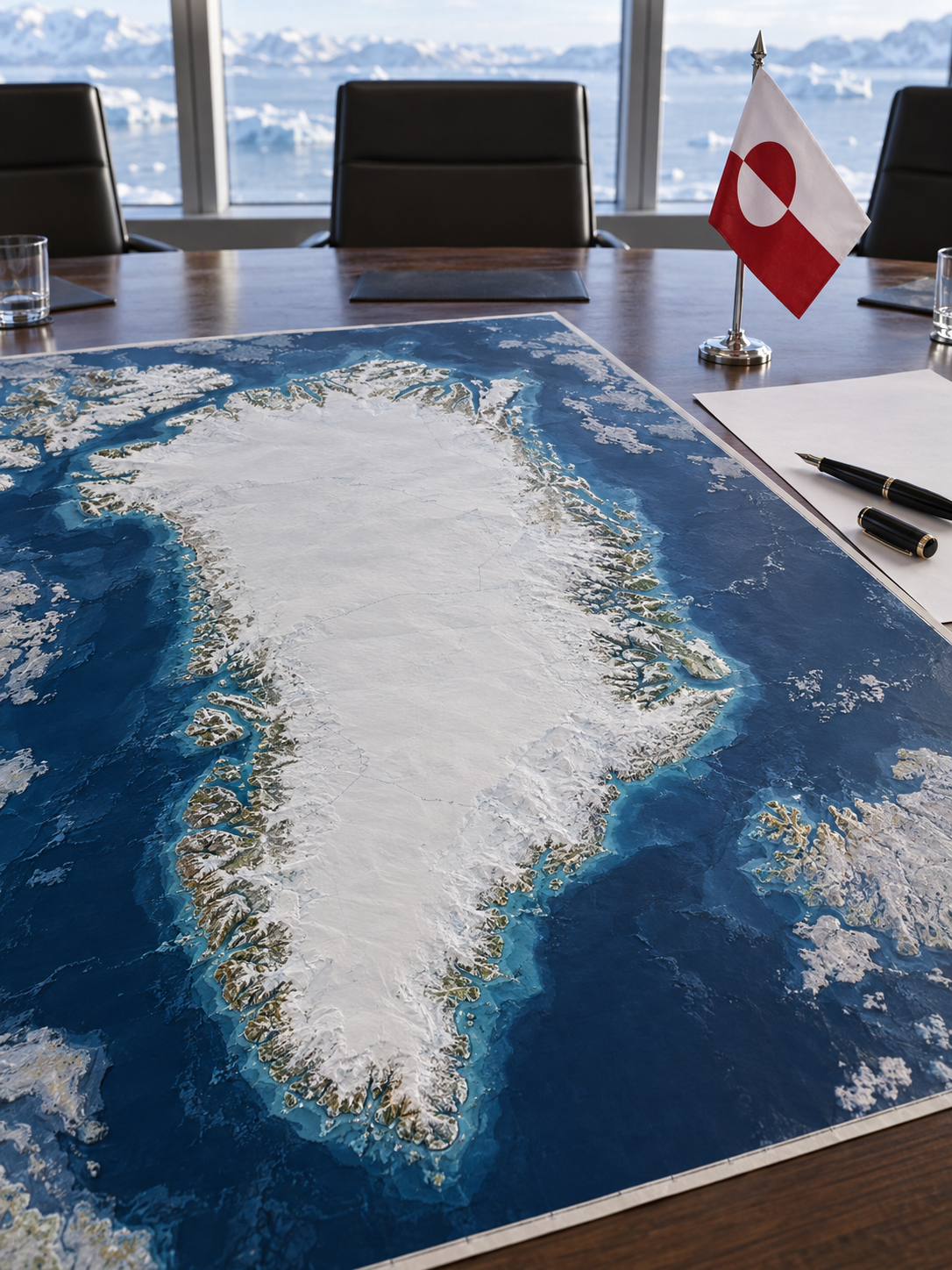
格陵兰安全协议还没签,主权不变
Greenland Deal Unsigned; Sovereignty Stays
About this story
Denmark says a Greenland-US security agreement is expected at the UN next week. Signing and parliamentary approval are still pending; sovereignty is unchanged. HSK 3 Chinese listening practice.
This is an HSK 3-4 Chinese listening episode that runs about 4 minutes. The full Mandarin script is shown with tap-for-pinyin and a line-by-line English translation, so you can listen and read at once — comprehensible input in the sense of Stephen Krashen's i+1 theory. It teaches 12 key vocabulary words such as 安全、决定、完成 and walks through 2 grammar patterns, each explained in English with examples. The same news story is retold at 4 difficulty levels — use the level selector above to find the version that is challenging but still understandable for you.
Read at your level
原文Read the complete story in Chinese. Reveal pinyin and English only when you need them.
English transcript reference
Seeing the words "Greenland Security Agreement," you might think the three parties have already signed, or even that the US has gotten this island.
On September 18, the Danish government's statement actually said "expected": Greenland, Denmark, and the US are expected to sign an agreement next week to strengthen security cooperation in the Arctic and North Atlantic.
Here, the word "expected" is very important, because it has not been signed yet.
The statement said the three parties may complete the signing during the UN General Assembly.
Every year, the UN General Assembly brings many countries' leaders together, so this period is suitable for putting long-discussed matters on the table.
But meeting and signing are two different steps.
Even if the signing really happens next week, the agreement will not automatically take effect at that moment.
The Danish government said each side still has to complete its own domestic parliamentary procedures.
Simply put, after returning home, the parties still have to review and agree according to their own systems before the agreement can formally begin.
So only by getting the timeline clear can we know how to describe today's news.
You can say "the three parties are preparing to sign a security agreement," but you cannot say "it has already been signed," and even less can you say "the US has bought Greenland."
Why would "buying Greenland" appear in the discussion?
Geographically, Greenland is an important place in the Arctic region, and the US also wants to participate in more security affairs there.
When people read the word "security," it is easy for outsiders to confuse "what the US is doing there" with "who this place belongs to."
But security cooperation and sovereignty are two different things.
Here, the former asks how the parties handle security issues together, while the latter asks who has the right to decide the future of a place.
In this statement, the Danish prime minister especially emphasized sovereignty, territorial integrity, and the right of Greenlanders to decide their own future.
At first hearing, these terms sound very formal, but in this story they are very concrete: when discussing security arrangements, Greenlanders cannot be left out of the decision.
In the statement, Greenland's leader also said the negotiations recognized Greenland's own interests.
In other words, Greenland is not a background object being discussed by others without a voice.
Greenland is one of the three parties expected to sign, and its own interests must be put on the table and taken seriously.
So far, the agreement has not been signed, and the public information has not provided a complete text that is already in effect.
Therefore, specific military authorities, implementation dates, or long-term effects cannot yet be described as established facts.
If a formal text appears next week, everyone will be able to read what it says clause by clause.
By then, we will still need to keep watching how each party's parliamentary procedures proceed.
For news readers, the simplest way to check is to divide the question into three sentences.
Ask when they plan to sign, and the Danish government says it is expected next week.
Ask whether they have already signed, and the answer given by the September 18 statement is not yet.
Ask whether the US has bought Greenland, and the answer is no; Denmark emphasizes sovereignty and Greenlanders' right to self-determination.
If someone only shows you the headline "Greenland Agreement," which date and which decision would you look for first before believing the matter is already complete?
Listen again
Try it without the transcript and notice what sounds clearer.
What vocabulary does this episode teach?
词汇The topic of the planned agreement.
Who has a say over Greenland’s future.
Signing and approval are separate steps.
Security cooperation does not mean a sale.
The timing and sovereignty claims matter.
Domestic institutions must examine the arrangement.
Authority over a territory.
Greenlanders’ right to decide their future.
Approval procedures remain before the deal can take effect.
Expected next week, not yet complete.
Only after the required domestic procedures.
Part of Denmark’s sovereignty statement.
* beyond level超纲词
What grammar patterns appear in this episode?
语法前者……后者……
Compares security cooperation with sovereignty.
在这里,前者问的是参与方怎样一起处理安全问题,后者问的是谁有权决定一个地方的未来。
Proper Nouns
专有名词Sources
来源Free account
Keep learning from this story
Create a free account to keep saved words and your preferred level together.
- Keep words with their story context
- Remember your preferred level
- Build your vocabulary over time