
A Chinese podcast · Same story, 4 levels
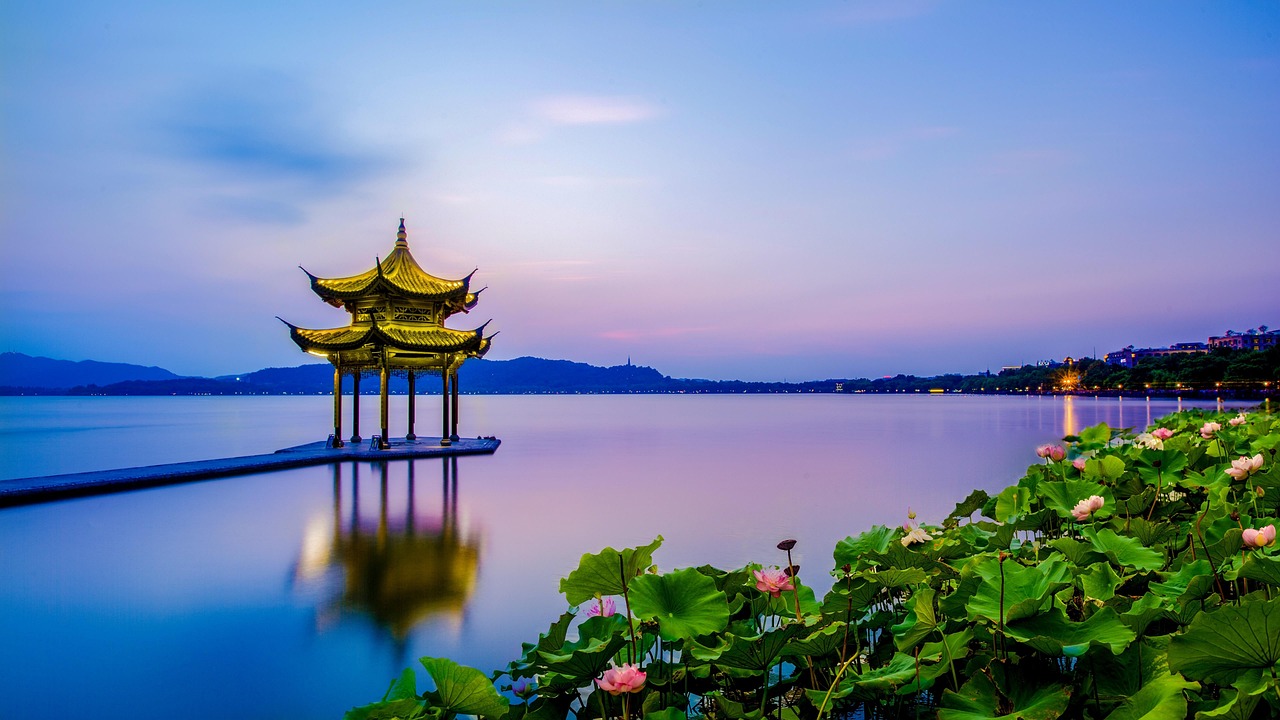
杭州:工程的废料,变成了作品
Hangzhou: The Lake That Would Vanish If Nobody Dug It
About this story
Why West Lake would become a swamp without dredging, how the Su Causeway is engineering spoil, and why Leifeng Pagoda fell brick by brick. HSK 4 Chinese listening practice.
This is an HSK 4 Chinese listening episode that runs about 4 minutes. The full Mandarin script is shown with tap-for-pinyin and a line-by-line English translation, so you can listen and read at once — comprehensible input in the sense of Stephen Krashen's i+1 theory. It teaches 12 key vocabulary words such as 清淤、淤泥、沼泽 and walks through 3 grammar patterns, each explained in English with examples. The same news story is retold at 4 difficulty levels — use the level selector above to find the version that is challenging but still understandable for you.
Read at your level
原文Read the complete story in Chinese. Reveal pinyin and English only when you need them.
English transcript reference
Most people treat West Lake as a piece of natural scenery.
That understanding isn't quite right.
West Lake covers six point three nine square kilometres with hills on three sides, and it does look natural.
But without continuous human intervention, this lake would disappear.
The reason is simple: silt from the hills on three sides keeps washing into the lake, and the bed rises year by year.
A shallow lake that isn't dredged eventually becomes a swamp, and then dry land.
So over the past thousand years or so, Hangzhou has done the same thing again and again: dig the lake out.
Almost all of today's famous features are by-products of that dredging.
The clearest example is the Su Causeway.
The Su Causeway is two point eight kilometres long, with six bridges, crossing the lake from south to north.
It was built in 1089, overseen by the prefect of Hangzhou at the time, Su Shi — Su Dongpo.
He organized labour to clear the weed and silt from the lake bed, and piled the excavated mud into a long causeway.
Put another way: when you stroll along the Su Causeway, what's under your feet is mud dug off the lake bed over nine hundred years ago.
That causeway later became one of West Lake's most famous views.
The waste from an engineering project became a work of art.
The Ten Scenes of West Lake were formally established in the Southern Song, over eight hundred years ago.
The ten names share one feature: each ties a place to a specific time and weather.
"Spring Dawn at the Su Causeway" is the causeway at dawn in spring; "Autumn Moon over the Calm Lake" is the lake and moon on an autumn night; "Lingering Snow on the Broken Bridge" is the bridge after snow, before it melts.
So these names are more like ten ways of looking than merely ten locations.
They remind you that the same place is not the same in different seasons and weather.
Another example is Leifeng Pagoda.
The pagoda on the south side of the lake looks ancient today, but it was actually completed in 2002.
The original Leifeng Pagoda collapsed on 25 September 1924.
The cause was neither an earthquake nor a war.
At the time a popular belief held that bricks from Leifeng Pagoda warded off evil and kept you safe.
So over a long period, people pulled bricks from the base, one at a time.
Once the structure was hollowed out past a certain point, the whole pagoda came down by itself.
Lu Xun wrote an essay about it, discussing exactly this "everyone takes a little" mentality.
A thousand-year-old pagoda wasn't destroyed by anyone in particular; it was carried away by a great many people, one brick each.
On the second day I went up into the hills for tea.
The hills west of West Lake produce Longjing tea.
Longjing is both the name of the tea and the name of a place.
Walking from the lakeside into the hills, the scenery changes, and so does the way you understand this city.
In June 2011, the West Lake Cultural Landscape was inscribed on the World Heritage List.
The grounds for the nomination are worth noticing.
The category it was inscribed under is cultural landscape, rather than natural scenery.
Which is to say, what was recognized as heritage is the whole formed by long interaction between people and nature here.
Causeways, bridges, pagodas, temples, inscriptions and poems, together with the hills and water, make up that whole.
Once you grasp this, West Lake stops being a pretty photograph.
It is a work that has been continuously maintained for over a thousand years.
Hangzhou still dredges the lake on a regular schedule, digging the silt out and carting it away.
If they stopped for a few years, this landscape would begin to degrade.
On the last day, I walked the Su Causeway again.
Six point three nine square kilometres of water, two point eight kilometres of causeway, six bridges, ten names set down over eight hundred years ago.
Not one of those numbers occurred naturally.
If the scenery in front of you is actually the result of dozens of generations repeatedly repairing it, would you like it more, or feel something has been lost?
Listen again
Try it without the transcript and notice what sounds clearer.
What vocabulary does this episode teach?
词汇HSK 4. And a thousand years of work behind it.
HSK 4. Ten of them, each bound to a season.
HSK 3. Neither earthquake nor war.
HSK 5. What was actually inscribed as heritage.
The thousand-year habit that keeps the lake a lake.
Dug out in 1089 and piled into the Su Causeway.
The natural end state of an undredged shallow lake.
Where the bricks were taken from, one at a time.
The belief that emptied the pagoda.
Almost every famous view here is one.
The UNESCO category is cultural landscape.
Never stopped, just scheduled out of sight.
* beyond level超纲词
What grammar patterns appear in this episode?
语法如果没有 …,就会 …
States what would happen absent some condition.
但如果没有人持续干预,这个湖会消失。
换句话说
Restates the point more plainly.
换句话说,你在苏堤上散步,脚下踩的是九百多年前从湖底挖出来的泥。
不是 …,也不是 …
Rules out two candidate explanations.
倒塌的原因不是地震,也不是战争。
Proper nouns
专有名词Free account
Keep learning from this story
Create a free account to keep saved words and your preferred level together.
- Keep words with their story context
- Remember your preferred level
- Build your vocabulary over time