
A Chinese podcast · Same story, 4 levels
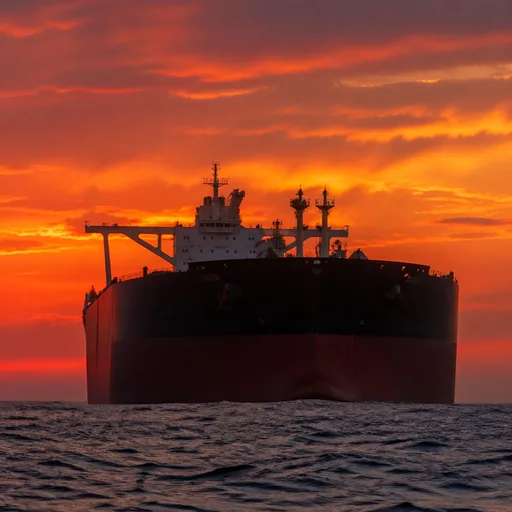
油价涨了,股票跌了
Iran–Israel War Shakes Global Markets
About this story
The Iran-Israel war near the Strait of Hormuz pushes oil prices up and drags the S&P 500 and Dow Jones lower worldwide. HSK 2 Chinese listening practice.
This is an HSK 2 Chinese listening episode that runs about 6 minutes. The full Mandarin script is shown with tap-for-pinyin and a line-by-line English translation, so you can listen and read at once — comprehensible input in the sense of Stephen Krashen's i+1 theory. It teaches 12 key vocabulary words such as 运、涨、为什么 and walks through 5 grammar patterns, each explained in English with examples. The same news story is retold at 4 difficulty levels — use the level selector above to find the version that is challenging but still understandable for you.
Read at your level
原文Read the complete story in Chinese. Reveal pinyin and English only when you need them.
English transcript reference
Recently something happened that affected the whole world.
Oil prices went up a lot.
Oil means gasoline.
You need oil to drive a car.
You also need oil to fly on a plane.
Oil prices went up.
Many people feel life has gotten harder.
Why did oil prices go up?
Because something big happened in the Middle East.
At the end of February this year.
America and Israel together attacked Iran.
Iran is a big country in the Middle East.
It has a lot of oil.
After America attacked Iran.
Iran was very angry.
It made a big decision.
It closed a place called the Strait of Hormuz.
What is this strait?
It is a waterway.
Over in the Middle East.
A passage in the middle of the ocean.
Ships carrying oil have to pass through here.
This strait is very important.
Twenty percent of the world's oil is shipped out through here.
Twenty percent is one-fifth.
This is a very large proportion.
On March fourth, Iran closed this strait.
After it closed, oil ships couldn't get through.
Oil couldn't be shipped out.
With less oil, prices went up.
How much did they go up?
Before, one barrel of oil was about eighty-one dollars.
Now it has risen to over one hundred and six dollars.
It went up thirty percent.
What does thirty percent mean?
It means if you used to spend one hundred dollars on gas.
Now you have to spend one hundred and thirty dollars.
That's thirty dollars more.
Some people say if the war continues.
Oil prices might go up to two hundred dollars.
Two hundred dollars per barrel.
That would be really scary.
You would spend more than double on gas.
What happens after oil prices go up?
Many things become more expensive.
Because shipping things requires oil.
Trucks use oil to ship things.
Planes use oil to ship things.
Ships also use oil to ship things.
When oil is expensive, shipping is expensive.
When shipping is expensive.
Prices in the supermarket go up.
You go buy fruit, more expensive.
You go buy meat, also more expensive.
Eating out becomes more expensive.
Going places becomes more expensive.
This is called inflation.
Inflation means things keep getting more expensive.
Your money is less and less enough.
Money that used to buy three apples.
Now can only buy two.
The stock market was also greatly affected.
What are stocks?
It's when you use money to buy a small part of a company.
When the company does well, you make money.
When the company does badly, you lose money.
America's most important stock index is called the S&P 500.
In March it fell about seven percent.
This is the biggest drop since 2022.
There is another index called the Dow Jones.
One day it fell almost eight hundred points.
What does this mean?
It means many companies' stocks got cheaper.
If you bought stocks.
Your money got less this month.
Why did stocks fall so much?
Because investors are very worried.
Investors are people who use money to buy stocks.
They worry oil prices will keep going up.
They worry companies' costs are too high.
Costs are the money companies spend.
When costs are high, they earn less.
When they earn less, stocks are worth less.
So everyone is selling stocks.
When more people sell, prices fall.
America also has another problem.
The government shut down.
Many federal government workers can't get their wages.
Like airport security workers.
They haven't been paid for several weeks.
But they still have to go to work every day.
Every single day.
They can't not go.
But there is no money.
This makes many people feel it's not fair.
When will things get better?
It depends on the Middle East situation.
The American president gave Iran a deadline.
He said open the strait before April sixth.
But will Iran listen?
Nobody knows right now.
If the strait opens, oil prices might go down.
After they go down, things will be a bit cheaper.
People won't be so scared.
But if the war continues.
Things might get worse.
Oil prices might go higher.
Things might get more expensive.
Everyone is waiting to see what happens.
What does this tell us?
It tells us the world is connected.
When there is a war in one place.
The whole world is affected.
Oil prices went up.
It's not just expensive in that place.
It's expensive everywhere.
Gas in China also got more expensive.
Buying things in Japan also got more expensive.
Because everyone uses the same oil.
I hope the war can end soon.
So oil prices can come down.
Things won't be so expensive.
Everyone's life will be a little easier.
Listen again
Try it without the transcript and notice what sounds clearer.
What vocabulary does this episode teach?
词汇To move things from one place to another.
When prices increase. Oil prices rose 30%.
HSK 1-2. why.
HSK 1-2. company.
HSK 1-2. airport.
HSK 1-2. problem / question.
The cost of oil. Oil prices went up a lot.
To use force against someone. America attacked Iran.
A narrow waterway. The Strait of Hormuz is very important.
When prices keep rising and money buys less.
Small pieces of a company you can buy.
A person who uses money to buy stocks.
* beyond level超纲词
What grammar patterns appear in this episode?
语法Proper nouns
专有名词Sources
来源Free account
Keep learning from this story
Create a free account to keep saved words and your preferred level together.
- Keep words with their story context
- Remember your preferred level
- Build your vocabulary over time