
A Chinese podcast · Same story, 4 levels
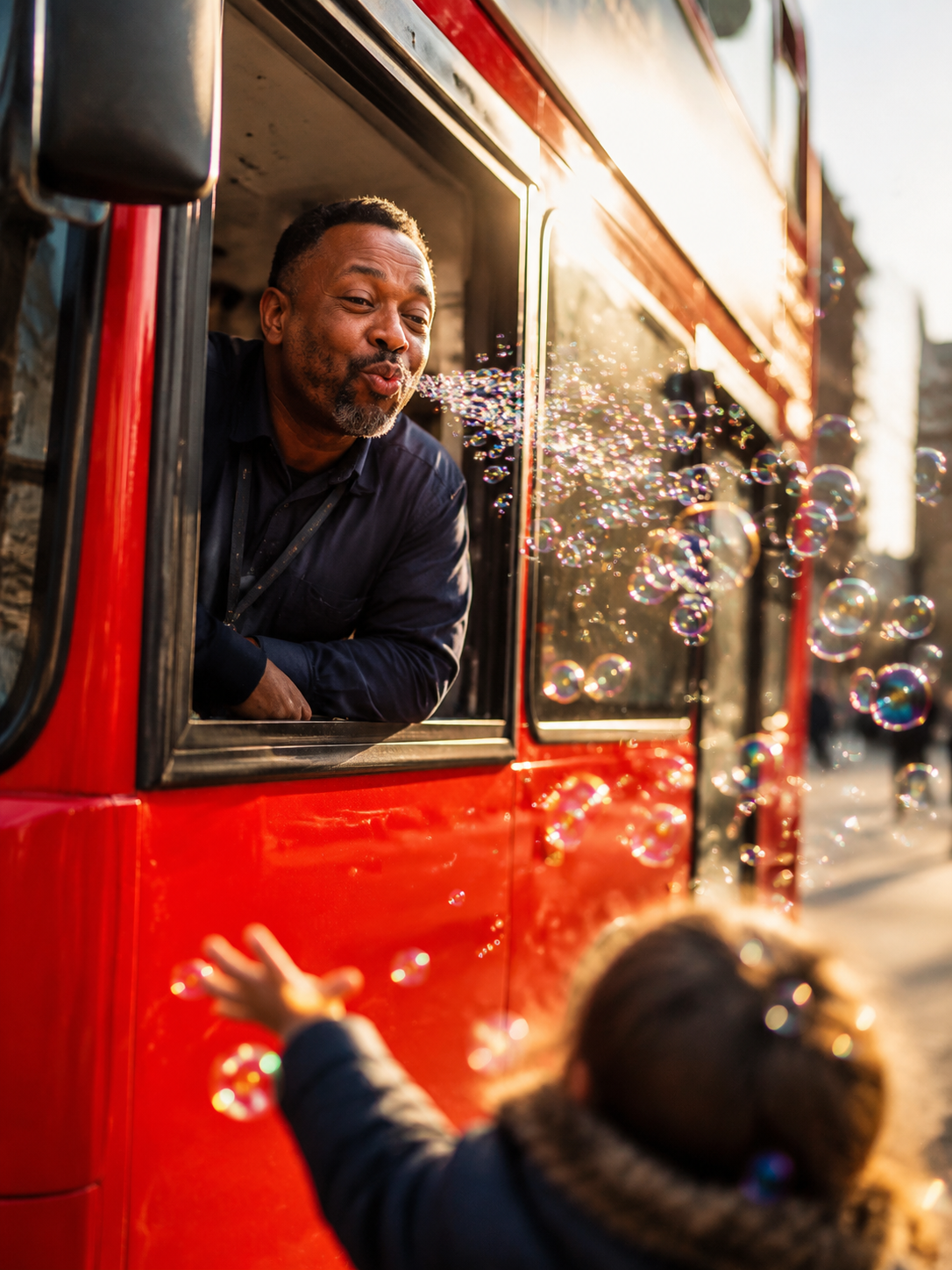
伦敦孩子管他的车叫「泡泡巴士」。公司以「安全考虑」叫停了他,至今没说是什么考虑。
London's Bubble Bus Driver Banned Over Safety
About this story
London's Bubble Bus Driver Banned Over Safety. HSK 1 Chinese listening practice.
This is an HSK 1 Chinese listening episode that runs about 2 minutes. The full Mandarin script is shown with tap-for-pinyin and a line-by-line English translation, so you can listen and read at once — comprehensible input in the sense of Stephen Krashen's i+1 theory. It teaches 12 key vocabulary words such as 上车、看见、高兴 and walks through 3 grammar patterns, each explained in English with examples. The same news story is retold at 4 difficulty levels — use the level selector above to find the version that is challenging but still understandable for you.
Read at your level
原文Read the complete story in Chinese. Reveal pinyin and English only when you need them.
English transcript reference
In London there are a lot of buses.
A great many people get on a bus every day.
When they get on, nobody says anything.
Everyone looks at a screen, and nobody looks at anyone.
But there was one bus that was different.
The driver of this bus did one thing.
When people got on, he blew bubbles.
Bubbles.
One bubble, two bubbles, a great many bubbles.
People got on, and the bubbles were right there in front of them.
Bubbles in front, bubbles above.
The bubbles were small, and gone very quickly.
But the grown-ups saw the bubbles and were happy.
The children saw the bubbles and were happy too.
Later, the children of London all knew about this bus.
They called it: the bubble bus.
They said: we want to ride the bubble bus.
They would not take another bus. They wanted this one.
The driver did not say anything about it. He just blew bubbles.
He blew bubbles every day.
One day, two days, a great many days.
Later, a lot of people saw it.
People who were not in London knew about this driver too.
Right — now what happened after.
The company said: no more.
The company said: you cannot blow bubbles.
The company said: this is a safety matter.
But safety about what?
The company did not say.
Even now, the company still has not said.
The company said: we have buses to drive, we have people to carry.
The driver stopped.
He does not blow bubbles now.
Now there are no bubbles on that bus.
It is the same bus, and the same people.
But when the children get on, there are no bubbles in front of them.
Think about it: one small thing, and a lot of people were happy.
Is that thing unsafe?
Listen again
Try it without the transcript and notice what sounds clearer.
What vocabulary does this episode teach?
词汇很多很多人,天天上车 = a great many people get on a bus every day.
大人看见泡泡,很高兴 = the grown-ups saw the bubbles and were happy.
孩子看见泡泡,也很高兴 = the children were happy too.
我们要坐泡泡车 = we want to ride the bubble bus.
伦敦的孩子都知道这个车了 = the children of London all knew this bus.
他吹泡泡 = he blows bubbles.
他天天吹泡泡 = he blew bubbles every day.
这个车的司机 = the driver of this bus.
孩子看见泡泡 = the children saw the bubbles.
公司说:这是安全的事 = the company said this is a safety matter.
司机停了 = the driver stopped.
公司说:不可以了 = the company said: no more.
What grammar patterns appear in this episode?
语法……的时候
"when X happens". The hinge of the whole story is one moment: boarding.
上车的时候,大家都不说。
人上车的时候,他吹泡泡。
不可以
"not allowed". Blunt, and here deliberately unexplained.
公司说:不可以了。
你不可以吹泡泡了。
Proper nouns
专有名词Sources
来源Free account
Keep learning from this story
Create a free account to keep saved words and your preferred level together.
- Keep words with their story context
- Remember your preferred level
- Build your vocabulary over time