
A Chinese podcast · Same story, 4 levels
中东打仗,全世界的钱包都在哭
Iran–Israel War Shakes Global Markets
About this story
The Iran-Israel war closes in on the Strait of Hormuz — S&P 500 and Dow Jones fall as the whole world feels the shock. HSK 3 Chinese listening practice.
This is an HSK 3-4 Chinese listening episode that runs about 7 minutes. The full Mandarin script is shown with tap-for-pinyin and a line-by-line English translation, so you can listen and read at once — comprehensible input in the sense of Stephen Krashen's i+1 theory. It teaches 14 key vocabulary words such as 国家、世界、太阳 and walks through 6 grammar patterns, each explained in English with examples. The same news story is retold at 4 difficulty levels — use the level selector above to find the version that is challenging but still understandable for you.
Read at your level
原文Read the complete story in Chinese. Reveal pinyin and English only when you need them.
English transcript reference
Recently the global economy has had a big problem.
This problem is directly related to the situation in the Middle East.
Simply put, America and Israel attacked Iran.
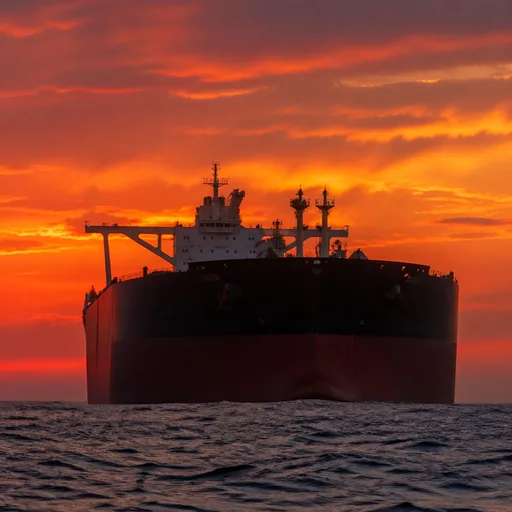
Iran immediately closed the Strait of Hormuz in response.
Then oil prices around the world went crazy.
Let's talk about this one thing at a time.
First, what exactly is the Strait of Hormuz?
It's a waterway in the Middle East.
You can think of it as a big gate.
About twenty percent of the world's oil has to go through this gate.
This proportion is very large.
When the gate closes, oil can't get out.
On March fourth, Iran closed this gate.
Why did they close it?
Because just a few days before.
On February twenty-eighth.
America and Israel attacked Iran's energy facilities.
Energy facilities are factories and equipment related to oil.
Like oil refineries.
Like oil pipelines.
These were all hit.
Iran's thinking was simple.
You attack my oil facilities.
Then I won't let you ship oil.
You don't let me have a good time.
I won't let you have a good time either.
So the strait was closed.
What happened after it closed?
Oil prices shot straight up.
Shot up means it rose very fast and very hard.
Before, one barrel of oil was about eighty-one dollars.
Now it's risen to one hundred and six dollars.
In one month it went up thirty percent.
Some analysts say.
If this war goes on until June.
Oil prices could reach two hundred dollars per barrel.
What does two hundred dollars mean?
It means you go to the gas station.
And spend more than double what you used to.
Before, filling up a tank cost three hundred yuan.
By then it might cost over six hundred.
This is a huge burden for ordinary people.
After oil prices went up, the chain reaction started.
What is a chain reaction?
It means one thing goes up.
And brings other things up with it.
Shipping things requires oil.
Trucks need oil.
Planes need oil.
Ships also need oil.
So shipping costs went up.
After shipping costs went up.
Things in the supermarket got more expensive.
Because those things were brought by trucks.
Flying also got more expensive.
Because airplane fuel got more expensive.
Basically everything related to transportation is going up in price.
This is called inflation.
Inflation means things keep getting more expensive.
But your salary hasn't changed.
It feels like your money isn't enough anymore.
This is what ordinary people are most afraid of.
Now let's talk about the stock market.
The American S&P 500 index dropped nearly seven percent in March.
This is the worst month since 2022.
One day the Dow Jones index dropped nearly eight hundred points.
Eight hundred points is a lot.
This means many people's investments are losing money.
If you bought stocks.
Your money probably got a lot less this month.
Why did stocks drop so badly?
Because investors feel the outlook is very uncertain.
They don't know when the war will stop.
They don't know if oil prices will keep going up.
With oil prices this high, companies' costs go up.
When costs go up, profits go down.
Profits are the money companies earn.
When profits go down, stocks naturally aren't worth as much.
So everyone is selling stocks.
When more people sell, prices drop even faster.
This creates a vicious cycle.
There's another thing making the situation even worse.
The American federal government is still shut down.
Government shutdown means the government has no money to operate.
TSA security workers haven't been paid for several weeks.
But they still have to go to the airport for work every day as normal.
Think about this picture.
On one side, oil prices are surging.
On another side, the government can't pay salaries.
On another side, stocks are dropping every day.
Three things added together.
How can ordinary people not feel anxious?
Trump set a deadline for Iran.
The strait must be opened before April sixth.
But will Iran listen?
It doesn't look very optimistic right now.
Iran is also a big country.
It's unlikely to give in just because of a deadline.
If the strait opens, the situation might improve.
Oil prices might come down.
Stocks might go back up.
People might not feel so nervous.
But if the war continues.
Oil prices might go up even more.
By then it won't just be Americans who are affected.
The whole world will be affected.
Because oil prices are global.
Gas in China will also get more expensive.
Buying things in Europe will also get more expensive.
Japan, South Korea, India.
The whole world uses oil.
Right now the whole world is watching the Middle East.
Because every decision over there.
Directly affects everyone's wallet.
To be honest, this situation feels really helpless.
Because ordinary people can't do anything about it.
You can't decide whether there's a war or not.
You can't decide whether the strait opens or not.
But when oil prices go up.
You have to spend more money.
When stocks go down.
You lose money.
When things get expensive.
You have to buy less.
This is the reality of globalization.
Things far away from you.
Can also affect your life.
Before, you might have thought Middle East issues had nothing to do with you.
Now look at the price at the gas station and you'll know.
It has a lot to do with you.
We live in a connected world.
When one place has a problem.
The whole world feels it.
This time is the best example.
Hopefully the war can end soon.
The strait can open soon.
So everyone's life can be a little better.
But then again.
This kind of thing also gives us a reminder.
Oil won't last forever.
And oil is too easy for others to control.
One strait closes.
Oil around the world gets expensive.
What does this tell us?
It tells us we rely too much on oil.
So now many countries are developing new energy.
Solar energy, wind energy, electric cars.
These don't need oil.
If in the future everyone uses electric cars.
Whether the Middle East strait opens or closes won't matter to you.
Of course this takes time.
We can't do it right now.
So for now we can only wait and see.
When things in the Middle East can get better.
Listen again
Try it without the transcript and notice what sounds clearer.
What vocabulary does this episode teach?
词汇HSK 1-3. country.
HSK 1-3. world.
HSK 1-3. sun.
HSK 1-3. situation / circumstances.
HSK 1-3. relationship; connection.
HSK 1-3. to feel / a feeling.
HSK 1-3. to develop; development.
How things are going in a place. The Middle East situation.
A narrow waterway. The Strait of Hormuz.
To go up very fast. Oil prices surged.
When one change causes many other changes.
When everything keeps getting more expensive.
The money a company earns after costs.
A bad pattern that keeps repeating and getting worse.
* beyond level超纲词
What grammar patterns appear in this episode?
语法Proper nouns
专有名词Sources
来源Free account
Keep learning from this story
Create a free account to keep saved words and your preferred level together.
- Keep words with their story context
- Remember your preferred level
- Build your vocabulary over time