
A Chinese podcast · Same story, 4 levels
《监狱来的妈妈》翻车:一场关于"洗白"的讨论
Mother From Prison Film Sparks Court Debate
About this story
Mother From Prison Film Sparks Court Debate. HSK 3 Chinese listening practice.
This is an HSK 3-4 Chinese listening episode that runs about 9 minutes. The full Mandarin script is shown with tap-for-pinyin and a line-by-line English translation, so you can listen and read at once — comprehensible input in the sense of Stephen Krashen's i+1 theory. It teaches 12 key vocabulary words such as 注意、决定、影响 and walks through 4 grammar patterns, each explained in English with examples. The same news story is retold at 4 difficulty levels — use the level selector above to find the version that is challenging but still understandable for you.
Read at your level
原文Read the complete story in Chinese. Reveal pinyin and English only when you need them.
English transcript reference
Late at night on May 20, 2026.
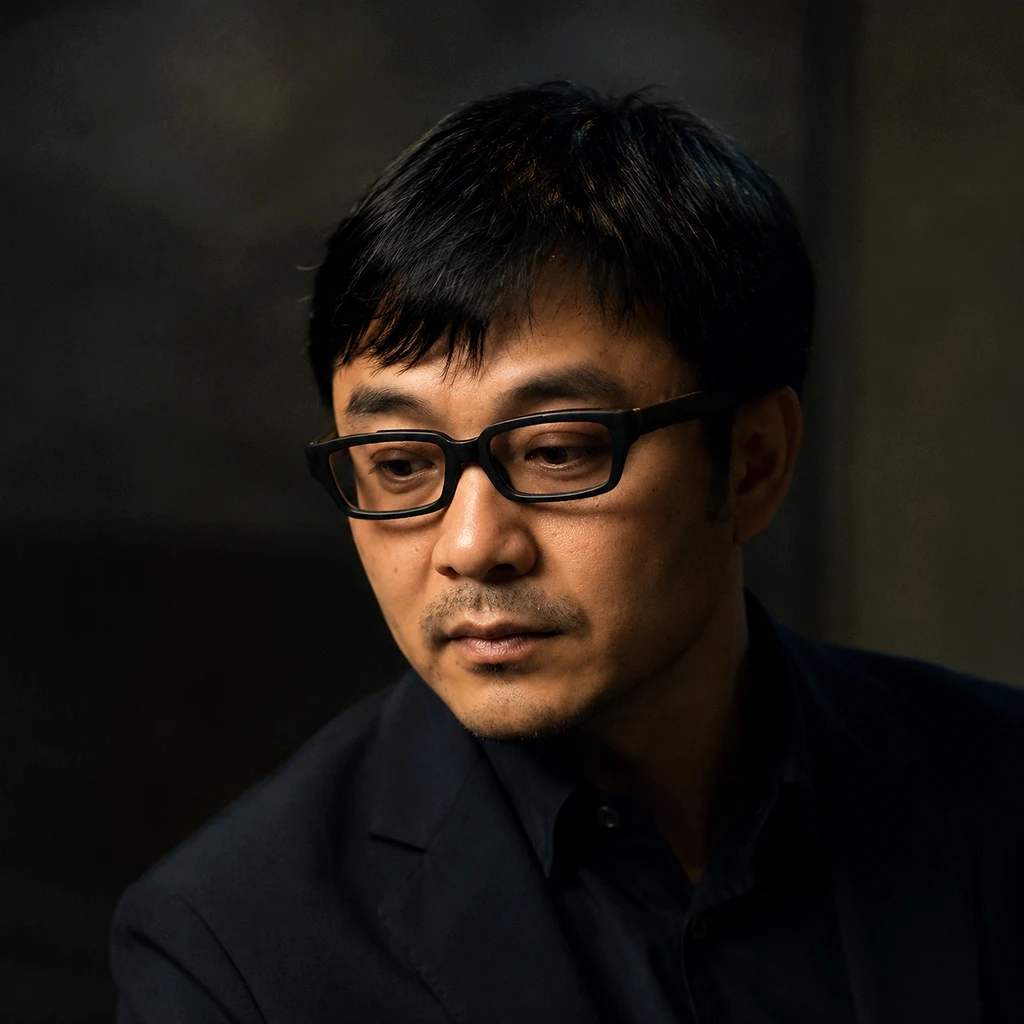
On Weibo, Wang Han
posted an apology.
Who is Wang Han?
If you've watched Chinese TV,
you've definitely heard of him.
Day Day Up, Happy Camp, I Am a Singer —
several of Hunan TV's most important variety shows of the past 20 years
can't be separated from him.
Many people call him "the host of the nation."
But on this day,
he was apologizing.
The thing he was apologizing for
is called "Mother From Prison."
It's a movie.
The director is named Qin Xiaoyu.
It was originally going to release on May 30.
The movie is adapted from a true story.
The lead actress is the real person of that true story —
Zhao Xiaohong.
Zhao Xiaohong
is, in fact, a killer.
Let's start from the beginning.
The night of April 16, 2009,
Shaanxi.
Zhao Xiaohong and her husband Zhang Bo
got into an argument over a small household matter.
How small?
The court verdict wrote it down:
"propping up the bed."
A matter of how to set the bed up properly.
In the middle of the argument,
Zhao Xiaohong went to the living room,
got a fruit knife,
returned to the bedroom,
and stabbed her husband once in the chest.
That single stab
pierced his aorta.
Zhang Bo died on the spot.
The Shaanxi High People's Court later determined:
Zhao Xiaohong committed intentional injury (causing death).
Sentenced to 15 years' imprisonment.
Deprivation of political rights for 5 years.
15 years is the maximum sentence this crime can carry.
We call it "the maximum sentence."
Note this:
in the court's findings,
there are no words "domestic violence."
Nor "long-term abuse."
No "resistance" or "self-defense."
What the court found
was a single act of intentional injury — losing control over a trivial matter.
Zhao Xiaohong served 15 years.
She was released around 2024.
If the story ended here,
it would be an ordinary criminal case.
But a director
found her.
Qin Xiaoyu.
An independent film director.
He'd made a few documentaries before.
Qin Xiaoyu decided
to turn Zhao Xiaohong's story into a movie.
And to have Zhao Xiaohong
play herself.
The movie started filming in 2019.
Note —
at that time Zhao Xiaohong was still in prison.
The director himself later said so in an interview.
The film crew went into the prison to shoot.
This in itself is a legal problem.
Chinese law provides
that a person deprived of political rights,
during the deprivation period,
cannot take part in "publishing, public speaking, assembly" and similar activities.
Film performance and promotion
are generally counted within this scope.
But let's set the procedural issue aside.
The bigger problem
is that the story this movie tells
and the court's verdict
are two completely different stories.
The movie's promotion says:
"She is a wife who was abused for years.
"That night she could bear it no longer,
"and in resisting, lost control.
"She served 15 years in prison.
"After release,
"she wants to return to her son and mother-in-law.
"She wants to be forgiven.
It sounds
like a story that makes you want to cry.
But in the verdict,
there is not a single mention of domestic violence.
Not a single mention of long-term abuse.
Not a single mention of self-defense.
In the verdict there is only:
one small household matter,
one fruit knife,
one stab,
one dead husband.
And a wife given the maximum sentence.
That is to say,
the movie is "adapted from a true story" —
but it wrote in, out of nothing,
things that weren't in that true story.
More precisely:
the movie erased what she actually did,
then invented a reason for her that means she shouldn't have done it.
Chinese netizens call this "whitewashing."
In early May,
the movie began large-scale promotion.
Yao Chen recommended this movie on Weibo.
Later she deleted that post,
and apologized.
In mid-May,
a lawyer dug out the verdict,
and put it side by side with the movie's promotion.
Netizens exploded.
The boycott spread from Weibo and Douban,
all the way to Bilibili, Xiaohongshu, and Douyin.
People said:
"Beautifying crime.
"Turning black into white.
"Using a victim's death to sell tickets.
"Using the topic of 'domestic violence' to scam sympathy.
Note one thing:
Chinese society
genuinely has a consensus about domestic violence.
Many women truly have suffered in domestic violence.
There are real cases of women jailed for resisting abuse.
Precisely because that consensus is real,
using "domestic violence" as a false cloak
makes people especially angry.
On May 19,
China Central Television stepped in to review it.
This is a clear official signal:
this movie has a problem.
On May 20,
the production side announced the film was pulled.
That means it won't be shown.
Zhao Xiaohong's social media account
was shut down by the platform.
Also late at night on May 20,
Wang Han posted his apology.
In his apology Wang Han said three things:
One,
"I deeply apologize for failing to seriously review the project's background and content.
Meaning:
I didn't do my homework as a producer.
Two,
"I did not take part in investing in this film.
Meaning:
I wasn't actually putting money into this project,
I just lent my name.
Three,
"I have cut off all contact with the production team,
"and the production has removed my credit.
Meaning:
please erase my name from this.
It sounds like all three things are made clear.
But netizens still aren't buying it.
Why?
First,
Wang Han and Qin Xiaoyu have collaborated several times before.
They aren't strangers.
Saying you never looked carefully
doesn't quite hold up.
Second,
as a producer,
your name itself is a credibility endorsement for this movie.
Your "host of the nation" halo —
how many people did it make willing to trust this movie?
Now that something's gone wrong,
saying "I didn't look closely"
can responsibility really be brushed off that cleanly?
Third,
in recent years the Chinese public has seen too many
celebrity-endorsement "crash" cases.
Endorsing fake diet pills,
endorsing unscrupulous hospitals,
endorsing investment scams.
Every time something goes wrong,
the celebrity says "I didn't know,"
"I was deceived too."
The public is tired of hearing it.
For Wang Han this time,
the biggest danger isn't the movie itself.
It's that this cycle of "lend your name → it blows up → apologize → move on"
makes everyone feel
that the identity of "host of the nation"
has become not so clean either.
But,
we should also say something fair for Wang Han.
He isn't the director.
He didn't write the script.
He didn't alter the verdict.
He really didn't take part in the investment.
And,
on the very same day he was attacked,
he posted a clear apology,
and had the production remove his credit.
From a PR standpoint,
this response counts as fast,
and clean.
So,
what's the meaning of all this?
I think it's this:
a movie is a special kind of product.
It tells the audience:
"This is a true story.
"This is what happened.
When the audience believes that sentence,
they hand their emotions to the people on the screen.
But if the words "true story" are fake,
then those emotions
have been deceived.
Zhao Xiaohong can live on.
Zhao Xiaohong can slowly rejoin society after prison.
Zhao Xiaohong can even write an autobiography.
But you cannot take a real murder case that actually happened,
repackage it,
tell it as a warm story of resisting domestic violence,
and then have the audience cry for her.
The dead man is still there.
The verdict is still there.
The truth is still there.
Finally,
I want to ask you a question:
If one day,
someone wants to take a story you don't like,
make it into a beautiful movie,
and tell everyone "this is real" —
what would you do?
Think about it.
Okay.
That's all for today.
Talk tomorrow.
Listen again
Try it without the transcript and notice what sounds clearer.
What vocabulary does this episode teach?
词汇To note, pay attention. The episode repeatedly says 注意 to flag the key fact: the verdict contains no mention of domestic violence.
To decide. Director Qin Xiaoyu 决定 to film Zhao Xiaohong's story and cast her as herself — the decision that started everything.
Influence, impact. A celebrity producer's name has 影响 — it lends a film credibility, which is why endorsement carries responsibility.
To accept. The episode's question: even if a producer apologizes, will the public 接受 it? Many no longer do.
Ordinary. The dead husband was a 普通 real person — a concrete human being, not a plot device.
Danger, dangerous. The episode's framing: Wang Han's biggest 危险 isn't this one film — it's the cycle of 'lend name → blow up → apologize' that erodes public trust.
The written court judgment. The episode contrasts the film's marketing with the 判决书 line by line — and they don't match.
Domestic violence (short for 家庭暴力). The film built its emotional appeal on 家暴 — a label the verdict never uses.
To whitewash — repackage a guilty person through narrative so the public sees them as innocent or sympathetic. The single word that powered the backlash.
To beautify, to glorify (something that shouldn't be). 美化犯罪 — 'beautifying crime' — was the central accusation against the film.
To withdraw a film from its scheduled release. Industry term: 撤 (withdraw) + 档 (release slot). The film 撤档 on May 20.
A film's credited 'producer' — can be a real investor or just a prestigious named figure. Wang Han's (named-only) role here.
* beyond level超纲词
What grammar patterns appear in this episode?
语法根据真实故事改编
根据 (based on) + 真实故事 (true story) + 改编 (adapted). A fixed phrase that appears on film posters. The episode's whole argument is that this phrase, on this film, was false — the adaptation invented what the 'true story' never contained.
电影'根据真实故事改编'。
根据真实事件改编。
把 A 重新包装成 B
把 construction with 重新包装 (repackage). 把一段真实存在过的杀人案,重新包装,讲成一个温情的故事 — to take a real murder case, repackage it, and tell it as a warm story. The grammar of narrative manipulation.
不能把一段真实存在过的杀人案,重新包装。
不是 A,是 B (sharp correction)
Used to replace a wrong framing with the right one. The episode uses it to separate fault: his fault is 不是'主导而欺骗',是'挂名而疏忽' — not 'leading and deceiving,' but 'lending his name and being negligent.'
他的过错是'挂名而疏忽',而不是'主导而欺骗'。
X 能 Verb 得这么干净吗?
A rhetorical question expressing doubt. 责任能撇得这么干净吗?— 'can responsibility really be brushed off this cleanly?' The 得 + adjective + 吗 structure questions whether something can be done as completely as claimed.
责任能撇得这么干净吗?
Proper nouns
专有名词Free account
Keep learning from this story
Create a free account to keep saved words and your preferred level together.
- Keep words with their story context
- Remember your preferred level
- Build your vocabulary over time