
A Chinese podcast · Same story, 4 levels
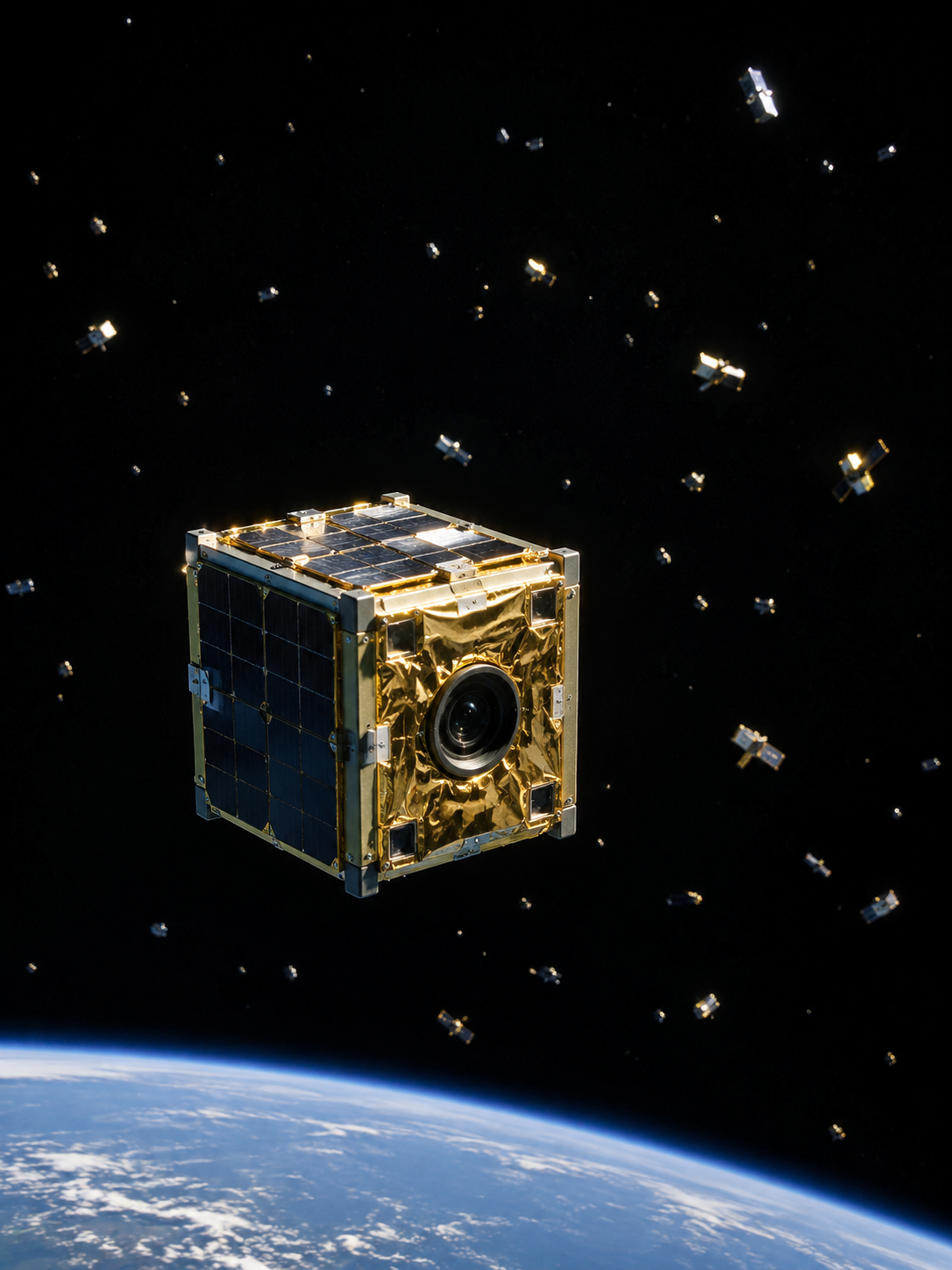
NASA 让卫星靠拍太空垃圾找到了自己。大家都嫌碎片危险,它成了天上唯一免费的路标。
NASA Satellite Navigates by Photographing Space Junk
About this story
NASA Satellite Navigates by Photographing Space Junk. HSK 2 Chinese listening practice.
This is an HSK 2 Chinese listening episode that runs about 2 minutes. The full Mandarin script is shown with tap-for-pinyin and a line-by-line English translation, so you can listen and read at once — comprehensible input in the sense of Stephen Krashen's i+1 theory. It teaches 6 key vocabulary words such as 东西、找、清楚 and walks through 3 grammar patterns, each explained in English with examples. The same news story is retold at 4 difficulty levels — use the level selector above to find the version that is challenging but still understandable for you.
Read at your level
原文Read the complete story in Chinese. Reveal pinyin and English only when you need them.
English transcript reference
There are many satellites in the sky, always moving.
How does a satellite know where it is?
Down here, we can look at a phone.
But the sky is far away, and a phone is no use up there.
Last week, the American space agency did something new.
They let a satellite find itself, by itself.
It used a camera.
The satellite already had a camera on board.
In the past, the camera looked at the ground.
This time, the camera looked at other satellites.
There is also a lot of space junk up there — broken satellites, old things.
The camera looks at that junk too.
The satellite carries a list, a catalogue.
The list says which orbit each thing is on.
The camera sees one, and the satellite goes and checks that list.
The more things it sees, the more clearly the satellite knows where it is.
In three days, this satellite looked at more than two hundred objects.
It found itself — and it also worked out the orbits of those two hundred objects more accurately.
Here is the most interesting part of this.
Space junk has always been a bad thing. Everyone says there is too much of it up there and it is dangerous.
But this time, the junk became the markers along the road.
If you do not know where you are, look at the things around you.
Think about it:
Can something everyone says is useless turn into something useful?
Listen again
Try it without the transcript and notice what sounds clearer.
What vocabulary does this episode teach?
词汇看到的东西越多 — the more things it sees.
他们让卫星,自己找到了自己 — they let the satellite find itself.
卫星就越清楚,自己在哪里 — the more clearly the satellite knows where it is.
天上的垃圾太危险 — the junk up there is too dangerous.
天上有很多卫星 — there are many satellites in the sky.
太空垃圾 — space junk. The word this episode rehabilitates.
* beyond level超纲词
What grammar patterns appear in this episode?
语法The more of one, the more of the other.
看到的东西越多,卫星就越清楚。 — The more things it sees, the more clearly it knows.
本来就……
"Already, all along" — the thing was there before anyone needed it.
卫星上本来就有相机。 — The satellite already had a camera on board.
成了……
Turned into. A change of role, not of substance.
垃圾成了路上的记号。 — The junk became the markers along the road.
Proper nouns
专有名词Sources
来源Free account
Keep learning from this story
Create a free account to keep saved words and your preferred level together.
- Keep words with their story context
- Remember your preferred level
- Build your vocabulary over time