
A Chinese podcast · Same story, 4 levels
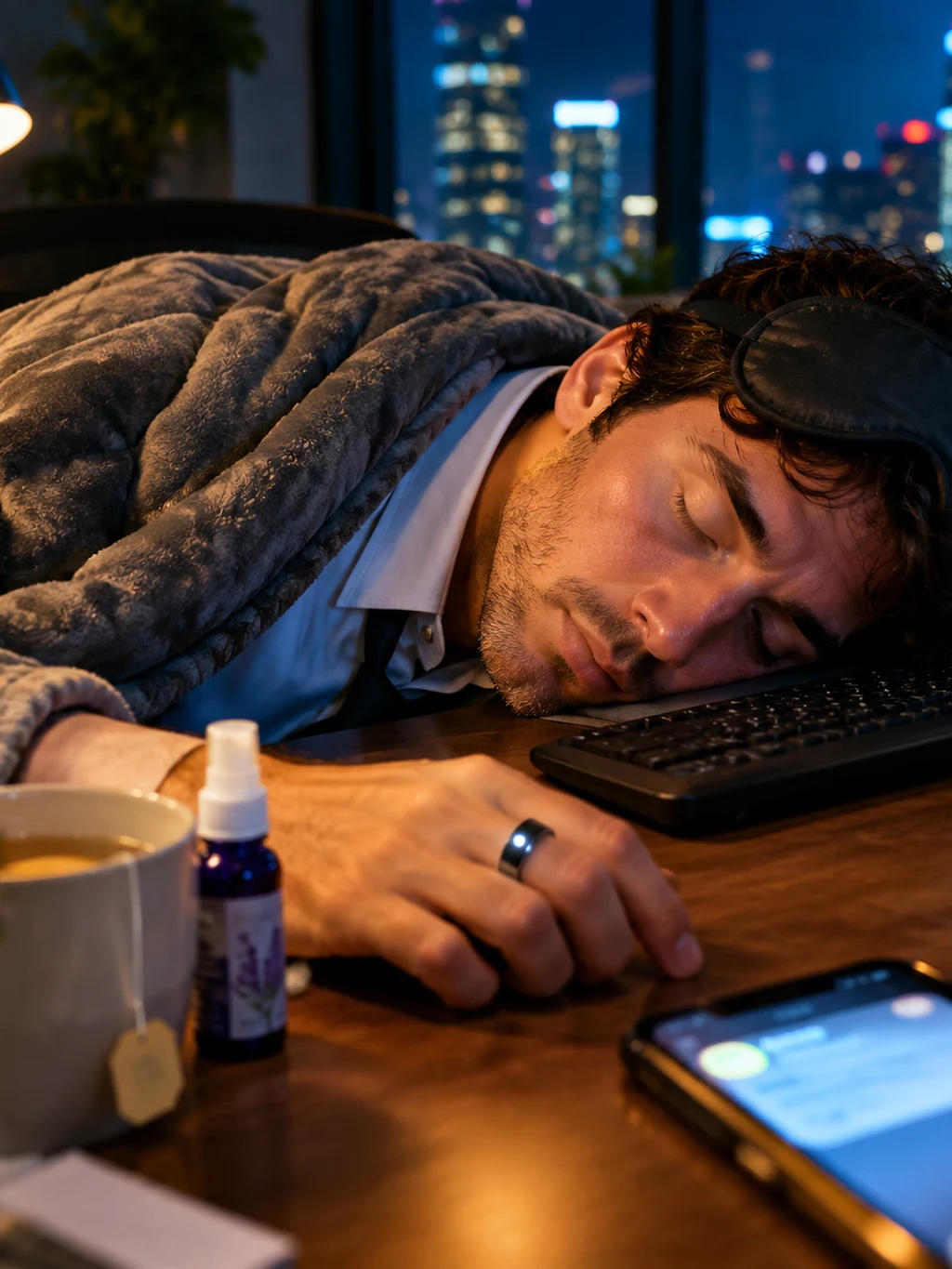
《经济学人》的玩笑邮件:一家公司想让员工睡好觉,结果全乱套了
The Economist's Joke Memo: A Company Tries to Fix Its Staff's Sleep, and Everything Goes Wrong
About this story
The Economist's Bartleby column wrote a satirical company memo about a sleep program gone wrong: staff woken at 2 a.m. for "pre-industrial" segmented sleep, bosses' 3 a.m. messages that got everyone up earlier, sleep trackers that made people anxious, and a weighted blanket that needed the fire brigade. The episode says plainly that the memo is a joke — then shows the two real things behind it: historian Roger Ekirch's evidence for "first sleep" and "second sleep", and the 2017 finding that tracker scores can make sleep worse. Chinese listening practice at four levels. HSK 2 Chinese listening practice.
This is an HSK 2 Chinese listening episode that runs about 3 minutes. The full Mandarin script is shown with tap-for-pinyin and a line-by-line English translation, so you can listen and read at once — comprehensible input in the sense of Stephen Krashen's i+1 theory. It teaches 12 key vocabulary words such as 公司、奇怪、历史 and walks through 3 grammar patterns, each explained in English with examples. The same news story is retold at 4 difficulty levels — use the level selector above to find the version that is challenging but still understandable for you.
Read at your level
原文Read the complete story in Chinese. Reveal pinyin and English only when you need them.
English transcript reference
Today's story is a joke.
Britain has a very famous magazine called The Economist.
There's a writer at the magazine who writes about working life every week.
This week, he wrote a fake company email.
The company is fake, and so is the email.
But lots of working people laugh when they read it.
Because this company is just like their own companies.
The email opens like this: the company's boss cares a great deal about sleep.
He believes that only when employees sleep well can they work well.
So the company tried lots of ideas to help employees sleep better.
The first idea had to do with the middle of the night.
Employees had to get up at two a.m., work for two hours, and then go back to sleep.
This idea sounds very strange.
But there's something true about it.
An American history professor found that a few hundred years ago, many people slept twice a night.
What does sleeping twice a night mean?
You'd sleep once in the evening, get up for an hour or so in the middle of the night, then sleep again.
In old books and diaries, he found more than five hundred examples like this.
Later, as electric lights spread, people stopped sleeping this way.
But in this fake company, the idea didn't work very well.
Some people got up in the middle of the night and then couldn't fall asleep again.
One salesperson fell asleep during a meeting with a client, and the deal was lost.
Also, the bosses sent everyone messages at three in the morning.
Younger employees saw them and got up very early to reply.
In the end, everyone in the company slept worse.
The second idea was to give employees a small device worn on the wrist to record their sleep.
One in five people couldn't work out how to use it.
The people who could use it had even more problems.
Some felt they had slept very well, but the device said they'd slept badly the night before.
This problem is real too.
In 2017, American doctors wrote a paper.
They said some people check these numbers every day and end up sleeping worse and worse.
In the fake company, the device also said the bosses had all fallen asleep during a meeting.
The company's answer: of course that can't possibly be true.
The company also sent employees lots of things, like something to wear over your eyes while you sleep, and very heavy blankets.
One employee got under a very heavy blanket and couldn't get out on her own.
In the end, others had to be called to pull her out.
Finally, the email's writer laid out what the company had concluded.
Sleep aids: whoever wants them can have them.
But don't make everyone do the same thing, and don't check on how employees are sleeping in the middle of the night.
The last line was: as for this plan, let's sleep on it.
Do you think a company should have a say in its employees' sleep?
Listen again
Try it without the transcript and notice what sounds clearer.
What vocabulary does this episode teach?
词汇HSK 2. 公司是假的,邮件也是假的。
HSK 2. 这个办法,听起来很奇怪 — but history backs it up.
HSK 2. 一位美国历史老师发现 — the real research inside the joke.
HSK 2. 工作两个小时,然后回去再睡。
HSK 2. 有的人觉得自己睡得很好,机器却说…
HSK 2. 这个问题,也是真的 — how the episode flags each real fact.
HSK 4. 一本很有名的杂志,叫《经济学人》。
一封假的公司邮件 — 封 is the measure word for letters and emails.
员工睡得好,工作才能做得好 — the premise of the whole program.
戴在手上的小机器 — the sleep tracker.
记录睡觉 — what the tracker is supposed to do.
很重的被子 — the weighted blanket someone had to be pulled out from under.
* beyond level超纲词
What grammar patterns appear in this episode?
语法……,……才能……
Only if X can Y happen. The boss's condition for good work.
他觉得,员工睡得好,工作才能做得好。
越来越 + adjective
More and more — describes a trend getting worse.
他们说,有的人每天都看这些数字,结果越来越睡不好。
谁……,就……谁
Whoever X, then Y them. A compact Chinese way to say "give it to whoever wants it".
睡觉的东西,谁想要,就给谁。
Proper Nouns
专有名词Free account
Keep learning from this story
Create a free account to keep saved words and your preferred level together.
- Keep words with their story context
- Remember your preferred level
- Build your vocabulary over time