
A Chinese podcast · Same story, 4 levels
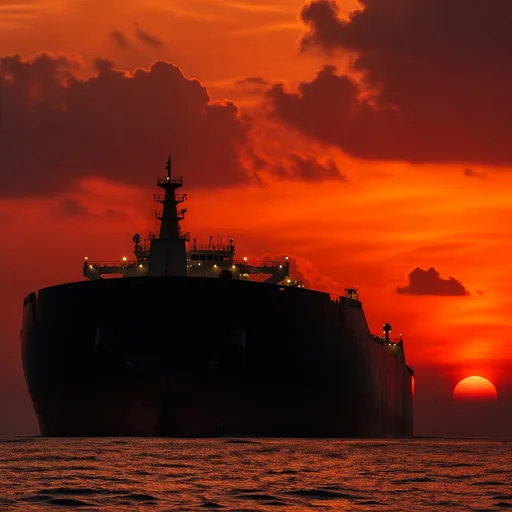
百元油价与霍尔木兹海峡的地缘博弈
Oil Above $100 as Hormuz Crisis Deepens
About this story
Crude holds above $100 as Iran tightens its grip on the Strait of Hormuz — Wall Street's risk premium and Saudi Arabia. HSK 5-6 Chinese listening practice.
This is an HSK 5-6 Chinese listening episode that runs about 9 minutes. The full Mandarin script is shown with tap-for-pinyin and a line-by-line English translation, so you can listen and read at once — comprehensible input in the sense of Stephen Krashen's i+1 theory. It teaches 20 key vocabulary words such as 原油、咽喉、脆弱 and walks through 5 grammar patterns, each explained in English with examples. The same news story is retold at 4 difficulty levels — use the level selector above to find the version that is challenging but still understandable for you.
Read at your level
原文Read the complete story in Chinese. Reveal pinyin and English only when you need them.
English transcript reference
When speaking of the recent international crude oil market, the most striking aspect is none other than the sustained consolidation of oil prices at a high level, with the price per barrel firmly nailed above the psychological threshold of $100, and the core arena of the game behind this,
remains the Strait of Hormuz, known as the global energy chokepoint.
Crude oil at $100 a barrel has never been just a cold number for the global economy; rather, it is a roaring engine of inflation, ruthlessly crushing the already fragile momentum of recovery.
When we unfold the map of the Middle East and focus our eyes on this narrow stretch of water between the Persian Gulf and the Gulf of Oman, it is not hard to understand why the slightest disturbance here can keep Wall Street traders on pins and needles.
The narrowest part of the Strait of Hormuz is only about 39 kilometers, and the deep-water channels truly suitable for large supertankers are merely two-way inbound and outbound lanes a mere three kilometers wide.
However, it is this seemingly inconspicuous maritime crevice that carries nearly one-fifth of global crude oil consumption and over one-fourth of the liquefied natural gas trade.
The economic lifelines of major Middle Eastern oil-producing countries like Saudi Arabia, Iraq, the UAE, and Kuwait are almost entirely tied to this deep blue waterway,
Any blockage means that tens of millions of barrels of black gold a day cannot reach the eagerly waiting Asian and European markets.
For Iran, guarding the Strait of Hormuz is not only a natural barrier endowed by geography, but also its sharpest Sword of Damocles in the international geopolitical game.
Facing long-term economic sanctions and sustained external military pressure, decision-makers in Tehran know well that they might struggle to gain the absolute upper hand in a head-to-head conventional military clash, but as long as they keep their hands firmly on the strategic switch of global energy,
they possess the ultimate bargaining chip that makes the entire Western world hesitate to act for fear of collateral damage.
This strategy, known as "asymmetric deterrence," has been masterfully utilized by Iran over the past few decades.
They simply do not need massive aircraft carrier strike groups; merely the anti-ship cruise missiles deployed along the long coastline, radar systems hidden in mountain caves, highly maneuverable "wolf packs" of armed speedboats,
as well as low-cost yet highly destructive naval mines and suicide drones,
are enough to paralyze this major energy artery in an extremely short period of time.
The pricing logic of the international crude oil market has always been extremely sensitive and forward-looking; it often trades not on the current supply and demand status, but on the extreme panic over future uncertainties.
The current oil price, having broken through $100 per barrel, actually contains a very high geopolitical risk premium.
That is to say, although giant oil tankers in the strait are still shuttling end-to-end and there has been no substantial rupture in the physical supply of crude oil, the capital market has already paid in advance for the potential risk of supply disruption.
As traders in the futures market type on their keyboards in front of screens, what lingers in their minds is the thrilling Tanker War during the Iran-Iraq War in the 1980s.
At that time, to cut off each other's economic resources, the belligerents frantically attacked unarmed neutral oil tankers sailing in the Persian Gulf, resulting in blazing fires on the sea, severe damage to the global crude oil supply chain, and shipping insurance rates skyrocketing.
Historical memories are always strikingly similar, and today's rapid iteration of weapons technology has made the means of blockading the strait more concealed, diverse, and efficient.
Once the Strait of Hormuz is truly forced to close due to military conflict, even if only for a brief few days or weeks, the chain reaction it triggers globally will be disastrous.
The first to bear the brunt will undoubtedly be the major Asian manufacturing powerhouses heavily dependent on Middle Eastern energy, but the aftershocks of this geopolitical tremor will by no means be confined solely to the Asian continent.
In a deeply intertwined globalized trade network, the surge in crude oil prices will spread like a virus, rapidly transmitting to every economic capillary.
From airline fuel surcharges to the transportation costs of ocean-going container ships, from plastic raw materials refined in chemical plants to the prices of agricultural products on ordinary people's dining tables, no industry can emerge unscathed from this inflation storm.
Against the macroeconomic backdrop where most global central banks are struggling to curb stubbornly high inflation, even at the expense of economic growth through aggressive interest rate hikes, oil prices above $100 are undoubtedly a harsh dose of medicine for the global economy.
Exorbitant energy costs will not only ruthlessly swallow the profit margins of real economy enterprises but also drastically weaken consumers' actual purchasing power, and may even push some fragile economies already hovering on the edge of recession directly into the abyss of stagflation.
This is exactly why, in the face of Iran's strong posture displayed in the Strait of Hormuz, the international community, especially the United States, has shown extreme anxiety and high military vigilance.
The U.S. Navy's Fifth Fleet, long stationed in Bahrain, has as one of its core strategic missions ensuring the freedom of navigation in this critical waterway, preventing any single nation from using it as a geopolitical weapon to hold the world hostage.
However, engaging in high-intensity military confrontation in the narrow waters and complex terrain of the Strait of Hormuz is tantamount to playing with fire in a sealed room full of powder kegs.
Any slight radar misjudgment, any overly close naval interception, or even an out-of-control drone could become the fuse for an accidental clash, rapidly escalating into a localized war that all parties would be unable to clean up.
What is even more tricky is that attempting to find a perfect alternative to the Strait of Hormuz is almost an impossible engineering miracle to accomplish in the short term.
Although Gulf countries like Saudi Arabia and the UAE have taken precautions by building oil pipelines attempting to bypass the strait, such as Saudi Arabia's East-West Pipeline across the Arabian Peninsula, the maximum capacity of these overland pipelines,
compared to the strait's massive throughput of over 20 million barrels per day,
remains a drop in the bucket.
As the saying goes, distant water cannot quench an immediate thirst; when a crisis truly strikes, these backup plans simply cannot fill the giant gap instantly torn open in the global energy market.
Examining it from a grander historical dimension, the current tense stalemate in the Strait of Hormuz once again ruthlessly exposes modern human industrial civilization's deep-rooted dependence on fossil fuels.
Although the world has been vigorously promoting energy transition in recent years, loudly advocating the development of renewable energies like wind and solar under the pressure of climate change, in the foreseeable future, oil will remain the blood flowing in the veins of modern industry,
and the underlying driving force behind the physical operation of the entire world.
As long as this hydrocarbon-dominated energy consumption structure does not undergo a fundamental subversion, the Middle East—this ancient, arid land flowing with black gold—will not lose its core position in the global geopolitical landscape.
And those powers capable of choking the energy chokepoints by virtue of geographical advantage will bound to continue holding disproportionate sway in the games on the international stage.
Some might hold an optimistic view, believing that sustained high oil prices will force the accelerated iteration of the new energy industry, becoming a potent catalyst to drive the global energy revolution and break free from dependence on Middle Eastern fossil fuels.
While this viewpoint certainly holds true in long-term economic logic, in the face of cruel reality, the growing pains of the energy transition period are genuinely borne by every ordinary person today.
When logistics truck drivers sigh in despair at doubled diesel bills, and when European families in winter have to cut other living expenses just to stay warm, the grand narrative of energy transition often appears too distant and pale.
We are currently situated in and witnessing an extremely complex multi-dimensional game, interwoven with the cold calculations of great power competition, the intricate ethnic and sectarian conflicts of the Middle East, and the pervasive speculative forces in the capital market.
The lock tightly gripped in Iran's hands seems on the surface to lock away the turbulent waves of the Strait of Hormuz, but in essence, it affects the ups and downs of the global economy and the livelihood and well-being of billions of people.
In this invisible yet highly tense shadow war, neither side dares to easily reveal its final trump card, because all players know very well in their hearts that once that dangerous critical point is completely breached,
the devastating price it triggers will be unbearable for the whole world.
The evolution of the situation remains bewilderingly complex; that crude oil price hanging high above $100 is like an alarm bell suspended over the head of the global economy, constantly reminding us with its unsettling roar that this seemingly highly developed,
closely interconnected modern world,
has a foundational cornerstone for operation that is so incredibly fragile and vulnerable to a single blow.
Listen again
Try it without the transcript and notice what sounds clearer.
What vocabulary does this episode teach?
词汇Refers to unrefined petroleum. Common in economic and energy-related contexts.
Literally 'throat', used metaphorically to describe a critical, narrow passage or strategic chokepoint.
Used to describe things that are easily broken or damaged, such as an economy, an ecosystem, or a person's emotions.
Military or political term meaning to intimidate or deter an opponent from taking action.
Can refer to physical paralysis of the body or the breakdown/stoppage of a system, traffic, or economy.
A financial term referring to the amount by which the price of an asset exceeds its fundamental value, often due to risk.
Often used metaphorically to describe high costs eating up profits or a disaster overwhelming a place.
A state of alertness or readiness, especially in a military or security context.
A substance that increases the rate of a chemical reaction; metaphorically, an event or person that causes great change.
To completely overturn a system, structure, or traditional way of doing things.
A stock market or financial term indicating a period where prices fluctuate within a narrow range.
A Chinese idiom meaning to hold back from taking action against an enemy for fear of damaging something valuable in the process.
An idiom describing someone's skill or technique reaching a high degree of proficiency or perfection.
An idiom describing things lined up closely one after another, often used for heavy traffic or a continuous stream of vehicles/ships.
An idiom meaning to prepare in advance for a rainy day or future crisis.
An idiom meaning an utterly inadequate measure or a drop in the bucket.
An idiom used to express a feeling of helplessness or frustration when facing a massive problem or task.
An idiom describing a state of extreme tension, mutual hostility, or an imminent outbreak of war.
An idiom used to describe a situation that is complex, bewildering, and difficult to figure out.
An idiom describing a state of extreme hunger or desperate need for resources/relief.
* beyond level超纲词
What grammar patterns appear in this episode?
语法A formal pattern used to introduce a topic and highlight its most prominent feature. '说到' means 'speaking of', and '莫过于' means 'nothing surpasses' or 'is none other than'.
说到近期国际原油市场,最引人注目的莫过于油价持续在高位盘整,单桶价格死死钉在了一百美元的心理关口之上
An emphatic correlative conjunction structure meaning 'Not only is it..., but it is even more...'. It emphasizes the second point as being more significant or profound than the first.
对于伊朗而言,扼守霍尔木兹海峡不仅是地理赋予的天然屏障,更是其在国际地缘政治博弈中最为锐利的一把达摩克利斯之剑。
A conditional structure indicating a sufficient condition. 'As long as [condition] is met, then [result] will happen.'
只要将手紧紧按在全球能源的战略开关上,就拥有了让整个西方世界投鼠忌器的终极筹码。
只要这种以碳氢化合物为主导的能源消费结构没有发生根本性的颠覆,中东这片古老、干旱却又流淌着黑色黄金的土地,就不会失去其在全球地缘政治版图中的核心地位。
A concessive conditional pattern meaning 'Even if it is just..., [result] will still...'. Used to emphasize that even a minimal degree of the condition will lead to a significant outcome.
一旦霍尔木兹海峡真的因为军事冲突而被迫关闭,哪怕只是短暂的几天或几周,其在全球范围内引发的连锁反应也将是灾难性的。
An enumerative pattern used to list a wide range of examples to prove a universal point. 'From A to B, from C to D, there is no [exception].'
从航空公司的燃油附加费,到远洋集装箱货轮的运输成本,从化工厂里提炼的塑料原料,再到普通民众餐桌上的农产品价格,没有任何一个行业能在这场通胀风暴中独善其身。
Proper nouns
专有名词Free account
Keep learning from this story
Create a free account to keep saved words and your preferred level together.
- Keep words with their story context
- Remember your preferred level
- Build your vocabulary over time