
A Chinese podcast · Same story, 4 levels
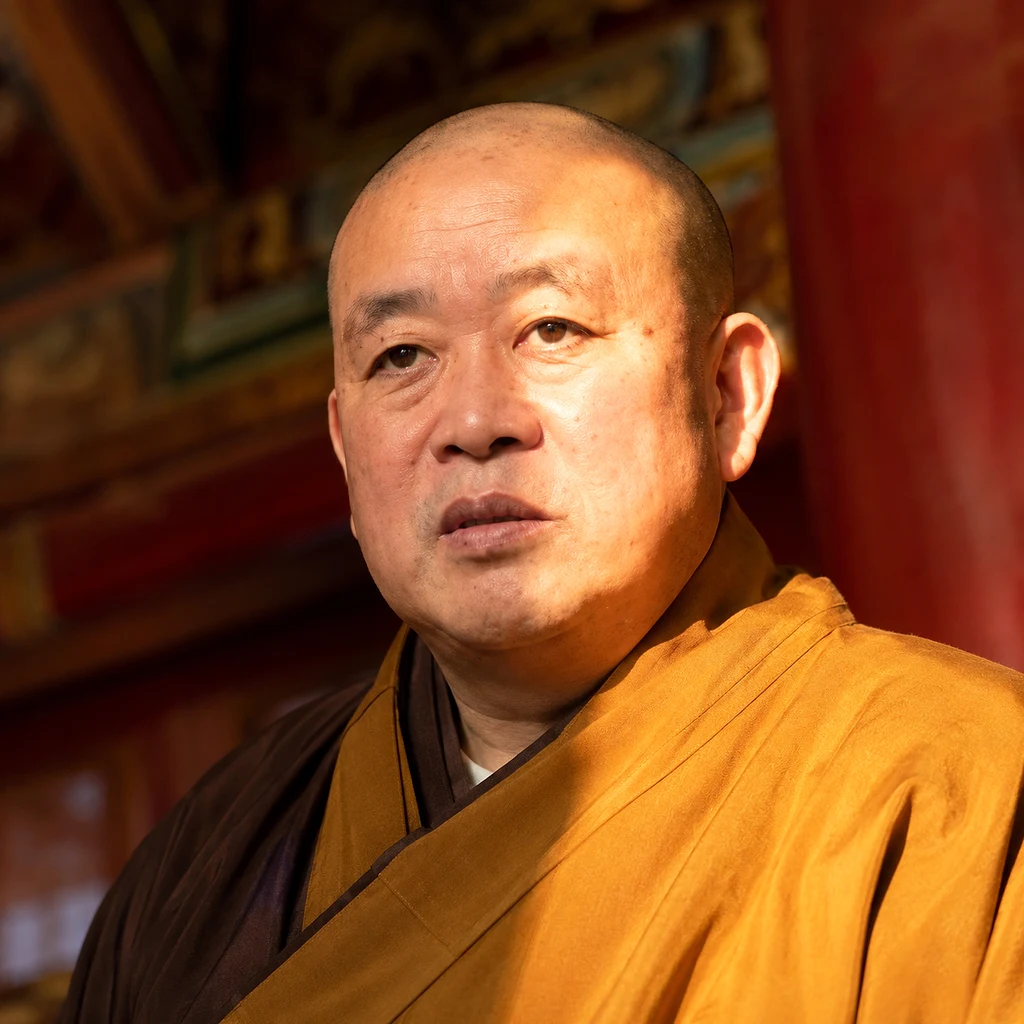
少林寺的大和尚出事了
Shaolin Abbot Shi Yongxin Gets 24 Years
About this story
The Shi Yongxin verdict explained — the CEO Monk of Shaolin Temple, his 24-year sentence, four charges totaling nearly 300 million yuan, and the long-standing rumors about his private life. HSK 2 Chinese listening practice.
This is an HSK 2 Chinese listening episode that runs about 6 minutes. The full Mandarin script is shown with tap-for-pinyin and a line-by-line English translation, so you can listen and read at once — comprehensible input in the sense of Stephen Krashen's i+1 theory. It teaches 12 key vocabulary words such as 新闻、公司、觉得 and walks through 6 grammar patterns, each explained in English with examples. The same news story is retold at 4 difficulty levels — use the level selector above to find the version that is challenging but still understandable for you.
Read at your level
原文Read the complete story in Chinese. Reveal pinyin and English only when you need them.
English transcript reference
Let me tell you a news story.
This news is huge.
A lot of people in China are watching.
There are also people abroad watching.
The news says: the great abbot of Shaolin Temple is going to prison.
He has to serve twenty-four years.
He also has to pay a 3.5-million-yuan fine.
When people heard this news, many didn't believe it.
They said: how could it be?
Let me first say what Shaolin Temple is.
Shaolin Temple is an old monastery in China.
A monastery is a place where monks live.
Shaolin Temple is in Henan.
It's over fifteen hundred years old.
Very old.
Also very famous.
The whole world knows it.
Why is it famous?
Because the monks here practice kung fu.
"Shaolin kung fu" — the whole world has heard of it.
Many movies are about Shaolin Temple.
Many foreigners come here to learn kung fu.
Now let's talk about this great abbot.
His name is Shi Yongxin.
Starting in 1999, he became the great abbot of Shaolin Temple.
He served for almost thirty years.
He was very good at doing business.
A lot of people called him the "CEO Monk."
Meaning, he was like the boss of a company.
He wasn't just a monk.
He was also the boss of Shaolin Temple.
What did he do?
He set up many companies under Shaolin Temple.
There were also many shops.
He sold Shaolin Temple food.
He sold Shaolin Temple clothes.
He also sold Shaolin Temple little things.
Everything had the Shaolin Temple name on it.
Tickets were also very expensive.
In 2017, ticket sales reached 350 million.
Think about it — 350 million.
That's a lot of money.
In 2019, over 4 million people came to Shaolin Temple.
That year, Shaolin Temple earned a total of 1.2 billion.
Shi Yongxin made Shaolin Temple extremely rich.
He also had Shaolin Temple perform kung fu all around the world.
So he became very famous.
Some people said he was good.
Some people said he wasn't good.
Those who said he was good felt: he made Shaolin Temple known to the whole world.
Those who said he wasn't good felt: he turned the temple into a company.
That's not right.
But either way, he was the great abbot for many years.
Nobody could touch him.
Until last year.
In July 2025, Shaolin Temple itself put out a notice.
The notice said: Shi Yongxin has problems.
He used the temple's money.
He also had other problems.
He had relationships with many women.
Monks aren't supposed to do that.
He even had his own children.
As soon as the notice came out, all of China was watching.
Everyone was asking: is it real?
Later it was proven to be real.
The police started investigating.
They investigated for several months.
This past May, he went to court.
On May 29 of this year, the court announced its decision.
The court said he had four offenses.
The first: he took the temple's money and used it himself.
This is called "occupational embezzlement."
How much did he take?
Over 131 million.
The second: he borrowed the temple's money and used it himself, without returning it for a long time.
This is called "misappropriation of funds."
How much did he use?
Over 151 million.
The third: he took other people's money to help them with things.
This is called "bribe-taking."
How much did he take?
Over 11.6 million.
The fourth: he gave money to government officials, for his own benefit.
This is called "bribery."
How much did he give?
Over 5.6 million.
Adding it all together, it's almost 300 million.
300 million is a huge amount of money.
The court said: you have to serve twenty-four years in prison.
You also have to pay 3.5 million.
Shi Yongxin heard this and didn't say much.
He said: I won't appeal.
Meaning, he won't fight the verdict.
He accepts the result.
The court also said: you aren't a monk anymore.
Your monastic name "Shi Yongxin" can no longer be used.
From now on you will be Liu Yingcheng.
Liu Yingcheng is his name before he became a monk.
Listening to this news, I feel things are complicated.
On one hand, what he did is genuinely wrong.
The money was the temple's, not his.
He used the temple's money to live his own good life.
He also did things monks can't do.
That's a fact.
On the other hand, he served for thirty years.
Nobody investigated him.
Why is it being investigated only now?
Why now?
These questions, we don't know.
But we can think about them.
I want to ask you a question.
Have you ever had this kind of experience?
You used to really trust someone.
Later you discovered they aren't who you thought they were.
At that time, how did you feel?
Did you still trust other people after that?
Think about it slowly.
Listen again
Try it without the transcript and notice what sounds clearer.
What vocabulary does this episode teach?
词汇HSK 2 noun. 看新闻 = to watch the news. Throughout the script, this story is framed as a 新闻.
HSK 2 noun. 他让少林寺有了很多公司 = he set up many companies under Shaolin Temple. Measure word: 家.
HSK 2 verb. Used to express an opinion or feeling, followed by a clause.
HSK 2 noun. The script uses it for 他和很多女人有关系 = he had relationships with many women.
HSK 1 noun. The script uses it for 他让少林寺有了很多公司,也有很多商店 = he set up many companies and many shops.
HSK 1 noun. Central topic word. 寺里的钱 = the temple's money.
Beyond HSK 1-2. The central religious noun in this story. Shi Yongxin lost his monk status as part of the verdict.
Beyond HSK 1-2. 他去了法院 = he went to court. The court that handed down the verdict was 河南省新乡市中级人民法院.
HSK 3, beyond the HSK 1-2 target. 表演功夫 = to perform kung fu. Shaolin sent its monks to perform around the world.
HSK 3, beyond the HSK 1-2 target. 他和很多女人有关系 = he had relationships with many women. Can also mean general connection or association.
HSK 3, beyond the HSK 1-2 target. 他接受这个结果 = he accepts the result. Used when describing why Shi Yongxin won't appeal.
Beyond HSK 1-2. Literally 门 (gate) + 票 (ticket). 2017 年,门票就卖了三亿五千万 = in 2017 tickets alone brought in 350 million.
* beyond level超纲词
What grammar patterns appear in this episode?
语法因为... + 所以...
The most common cause-and-effect structure in Chinese. Both clauses are kept, unlike English which usually drops one.
为什么这么有名?
因为这里的和尚会功夫。
因为美国的生活有点难,所以他们觉得很累。
Subject + 让 + Object + Verb
让 means 'to let / cause / make'. The structure marks causation — A makes B do something, or A causes B to be a certain way.
他让少林寺有了很多公司。
他让少林寺非常有钱。
他还让少林寺去世界各地表演功夫。
Subject + 觉得 + Clause
Use 觉得 to introduce an opinion or feeling. Followed by a complete clause, not just an adjective.
说他好的人觉得:他让少林寺被全世界知道。
他们觉得:这是不对的。
听这个新闻,我觉得很复杂。
Subject + 跟 + Person + 有关系
跟 = with, 有关系 = have a relationship. The fixed structure for talking about social or romantic relationships between people.
他长期跟好几个女人有关系。
他跟很多大人物有关系。
Subject + 还 + Verb
还 = also / still / additionally. Goes before the verb to add another action or to mark continuing state.
他还要给三百五十万的罚款。
他还做了和尚不可以做的事。
他还让少林寺去世界各地表演功夫。
了 after a verb marks a completed action. Often translated as past tense in English.
法院给他判了。
门票就卖了三亿五千万。
他去了法院。
Proper nouns
专有名词Free account
Keep learning from this story
Create a free account to keep saved words and your preferred level together.
- Keep words with their story context
- Remember your preferred level
- Build your vocabulary over time