
A Chinese podcast · Same story, 4 levels
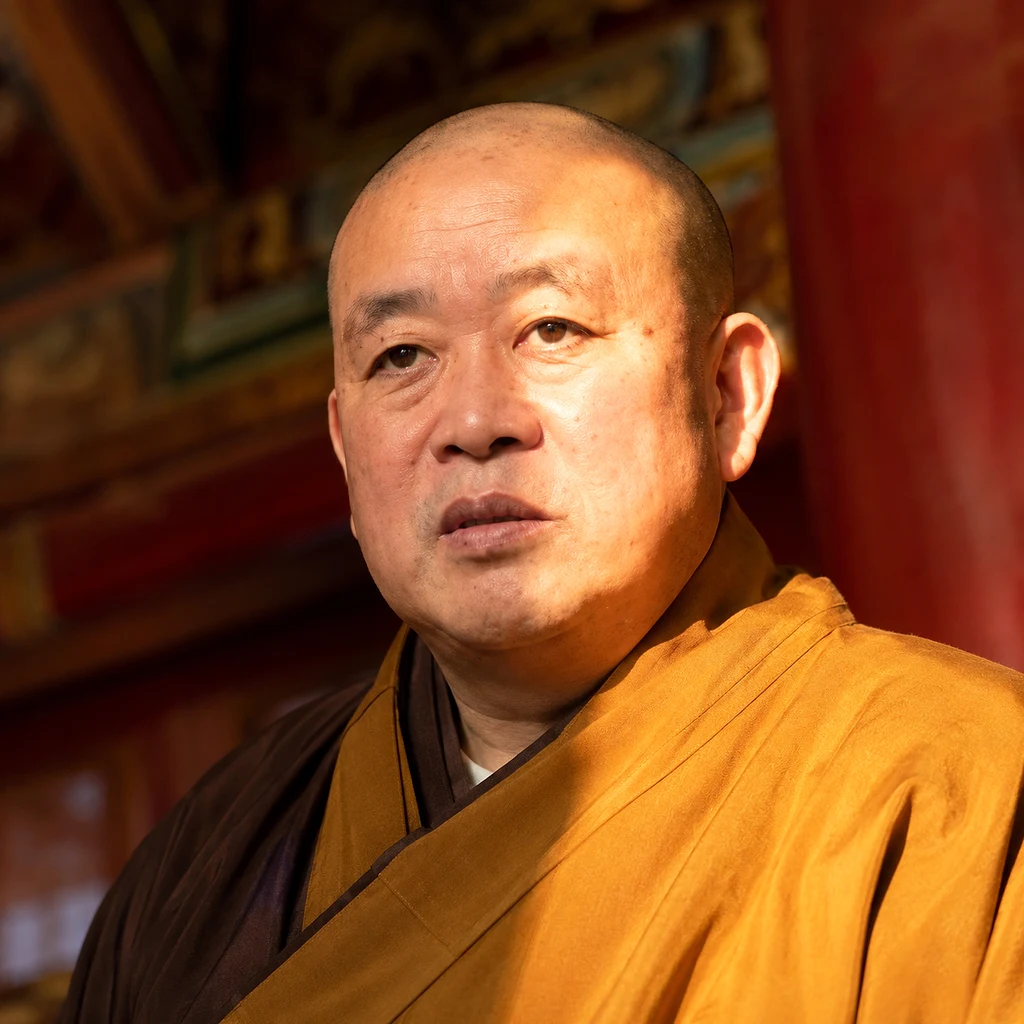
释永信被判二十四年——一座千年古寺的"商业实验",最后是怎么结束的
Shaolin Abbot Shi Yongxin Gets 24 Years
About this story
The deeper read on the Shi Yongxin verdict — four charges totaling ~300M yuan, 706 trademarks, a 1.2B yuan tourism year, and three larger trends: rethinking cultural-asset commercialization, anti-corruption reaching the temple gate, and the cost of trust. HSK 5-6 Chinese listening practice.
This is an HSK 5-6 Chinese listening episode that runs about 10 minutes. The full Mandarin script is shown with tap-for-pinyin and a line-by-line English translation, so you can listen and read at once — comprehensible input in the sense of Stephen Krashen's i+1 theory. It teaches 12 key vocabulary words such as 严重、失望、政府 and walks through 7 grammar patterns, each explained in English with examples. The same news story is retold at 4 difficulty levels — use the level selector above to find the version that is challenging but still understandable for you.
Read at your level
原文Read the complete story in Chinese. Reveal pinyin and English only when you need them.
English transcript reference
A fifteen-hundred-year-old temple.
An abbot of almost thirty years.
A case totaling close to 300 million yuan.
And finally: a twenty-four-year prison sentence.
What we're going to discuss today.
Is the verdict against former Shaolin Temple abbot Shi Yongxin.
May 29.
Xinxiang Intermediate Court in Henan Province issued its first-instance verdict.
The verdict document is long.
But the conclusion is simple.
Shi Yongxin, lay name Liu Yingcheng.
Was sentenced to twenty-four years in prison.
And fined 3.5 million yuan.
There are four charges in total.
Let me go through them one by one.
First, occupational embezzlement.
That means using your position within an organization.
To turn the organization's property into your own.
The court found.
From 2003 to 2025.
The amount he embezzled this way.
Was over 131 million.
Second, misappropriation of funds.
That means taking the organization's money.
For personal use.
For longer than three months without returning it.
From 2012 to 2022.
He misappropriated over 151 million.
Third, bribe-taking by a non-state employee.
Acting as abbot of Shaolin Temple.
In construction contracting and business activities.
He took other people's property.
And helped them with their affairs.
The amount was over 11.6 million.
Fourth, bribery.
He gave money to government officials.
To seek improper benefits for himself.
From 1995 to 2022.
The amount he gave out was over 5.6 million.
The four added together.
The total amount of the case is close to 300 million yuan.
For a person who has left the household life.
This is a hard-to-imagine number.
In court, Liu Yingcheng stated.
"I accept the verdict and will not appeal."
He accepts the result.
There's another line in the news.
The dharma name "Shi Yongxin."
He can no longer use it.
From now on, he can only be Liu Yingcheng.
At this point.
We need to pull the timeline back.
Why are we in 2026.
Seeing a line of news like this?
The answer didn't actually start in May.
We have to start last year.
July 27, 2025.
The Shaolin Temple management office released a notice.
The notice said.
Shi Yongxin is suspected of criminal offenses.
Misappropriating and embezzling temple assets.
In addition.
He had also seriously violated Buddhist precepts.
What are precepts?
They're rules monks must follow.
He had long maintained improper relationships with multiple women.
And had fathered children out of wedlock.
Illegitimate children — children a monk should fundamentally never have.
This was the first time China's temple system.
Used such direct language.
To publicly denounce its own abbot.
The moment the notice came out, the entire internet shook.
Soon after, the police got involved.
November 16, 2025.
Xinxiang Procuratorate approved his arrest.
March 20, 2026.
The case was formally indicted to the court.
And then there was the May 29 verdict.
From last July to this May.
About 306 days had passed in between.
A person who once stood at the very top of Shaolin Temple.
From public notice.
To arrest.
To indictment.
To sentencing.
It took just over three hundred days.
So let's look one step further back.
How did Shi Yongxin climb to that position in the first place?
In 1999.
He officially became abbot of Shaolin Temple.
Back then, Shaolin Temple was actually poor.
Tickets and incense couldn't support the daily life of an entire monastery.
Shi Yongxin took a very unusual path.
He decided to have Shaolin Temple go into business.
1997.
He founded the first "temple company" in China.
2008.
He set up another "intangible asset management company."
Specifically managing the licensing of the Shaolin Temple name.
According to public reports.
Shaolin Temple registered over seven hundred trademarks over the years.
Covering food and lodging.
Also covering cosmetics and jewelry.
And many other things.
2017.
Just from ticket revenue.
It pulled in 350 million yuan.
2019.
Shaolin Temple's visitor count was 4.2 million.
That year.
The estimated tourism revenue.
Was over 1.2 billion yuan.
Shaolin Temple was also performing kung fu around the world.
Reportedly, the revenue from a single performance.
Could reach tens of millions.
He also sent monks overseas.
To open Shaolin cultural centers abroad.
He made the two characters "Shao Lin."
Into a global brand.
This is why.
The media gave him a nickname.
"CEO Monk."
Some also called him "political monk."
Meaning.
He was both an entrepreneur.
And a figure deeply connected to power.
He wore the kasaya.
And also sat in the boardroom seat.
These two identities.
Were bound together by him.
In a certain sense, Shi Yongxin really did take Shaolin Temple.
From an ancient temple facing decline.
And turned it into an international brand.
That's a fact.
And later, it became the reason many people defended him.
"Without him, there'd be no Shaolin Temple as we know it."
This sentence is the honest belief of many longtime worshippers.
But the issue is.
When a temple starts doing business on a large scale.
One thing slowly becomes very hard.
That is.
The temple's money, and the abbot's personal money.
How exactly are they kept apart?
More and more companies.
More and more trademarks.
More and more subsidiaries.
Fewer and fewer people who could sign off.
Almost no one who could supervise him.
All the money.
Eventually flowed to one person.
Under that kind of structure.
It's very hard for a person not to go wrong.
So when I look at this verdict.
I actually have two layers of feeling in my heart.
The first layer is.
He deserved it.
What he did really crossed the line.
Not by a little — by huge sums of money.
And the time span was very long.
From the late nineties all the way to 2025.
It wasn't an impulse in a single moment — it was a decades-long habit.
More importantly.
He also violated the most basic precepts of a person who has left the household life.
Maintaining long-term relationships with women.
Raising illegitimate children.
For everyone who truly believes in the Buddhist gate.
This is a different and deeper kind of harm.
So the twenty-four years in legal terms.
Make sense.
The disappointment in public opinion.
Also makes sense.
The two added together.
That's the weight of this verdict.
But the second layer of feeling is.
This thing.
Isn't just a story of "a monk who went wrong."
It's more like a lesson from China over the past thirty years.
About how to "use" traditional cultural assets.
Our generation.
Has watched many old things get repackaged by the market.
Shaolin Temple, Daoist temples, ancient towns, festivals.
All became things you could charge admission for.
Things you could turn into IP.
Things you could license merchandise from.
Shi Yongxin.
Was just the biggest single case in this wave.
He went the furthest inside it.
And fell the hardest.
So when we sentence him.
We're actually also indirectly.
Sentencing this whole way of thinking.
Sentencing the idea that "tradition equals IP."
Sentencing the logic that "tickets equal culture."
Around this whole story.
I want to tell you about three larger trends.
That I've seen myself in all of this.
The first trend.
Reflection on the "commercialization" of traditional cultural assets.
Has officially come onto the table.
We used to think.
If it can make money, it's good.
"Reviving culture" meant turning it into IP.
Now people are starting to ask.
Temples, museums, historic sites.
Should they really be managed by company logic?
And if so, how?
Who oversees it?
These questions have no standard answer.
But at last they are being asked.
The second trend.
The boundaries of the anti-corruption drive have been pushed one step further.
In the past few years.
We've seen anti-corruption inside the system.
We've seen private-company bosses go to jail.
Now we've seen.
Even temples, even abbots.
Are not "special zones."
No identity puts you above the law.
This is a warning to many people.
And a signal.
The third trend.
And the one I think is most important.
Is about the cost of "trust."
Shi Yongxin is not an isolated person.
Behind him are decades of incense-burners.
Decades of believers.
Decades of warrior monks and tourists.
Some people traveled thousands of miles to bow to him.
Some sent their children to Shaolin to learn kung fu.
Some donated their family's savings to the temple.
At the time, they were sincere.
So this verdict.
Is also saying one thing to all those people.
The person you saw back then.
Is not the person you thought he was.
This kind of "re-recognition."
Isn't something the law can fully process.
It leaves some deeper marks.
On that person.
And on an entire generation.
On their attitude toward "authority" and "the sacred."
This is a change that happens slowly.
But it really has happened.
Finally.
I want to leave two questions with you.
The first is more concrete.
If you've ever seriously trusted a person.
Or an institution.
Or a brand.
And later you found out.
They weren't who you thought they were.
How did you handle that feeling?
Could you still "trust again" with someone else later?
Or did something never feel the same again?
Did anything inside you change because of it?
The second question.
Think a bit bigger.
Do you think.
Institutions like temples.
Institutions like museums.
"Non-market" institutions like charities.
Can they really "stay completely away from money"?
Or is "staying away from money" itself.
An illusion?
If they can't.
Then by what rules should they touch money?
Who sets those rules?
Who supervises?
These two questions have no standard answer.
But they're worth thinking about slowly.
Listen again
Try it without the transcript and notice what sounds clearer.
What vocabulary does this episode teach?
词汇HSK 3 adjective. 严重违反佛教戒律 = seriously violated Buddhist precepts. A common formal-register word for marking gravity.
HSK 3. 舆论上的失望 = disappointment in public opinion. Both verb and noun: 对... 失望 = to be disappointed in...
HSK 4. Within the HSK 1-4 target for normal. Used in the discussion of anti-corruption efforts reaching across the system.
HSK 3 noun. 没有哪个身份能让你站在法律之外 = no identity puts you above the law.
HSK 4. Used in the analysis layer when describing the structural conditions that enabled the situation.
HSK 4. 像寺庙、博物馆、慈善机构这样的'非市场'机构 = 'non-market' institutions like temples, museums, and charities.
Beyond HSK 1-4. The set of rules monks must observe. The script glosses it inline: 戒律就是和尚必须遵守的规矩.
Beyond HSK 1-4. 育有私生子 = had illegitimate children. Particularly serious for an ordained Buddhist monk.
Beyond HSK 1-4. Formal legal vocabulary. 涉嫌刑事犯罪 = suspected of criminal offenses.
Beyond HSK 1-4. The formal legal noun for a court's decision. 这次判决 = this verdict.
Beyond HSK 1-4. The yellow or saffron robe worn by Buddhist monks. 他既穿着袈裟,又坐在董事会的位置上 = he both wore the kasaya and sat in the boardroom seat.
Beyond HSK 1-4. Used in the closing analysis: 对一整代人对'权威'和'神圣'的态度 = the attitude of an entire generation toward 'authority' and 'the sacred'.
* beyond level超纲词
What grammar patterns appear in this episode?
语法Subject + 把 + Object + Verb-phrase
The 把 construction: re-orders the object before the verb to emphasize disposal or result. Requires a resultative verb phrase.
把单位的钱挪走。
把单位的财物,变成自己的。
美国年轻人,开始把中国的日常,当成"另一种现代生活"在学。
对... + 来说
Topicalizer: 'as for... / from the perspective of...'. Marks who or what the following statement applies to.
对一个出家人来说。
对所有真正相信佛门的人来说。
对很多中国人来说。
Subject + 既...又...
既 X 又 Y = 'both X and Y' / 'X as well as Y'. Used to describe two coexisting properties or roles.
他既是一个企业家。又是一个跟权力高度连接的角色。
他既穿着袈裟。又坐在董事会的位置上。
Verb / Adjective + 起来
Verb / Adj + 起来 can introduce an evaluation or topic ('when you V it, it...') or mark the start of an action.
说到这里。
四个加起来。
这是一个慢慢发生的变化。
不只是... + 也是...
Used to say 'not only X, but also Y'. Less formal than 不但...而且....
不只是一个"和尚走错了路"的故事。
这件事对很多人是一个警醒。也是一个信号。
也是后来很多人为他辩护的理由。
之所以... + 是因为...
Formal cause-effect structure that inverts the standard 因为...所以.... Puts the result first, then introduces the reason.
"叔叔风"之所以打动他们,是因为他们自己的生活。
Subject + 越来越 + Verb / Adjective
Marks an increasing tendency: 'more and more...'. Often used with stative verbs or adjectives.
公司越来越多。
商标越来越多。
能签字的人,越来越少。
Proper Nouns
专有名词Free account
Keep learning from this story
Create a free account to keep saved words and your preferred level together.
- Keep words with their story context
- Remember your preferred level
- Build your vocabulary over time