
A Chinese podcast · Same story, 4 levels
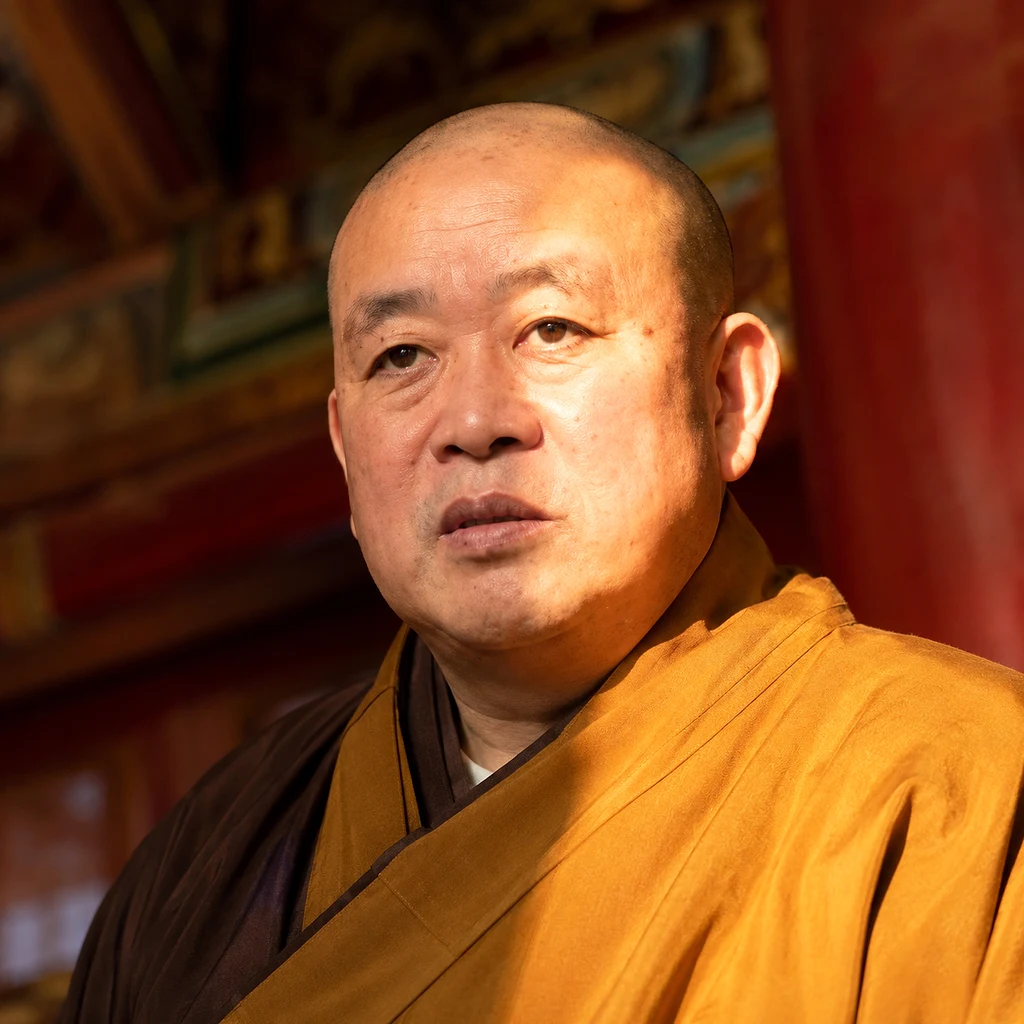
少林寺的大和尚
Shaolin Abbot Shi Yongxin Gets 24 Years
About this story
A simple story about a child who once met the famous abbot of Shaolin Temple, and what happens when the news says the abbot did very bad things. HSK 1 Chinese listening practice.
This is an HSK 1 Chinese listening episode that runs about 6 minutes. The full Mandarin script is shown with tap-for-pinyin and a line-by-line English translation, so you can listen and read at once — comprehensible input in the sense of Stephen Krashen's i+1 theory. It teaches 12 key vocabulary words such as 钱、买、想 and walks through 6 grammar patterns, each explained in English with examples. The same news story is retold at 4 difficulty levels — use the level selector above to find the version that is challenging but still understandable for you.
Read at your level
原文Read the complete story in Chinese. Reveal pinyin and English only when you need them.
English transcript reference
Let me tell you a news story.
Xiao Ming is seven years old.
He's in China.
His home is in Henan.
His dad says: today we're going to Shaolin Temple.
Xiao Ming is very happy.
Shaolin Temple is very famous.
All of China knows it.
The whole world knows it.
They went.
There are a lot of people on the road.
A lot of cars too.
Everyone is going to Shaolin Temple.
They arrived.
The gate is big.
The gate is red.
On it it says: Shaolin Temple.
They went in.
Inside is also very big.
There are mountains, there are trees.
There are many people.
There are many monks.
The monks wear yellow clothes.
There's no hair on their heads.
Xiao Ming looks and finds it strange.
Dad says: they are monks.
They study here.
They live here.
They also practice kung fu.
Xiao Ming says: okay.
They walked to a big building.
Inside the building is a big Buddha.
The Buddha is big.
It's gold.
People bow to the Buddha.
Xiao Ming bows too.
He closes his eyes.
He thinks: I want to be a good person.
They came out.
A monk walked over.
That monk is very famous.
He is the head monk of this place.
Everyone calls him the great abbot.
He smiles at Xiao Ming.
He says: hello.
Xiao Ming also says: hello.
Xiao Ming is very happy.
He thinks: the great abbot is really nice.
They bought something.
It's a tiny little Buddha.
Fifty yuan.
Xiao Ming holds it in his hand.
He really likes it.
They went home.
Many years passed.
Xiao Ming grew up.
He's seventeen now.
He's at home watching TV.
There's news on TV.
The news says: something happened at Shaolin Temple.
Xiao Ming says: what?
He watches the news.
The news says: the great abbot of Shaolin Temple did bad things.
He took a lot of money.
He took a hundred million.
He took another hundred million.
And another hundred million.
All of it was the temple's money.
Not his money.
He used it himself.
Xiao Ming finds it strange.
He thinks: isn't he a good person?
Isn't he the great abbot?
Why is it like this?
The news also says: he did other bad things.
He had relationships with many women.
Monks aren't allowed to do that.
Monks can't have women.
But he did.
He even had children.
Xiao Ming listens and feels sad.
The news says: he went to court.
The court said: you aren't a monk anymore.
The court said: you have to go to prison.
You have to sit there for twenty-four years.
You also have to pay three million five hundred thousand.
Xiao Ming listened and didn't speak.
He thought about it a lot.
He thought for a whole night.
He thought: when I was little, he smiled at me.
I thought he was a good person.
I thought he was a good great abbot.
But he wasn't.
He's a bad person.
He fooled me.
He fooled everyone.
Xiao Ming is very sad.
He opened up his little Buddha.
That tiny little gold Buddha.
He still keeps it.
He says to the little Buddha: you're still here.
But the great abbot isn't here anymore.
He thought for a while.
He said to himself: people change.
What about you?
Have you heard this story?
Have you heard of Shaolin Temple?
Have you been to a place like this?
Are there people like this where you live?
Famous, but not good people?
What did you think at that time?
This news story is called "Something happened to the great abbot of Shaolin Temple."
This great abbot is named Shi Yongxin.
He was the great abbot for many years.
He was the abbot for almost thirty years.
He made Shaolin Temple very rich.
He made the whole world know Shaolin Temple.
He himself also became very rich.
But the money he took wasn't his.
It was the temple's money.
It was everyone's money.
He also did things monks can't do.
Monks can't have women.
He did.
Monks can't have children.
He did.
So he has to go to prison.
For twenty-four years.
He also has to pay three million five hundred thousand.
He's not a monk anymore.
His new name is Liu Yingcheng.
Money is a good thing.
It's also a not-good thing.
It depends on how you use it.
Being famous is a good thing.
It's also a not-good thing.
It depends on what kind of person you are.
Listen again
Try it without the transcript and notice what sounds clearer.
What vocabulary does this episode teach?
词汇HSK 1 noun. Measure word: 块 / 元. Used throughout for 拿了很多钱 (took a lot of money) and 寺里的钱 (the temple's money).
HSK 1 verb. The opposite is 卖 (sell). In the script: 他们买了一个东西 = they bought something.
HSK 1 verb. Both 'think' and 'want to do something'. 他想:他不是好人吗? = he thought: isn't he a good person?
HSK 1 adjective. 小明很高兴 = Xiao Ming is very happy.
HSK 1 verb. 他看电视 = he watches TV. 他看新闻 = he watches the news.
HSK 1 noun. 他在家看电视 = he watches TV at home. Measure word: 台.
Beyond HSK 1. Central topic word of the episode. The script teaches it: 他们是和尚 = they are monks. Monks shave their heads and wear yellow robes.
HSK 2, beyond the HSK 1 target. 看新闻 = to watch the news. The whole episode is framed as a news story.
Beyond HSK 1. 小明听了,很难过 = Xiao Ming listened and felt sad. Built from 难 (hard) + 过 (pass/go through).
Beyond HSK 1. Literally 出 (out) + 事 (matter). In the news, 出事了 = something has gone wrong / a scandal has broken.
HSK 2, beyond the HSK 1 target. 他拿了很多钱 = he took a lot of money. Also: hold something in your hand.
Beyond HSK 1. Literally 坐 (sit) + 牢 (jail). 坐二十四年的牢 = to serve 24 years in prison.
* beyond level超纲词
What grammar patterns appear in this episode?
语法The basic identity sentence in Chinese — 是 links the subject to a noun (or noun phrase).
小明七岁。
他是美国人。
他是这里最大的和尚。
Subject + 不 + Verb / Adjective
Negate verbs and adjectives by placing 不 directly before them.
他不是好人。
他不是和尚了。
和尚不可以这样。
Subject + 也 + Verb
也 means 'also'. It always goes between the subject and the verb, never at the start of the sentence.
全中国都知道。全世界都知道。
小明也拜了。
他自己也很有钱。
Use 很 (very) before adjectives to form a simple descriptive sentence. Even when 'very' is not really meant, 很 is needed as a filler.
门很大。
他很有名。
小明很难过。
了 after a verb marks a completed action — often translated as past tense in English.
他们去了。
他们出来了。
他拿了很多很多钱。
Subject + 还 + Verb
还 means 'also / additionally / still'. Goes before the verb to add an action or to mark something still continuing.
他还做了别的不好的事。
他还有小孩。
他还要给三百五十万。
Proper Nouns
专有名词Free account
Keep learning from this story
Create a free account to keep saved words and your preferred level together.
- Keep words with their story context
- Remember your preferred level
- Build your vocabulary over time