
A Chinese podcast · Same story, 4 levels
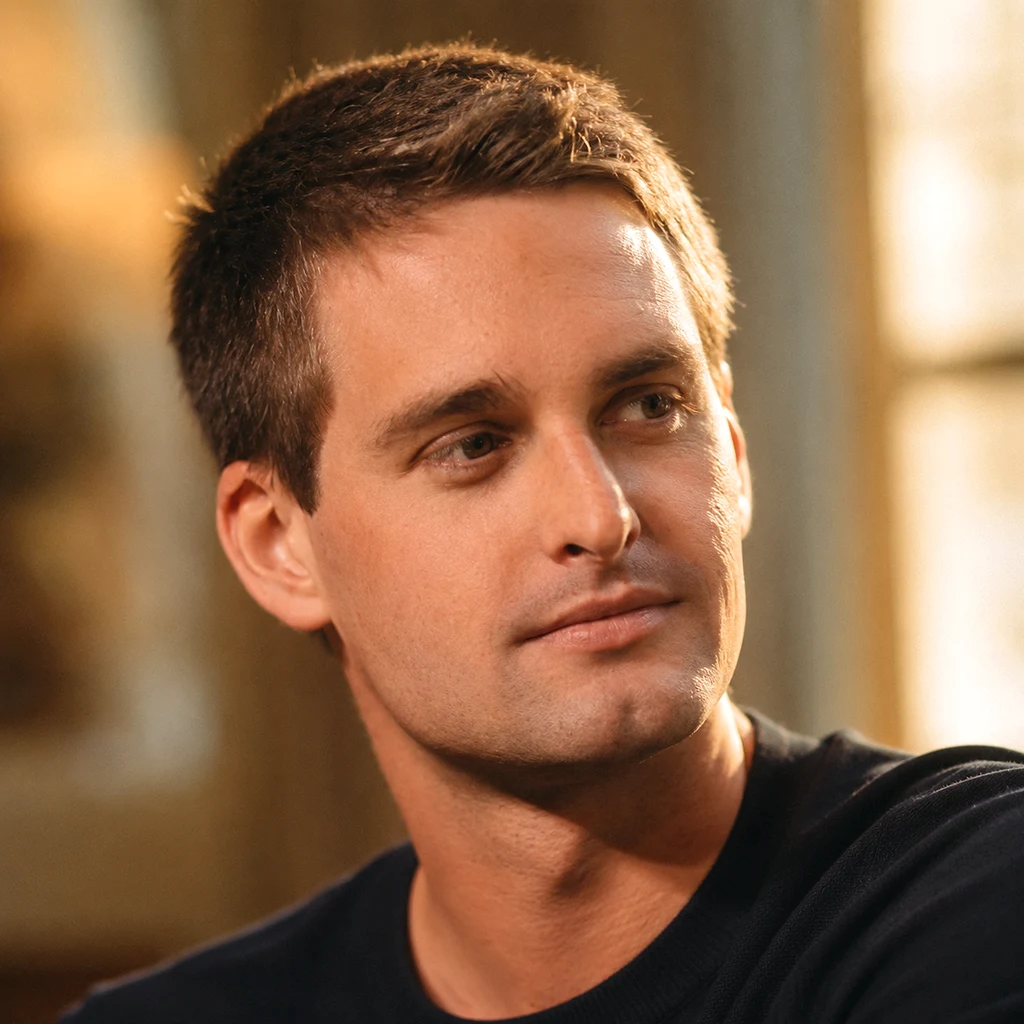
Snapchat 创始人夫妇捐款,为 26 万加州家庭免除 5.5 亿医疗债务
Snapchat Founder Erases $550M in Medical Debt
About this story
Snapchat Founder Erases $550M in Medical Debt. HSK 5-6 Chinese listening practice.
This is an HSK 5-6 Chinese listening episode that runs about 7 minutes. The full Mandarin script is shown with tap-for-pinyin and a line-by-line English translation, so you can listen and read at once — comprehensible input in the sense of Stephen Krashen's i+1 theory. It teaches 15 key vocabulary words such as 新闻、问题、普通 and walks through 3 grammar patterns, each explained in English with examples. The same news story is retold at 4 difficulty levels — use the level selector above to find the version that is challenging but still understandable for you.
Read at your level
原文Read the complete story in Chinese. Reveal pinyin and English only when you need them.
English transcript reference
Today I want to talk with you about a piece of news from America — a rare one that warms the heart.
The story's protagonist is the co-founder and CEO of the social app Snapchat, Evan Spiegel.
The name may be unfamiliar, but you've most likely used or heard of his product.
It's that photo-and-chat app built around disappearing messages, beloved by young people.
Its most famous feature is that photos automatically vanish a while after being viewed.
That small idea captured the hearts of countless young people worldwide.
Thanks to it, Spiegel became a billionaire at a young age, worth about 2.1 billion dollars.
His wife is the renowned Australian supermodel Miranda Kerr.
This time the two made headlines not for making more money, nor for any gossip.
But because they quietly donated a large sum to clear the debts of complete strangers.
To grasp the weight of this, we first need to discuss America's chronic problem: medical debt.
Just how expensive US healthcare is — that's known the world over.
Without insurance, one hospital trip can bring a bill big enough to weaken your knees.
Even with insurance, you still shoulder a sizable share of many costs.
A somewhat serious illness leaving you tens or hundreds of thousands in debt is nothing unusual.
So countless ordinary families, from a single illness, take on debt they may never repay in a lifetime.
The most helpless thing about medical debt is that it's a debt you simply can't dodge.
You can choose not to buy a house, a car, or to travel — but you can't choose not to get sick.
One statistic says it all: roughly one in four American adults carries medical debt.
It has also long been one of the top reasons Americans file for bankruptcy.
Many work diligently their whole lives, only to be utterly crushed by a single hospital bill.
So how exactly did Spiegel and Miranda help?
Smartly, they didn't hand cash to each person — that's costly and inefficient.
They gave the money to a nonprofit that specializes in exactly this.
The way this organization operates might strike you as unbelievable.
Hospitals and collection agencies hold vast amounts of uncollectable bad debt.
Rather than chase it endlessly, they'd rather sell that debt in bulk dirt cheap.
So this organization buys the debt cheaply, then with one sweep wipes it out entirely.
The beauty is the leverage: every ten dollars donated cancels, on average, a thousand dollars of debt.
In other words, a dollar does the work of a hundred — the donation is amplified a hundredfold.
This organization has, in fact, quietly toiled for over a decade.
To date, across all fifty states, the debt it has cancelled has long surpassed 40 billion dollars.
So Spiegel's 500-million-plus isn't a lone gift, but the latest leg of a long relay.
By exactly this method, the Spiegels this time cancelled 550 million dollars of medical debt in all.
The direct beneficiaries are about 260,000 California families.
San Diego received the largest share; in that place alone, over 40,000 people had debt cleared.
Places like Los Angeles saw large numbers benefit as well.
Interestingly, many of those affected are still in the dark, unaware of the windfall.
Starting mid-July, notification letters will arrive in their hands batch by batch.
The letter reads: your medical debt has been paid off for you, wiped clean from now on.
Go ahead and picture the scene.
An utterly ordinary California family casually opens the mailbox one day.
They likely expect yet another dreaded bill.
But they open it to a notice: the tens of thousands you've long carried — gone.
That instant of setting down the burden and exhaling is something no amount of money can buy.
To reassure everyone, Miranda stepped forward with a warm word.
She said: the reason we want to tell you ourselves is that we fear you won't believe it.
After all, with such a windfall, anyone's first reaction is to suspect a scam.
So if you really get such a letter, rest completely assured — it's real.
Of course, such a good deed inevitably draws differing voices online too.
Some are genuinely moved, calling it a tangible act of kindness.
But others don't buy it, seeing it as merely a game within the wealthy class.
Their reasoning: those whose debt gets bought are often middle-class, not necessarily the most desperate.
Some press further: shouldn't such a large sum go directly to the poorest?
In fairness, each of these doubts holds some truth.
What deserves a cooler look is that cancelling debt, ultimately, only wipes away past wounds.
The real root — expensive US healthcare — won't be cured by a single donation.
Clear one batch today, and tomorrow another batch likely takes on new debt.
Solving it at the root has never depended on a few kind tycoons, but on reforming the whole healthcare system.
That said, before the system slowly improves, someone willing to lend a hand first is already precious.
Moreover, Spiegel and Miranda are not an isolated case.
The low-key wealthy woman MacKenzie has, before this, repeatedly given huge sums for the same cause.
You could say clearing ordinary people's medical debt is quietly becoming a new trend among America's rich.
Whichever side you take, one thing is undeniable.
For those 260,000 families, the heavy stone long pressing on their chest has finally been lifted.
For them it isn't an abstract number, but real days when they can finally breathe.
This summer, they can probably sleep soundly for a few nights.
How a person spends their money reveals a lot about who they are.
The answer Spiegel and Miranda gave this time is, all things considered, a fine one.
Okay, that's where today's story ends; see you next time.
Listen again
Try it without the transcript and notice what sounds clearer.
What vocabulary does this episode teach?
词汇News. 一条来自美国的新闻 = a piece of news from America.
A problem. 那个老大难的问题 = that chronic, thorny problem.
Ordinary. 无数普通家庭 = countless ordinary families.
The world. 几乎是全世界都知道的事 = something almost the whole world knows.
Serious. 稍微严重点的病 = a somewhat serious illness.
A figure. 让人腿软的数字 = a figure that weakens the knees.
A product. 你八成用过他的产品 = you have most likely used his product.
A system. 整个医疗制度的改变 = reform of the whole healthcare system.
Debt. 医疗债务 = medical debt.
To cancel a debt. 一笔勾销,彻底免除 = wiped out and fully cancelled.
A donation. 并不会因为一笔捐款就痊愈 = won’t be cured by a single donation.
Bankruptcy. 申请破产最主要的原因之一 = a top reason for filing bankruptcy.
A bill. 被一张医院账单彻底击垮 = utterly crushed by one hospital bill.
Leverage. 最妙的是这里面的杠杆 = the beauty is the leverage.
Insurance. 一旦没有保险 = the moment you have no insurance.
* beyond level超纲词
What grammar patterns appear in this episode?
语法与其...不如... / 更愿意...
"Rather than... (would prefer)..." — chooses the better of two options.
与其无止境地催下去,它们更愿意用极低的价格把这些债卖掉。
并不会因为...就...
"Will not... just because..." — denies a too-easy causal claim.
这个真正的病根,并不会因为一笔捐款就痊愈。
说到底 / 归根到底
"Ultimately / when all is said and done" — gets to the essence.
免除债务,说到底只是替人擦掉了过去的伤口。
Proper nouns
专有名词Free account
Keep learning from this story
Create a free account to keep saved words and your preferred level together.
- Keep words with their story context
- Remember your preferred level
- Build your vocabulary over time