
A Chinese podcast · Same story, 4 levels
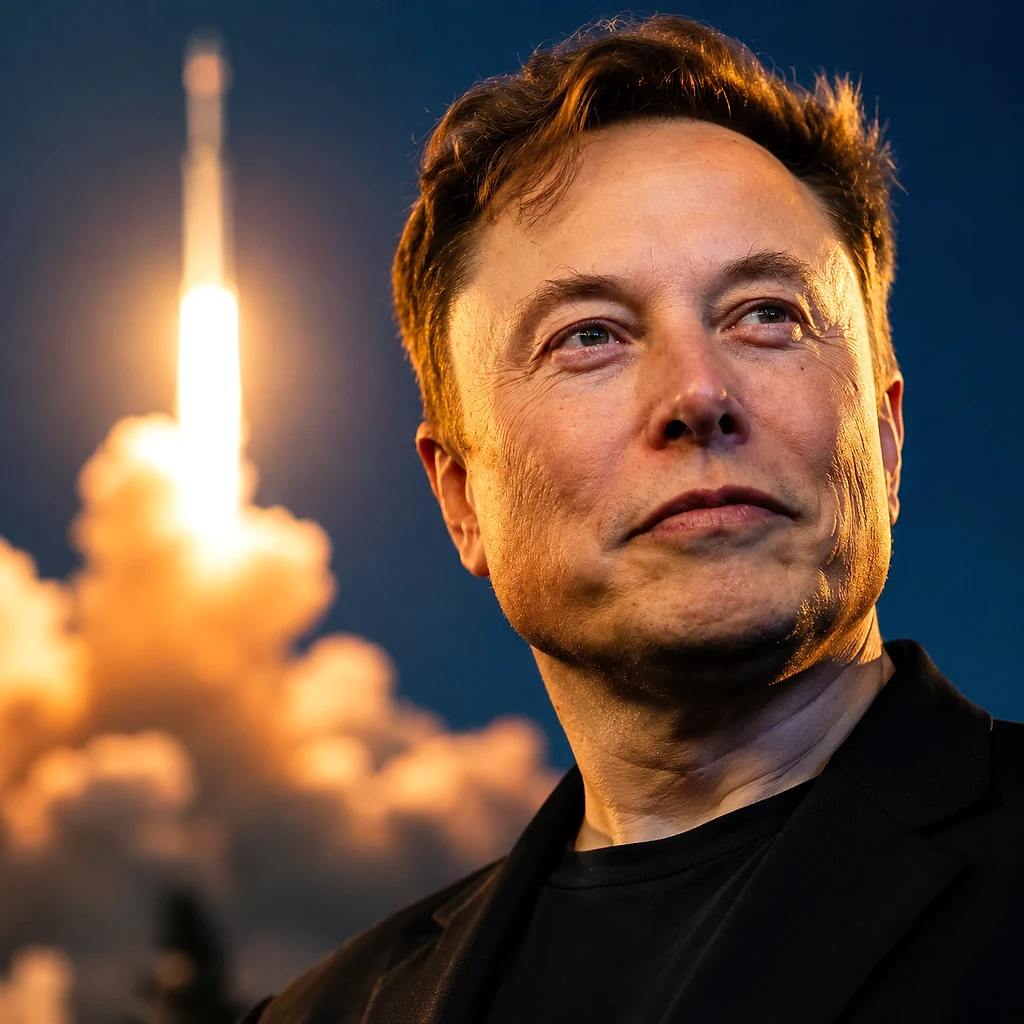
马斯克的 SpaceX 上市,他成了世界首富
SpaceX Goes Public at $750 Billion Valuation
About this story
SpaceX's record IPO explained simply: what 'going public' means, why a rocket-and-satellite company drew frantic buyers, the first-day surge, and how Musk became the richest person on Earth. HSK 2 Chinese listening practice.
This is an HSK 2 Chinese listening episode that runs about 4 minutes. The full Mandarin script is shown with tap-for-pinyin and a line-by-line English translation, so you can listen and read at once — comprehensible input in the sense of Stephen Krashen's i+1 theory. It teaches 14 key vocabulary words such as 上网、特别、为什么 and walks through 7 grammar patterns, each explained in English with examples. The same news story is retold at 4 difficulty levels — use the level selector above to find the version that is challenging but still understandable for you.
Read at your level
原文Read the complete story in Chinese. Reveal pinyin and English only when you need them.
English transcript reference
Today we'll talk about a recent big event.
This event is connected to an American company.
First, let's talk about this company.
This company is in America, and it's very famous.
It makes a very special thing.
This thing can fly up into the sky.
It flies extremely, extremely high.
Much higher than an airplane.
It can fly beyond the sky.
This thing is called a 'rocket'.
A rocket is very big, and very expensive.
Making one rocket costs a lot of money.
So what is a rocket used for?
A rocket can carry people up into the sky.
It can also carry things up into the sky.
For example, carrying some machines up.
These machines are placed very, very high in the sky.
What are they for?
They can let you get online.
Even if you're in a faraway place,
with no one beside you,
you can still get online.
This company does exactly these things.
It makes rockets.
It also makes the machines in the sky.
In America, almost everyone knows this company.
In China, a lot of people know it too.
So today, what happened?
Today, this company did a big thing.
It went public ('listed').
What does 'going public' mean?
We'll go slowly.
Before, this company belonged to a few people.
Others couldn't buy a piece of it even if they wanted to.
But today, it's different.
Starting today, this company divided itself into many small pieces.
Each small piece is called a 'share'.
Whoever wants to buy, can buy.
If you buy one share, you own a small piece of the company.
If this company earns money later,
you can get a little share of it too.
This is what 'going public' means.
Today, the number of people wanting to buy this company was enormous.
Why did so many people want to buy?
Because everyone thinks:
this company will get better and better.
There will be more and more rockets.
More and more machines in the sky too.
So buying a little now might be worth more later.
And so, buyers crowded in, fighting to get in.
This company, in one day, sold an enormous amount.
Exactly how much did it sell?
Let's put it this way.
This is the biggest 'going public' in the world so far.
No company before,
when going public, had ever sold this much money's worth.
What's more, this company's stock,
on the very first day, rose about twenty percent.
In other words,
people who bought in the morning had more money by the evening.
Speaking of which, there's one person we can't leave out.
He is this company's boss.
Many people have heard his name.
He's called Musk.
After the company went public,
Musk's own money suddenly became enormous.
How enormous?
He became the person with the most money in the entire world.
And he's the first one in history
to have money on this scale.
No one before had ever reached this number.
Finally, let's think together.
A rocket-making company,
today divided itself into small pieces and sold them to the whole world.
Countless people scrambled to buy.
What does this show?
It shows that many people believe:
in the future, people going to the sky will happen more and more.
The sky will become a huge business.
What they're betting on is the future.
Will this future come?
None of us knows.
But today, many people have already placed their bets.
Finally, I want to ask you.
If one day, ordinary people could also ride a rocket up to take a look,
would you want to go?
What would you most want to see in the sky?
Listen again
Try it without the transcript and notice what sounds clearer.
What vocabulary does this episode teach?
词汇它们可以让你上网 = they let you get online. The Starlink function.
HSK 3. 想买的人特别特别多 = an especially large number of people wanted to buy.
HSK 1-2. why.
HSK 1-2. company.
HSK 1-2. side / beside.
HSK 1-2. history.
HSK 1-2. morning.
Glossed inline: 可以飞上天,比飞机还要高 = can fly up into the sky, higher than an airplane.
Glossed inline: 把自己分成很多小块,谁想买都可以买 = divide itself into small pieces anyone can buy. The core concept.
Glossed inline: 每一小块,叫一'股' = each small piece is called a 'share'.
HSK 4. 带一些机器上去 = carry some machines up — the episode's plain word for satellites.
以后可能会更值钱 = might be worth more later. 值 (worth) + 钱 (money).
HSK 4. 公司以后赚了钱 = if the company earns money later.
买的人挤破了头 = buyers crowded in frantically. Vivid spoken expression.
* beyond level超纲词
What grammar patterns appear in this episode?
语法什么是 X 呢? + full answer
Rhetorical definition question, fully answered. Glosses 火箭, 上市.
什么是上市呢?
那火箭是用来做什么的呢?
就算 ... 也 ... (even if)
Concessive: 'even if X, still Y'.
就算你在很远的地方,旁边一个人都没有,你也可以上网。
A 比 B + 还要 + Adj
Comparison with intensifier: 'even more Adj than B'.
比飞机还要高很多。
Verb + 着 + Object (carrying / holding)
着 marks an accompanying manner.
火箭可以带着人,飞上天。
也可以带着东西,飞上天。
越来越 + Adjective
'more and more X'. Marks escalation.
这个公司,以后会越来越好。
火箭会越来越多。
也就是说 + Clause (in other words)
Discourse marker that rephrases / clarifies.
也就是说,早上买的人,到了晚上,钱就变多了。
会不会 + Verb? (will it or won't it?)
Yes-no question about the future, often rhetorical.
这个未来,会不会来呢?
Proper nouns
专有名词Free account
Keep learning from this story
Create a free account to keep saved words and your preferred level together.
- Keep words with their story context
- Remember your preferred level
- Build your vocabulary over time