
A Chinese podcast · Same story, 4 levels
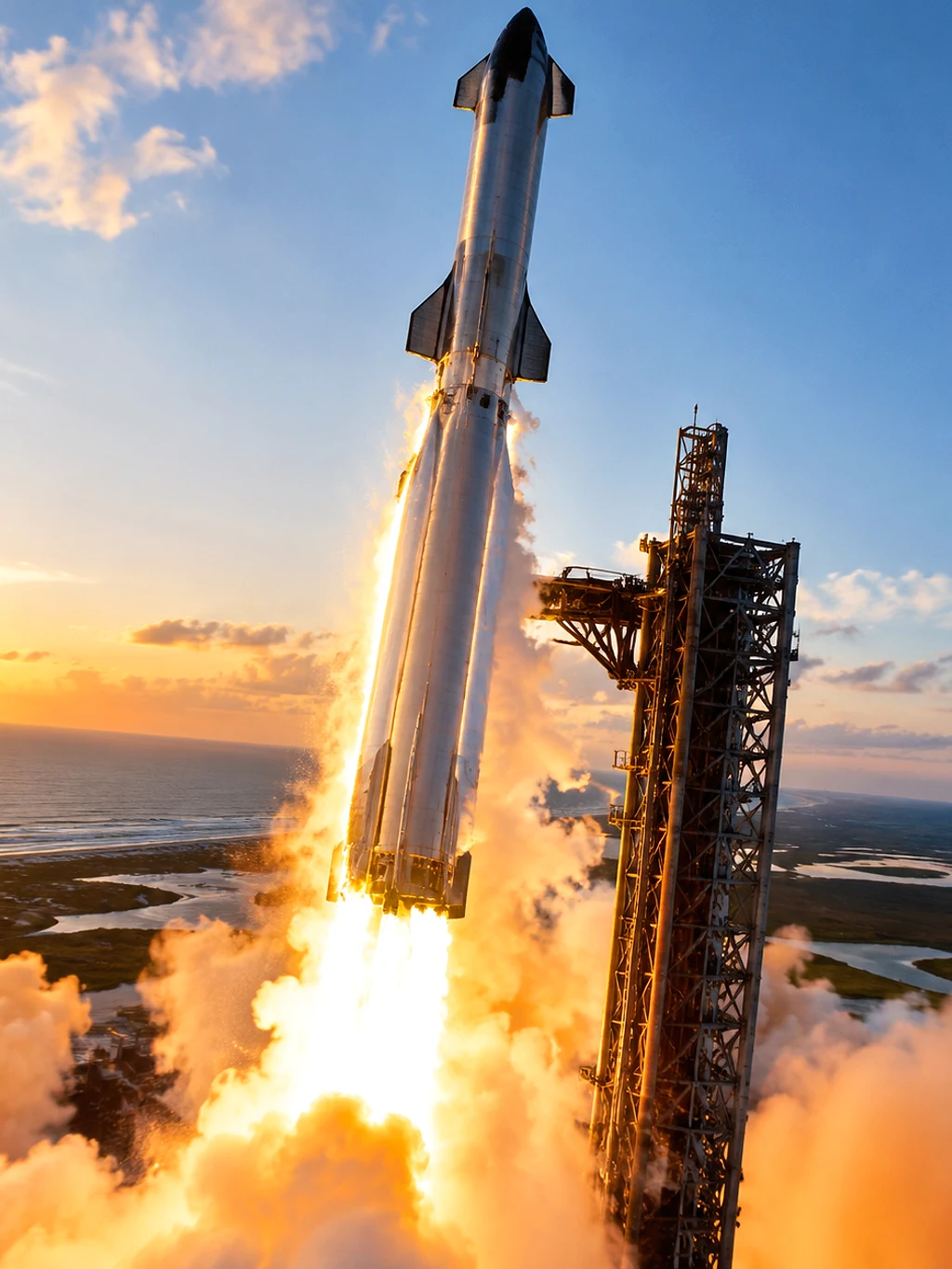
星舰第一次进入轨道:放出二十六颗星链卫星,飞了三小时就提前返回
Starship Reaches Orbit for the First Time, Deploys 26 Starlink Satellites — Then Comes Home Early
About this story
On its 14th test flight on Sept. 28, 2026, SpaceX's Starship finally reached orbit despite losing an engine on the way up, and released 26 working Starlink satellites. SpaceX then cut the planned ten-hour mission to about three, splashing down north of Hawaii without saying why. What orbit means for reuse, NASA's moon plans and SpaceX's new shareholders. Chinese listening practice at four levels. HSK 2 Chinese listening practice.
This is an HSK 2 Chinese listening episode that runs about 2 minutes. The full Mandarin script is shown with tap-for-pinyin and a line-by-line English translation, so you can listen and read at once — comprehensible input in the sense of Stephen Krashen's i+1 theory. It teaches 12 key vocabulary words such as 小时、公司、担心 and walks through 3 grammar patterns, each explained in English with examples. The same news story is retold at 4 difficulty levels — use the level selector above to find the version that is challenging but still understandable for you.
Read at your level
原文Read the complete story in Chinese. Reveal pinyin and English only when you need them.
English transcript reference
Do you like planes?
Today we're not talking about planes; we're talking about a very, very big rocket.
This rocket is called Starship, and it was made by the American company SpaceX.
Starship is more than 120 metres tall, the biggest rocket in the world.
On the morning of September 28, Starship flew into the sky from Texas, in America.
This was Starship's fourteenth flight.
Before, Starship went up and came down very quickly; it couldn't keep flying around the Earth.
This time was different: Starship flew around the Earth for the first time.
When Starship was going up, there was a problem.
Starship has six engines, and one of them suddenly stopped working.
People at the company were worried, and at first they said: we won't fly around the Earth.
But then the other engines worked a little longer, and Starship could keep going.
Starship flew up to more than 270 kilometres high and started flying around the Earth.
Starship made it, and this was the first time Starship flew around the Earth.
The big rocket underneath flew for seven minutes, then came back and landed in the sea.
There were twenty-six satellites inside Starship.
Starship put all of these satellites into space.
Originally, Starship was going to fly for almost ten hours and go around the Earth six times.
But the company suddenly decided to bring Starship back early.
The company didn't say why.
Starship flew for three hours, came back, and landed in the Pacific Ocean.
The company's boss, Musk, said: Starship's first flight around the Earth was a success!
Starship didn't fly for ten hours, but it flew around the Earth for the first time, so the company was still very happy.
The company thinks Starship will be able to fly many times in the future, just like a plane.
NASA also wants to use Starship to take people to the moon.
If you could ride Starship, would you go to the moon, or to Mars?
Listen again
Try it without the transcript and notice what sounds clearer.
What vocabulary does this episode teach?
词汇HSK 2. 差不多十个小时.
HSK 2. 公司突然决定.
HSK 2. 公司的人很担心.
HSK 2. 出了一个问题.
HSK 2. 就像飞机一样 / 这一次不一样.
HSK 2. 世界上最大的火箭.
一个很大很大的火箭.
HSK 3. 绕着地球飞.
一个发动机突然不工作了.
二十六个卫星.
公司突然决定.
HSK 3. 让星舰早一点回来.
* beyond level超纲词
What grammar patterns appear in this episode?
语法本来……
Originally (but things changed).
本来,星舰要在天上飞差不多十个小时,绕地球六圈。
就像……一样
Just like…
公司想,以后星舰可以飞很多次,就像飞机一样。
A,还是 B?
A or B? — a choice question.
如果你能坐星舰,你想去月亮,还是火星?
Proper Nouns
专有名词Free account
Keep learning from this story
Create a free account to keep saved words and your preferred level together.
- Keep words with their story context
- Remember your preferred level
- Build your vocabulary over time