
A Chinese podcast · Same story, 4 levels
蒂芙尼把"艾芙尼"告上法院:一场关于名字的商标之争
Tiffany Sues Chinese Pad Brand Alffany
About this story
Tiffany Sues Chinese Pad Brand Alffany. HSK 3 Chinese listening practice.
This is an HSK 3-4 Chinese listening episode that runs about 3 minutes. The full Mandarin script is shown with tap-for-pinyin and a line-by-line English translation, so you can listen and read at once — comprehensible input in the sense of Stephen Krashen's i+1 theory. It teaches 9 key vocabulary words such as 认为、决定、客人 and walks through 2 grammar patterns, each explained in English with examples. The same news story is retold at 4 difficulty levels — use the level selector above to find the version that is challenging but still understandable for you.
Read at your level
原文Read the complete story in Chinese. Reveal pinyin and English only when you need them.
English transcript reference
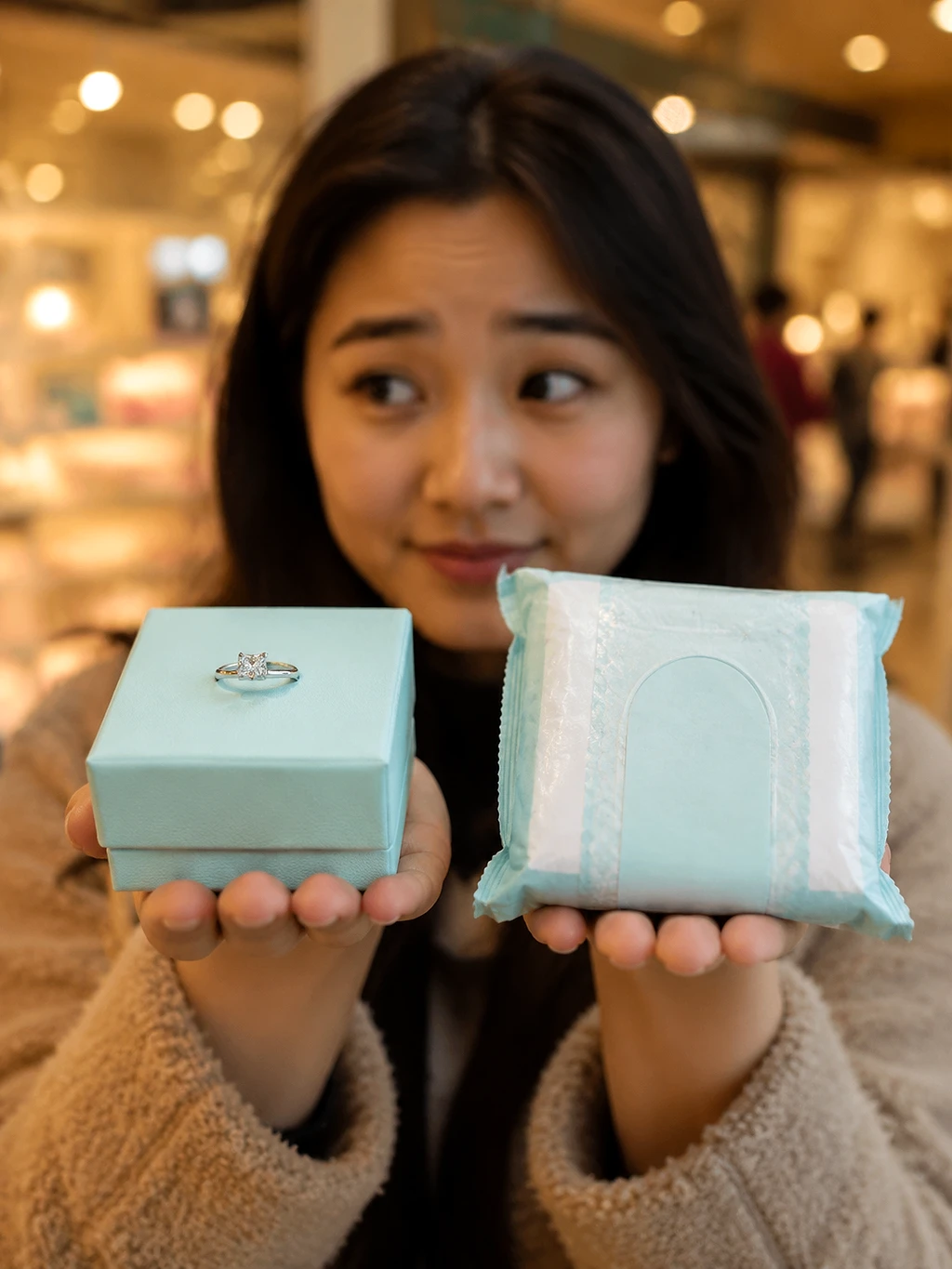
Today let's chat about something pretty interesting: a big brand took a small brand to court.
The story involves two companies.
The first is Tiffany, an American company and a very famous jewelry brand.
It sells diamonds and rings, and everything is really expensive.
Many people getting married want to buy a Tiffany ring.
Around the world, Tiffany means "wealthy and high-end."
The second company is in China, and it's called Alffany.
Have a listen: Tiffany, Alffany.
Said out loud, aren't these two names extremely alike?
But what Alffany sells has nothing to do with jewelry.
What it sells is sanitary pads.
One sells diamonds, one sells sanitary pads — these two companies couldn't be further apart.
Yet simply because the names are so alike, Tiffany is very unhappy.
In business, a company's name is really its "trademark."
A trademark is important, and other companies can't just use it freely.
Tiffany feels: your name is too much like mine, and it'll confuse people.
So Tiffany is trying to find a way to stop Alffany from using this name.
The two sides have been fighting over this for several years now.
Years ago, one of Alffany's trademarks was deemed too similar to Tiffany's and couldn't be used.
But later, another new Alffany trademark was approved.
Tiffany, unwilling to accept that, of course took it to court again.
Now the case has reached a high court in Beijing.
The court has to decide whether this trademark can stay.
Alffany's side says: we never once meant to imitate Tiffany.
They say: we sell sanitary pads — customers simply won't buy one thinking it's the other.
The matter has also stirred up a lively debate online.
Some side with Tiffany: names this similar really aren't okay.
Others side with Alffany: the two sell completely different things — why would a big brand pick on a small company?
In fact, cases like this have grown more and more common in recent years.
Many famous foreign brands are protecting their names in China.
How much can a name be worth?
This case has gotten many people thinking about that question.
Who's right and who's wrong — we'll still have to wait for the court's final decision.
OK, that's it for today — see you next time.
Listen again
Try it without the transcript and notice what sounds clearer.
What vocabulary does this episode teach?
词汇被认为和蒂芙尼太像 — was deemed too similar to Tiffany.
法院要决定:这个商标能不能留下 — the court must decide whether the trademark can stay.
客人根本不会买错 — customers simply won’t buy the wrong one.
蒂芙尼就想办法 — Tiffany is trying to find a way.
商标很重要 — a trademark is important.
Beyond HSK 1-3. 公司的名字,其实就是它的"商标" — a company’s name is really its trademark.
Beyond HSK 1-3. 蒂芙尼是一个很有名的珠宝牌子 — Tiffany is a famous jewelry brand.
Beyond HSK 1-3. 这个案子,到了北京的一个高级法院 — the case reached a high court in Beijing.
Beyond HSK 1-3. 为什么要为难一个小公司?— why pick on a small company?
* beyond level超纲词
What grammar patterns appear in this episode?
语法就因为...
"simply / just because..." — stresses a single cause.
可是,就因为名字太像,蒂芙尼很不高兴。
被 + 认为/判 + ...
Passive voice — the subject "is deemed / is judged to be..." by others.
艾芙尼的一个商标,就被认为和蒂芙尼太像。
Proper nouns
专有名词Free account
Keep learning from this story
Create a free account to keep saved words and your preferred level together.
- Keep words with their story context
- Remember your preferred level
- Build your vocabulary over time