
A Chinese podcast · Same story, 4 levels
“Trump 2028”之谜:宪法只准两届,为何 Trump 反复拿第三届开玩笑
Trump Keeps Raising a Third-Term Bid for 2028
About this story
Trump Keeps Raising a Third-Term Bid for 2028. HSK 5-6 Chinese listening practice.
This is an HSK 5-6 Chinese listening episode that runs about 2 minutes. The full Mandarin script is shown with tap-for-pinyin and a line-by-line English translation, so you can listen and read at once — comprehensible input in the sense of Stephen Krashen's i+1 theory. It teaches 8 key vocabulary words such as 政治、害怕、资格 and walks through 3 grammar patterns, each explained in English with examples. The same news story is retold at 4 difficulty levels — use the level selector above to find the version that is challenging but still understandable for you.
Read at your level
原文Read the complete story in Chinese. Reveal pinyin and English only when you need them.
English transcript reference
In American politics, there's a rule that sounds a bit "counterintuitive": no matter how capable or popular you are, a president can serve at most two terms.
This rule is written into the 22nd Amendment of the Constitution, set back in 1951.
Why set it that way?
Because before that, Roosevelt was re-elected four times, one man in the White House for over a decade.
At the time, many grew afraid: if power stays concentrated in one person's hands for a long time, "dictatorship" might not be far off.
So the "two-term cap" became an iron law of American politics.
And Trump is exactly the type who most dislikes being boxed in by rules.
He's been president twice — the first a few years ago, the second his current term.
By the Constitution, in 2028 he no longer has the eligibility to run.
But he just loves to keep "fishing" with this over and over.
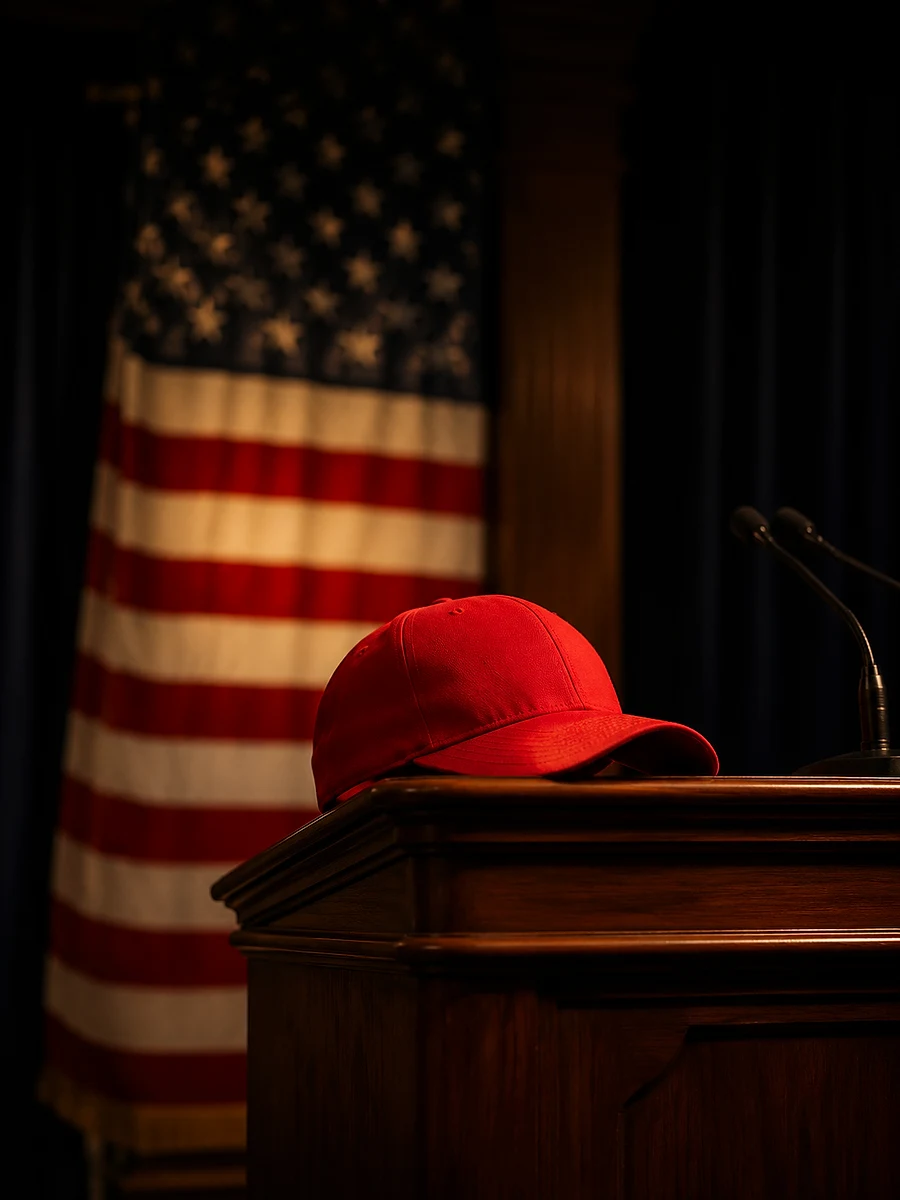
He printed a batch of red "Trump 2028" hats, and pulls them out from time to time.
At the White House Correspondents' Dinner a few days ago, in front of the whole press corps, he pulled out the hat, put it on, first said "the third time will be even better," then immediately added "I'm joking";
then, changing tack, he "announced" he'd run for a fourth term.
The audience genuinely couldn't tell: is this a serious signal, or pure trolling for attention?
And that's the subtlest part.
Legally, his winning a third term is almost impossible: to get around the 22nd Amendment, you'd have to amend the Constitution again, and amending it requires a supermajority of Congress and the states — in today's climate, basically a fantasy.
Even the number-one figure in his own party publicly stated he sees no path for a 2028 run.
So why does Trump keep tirelessly bringing up "2028"?
One very real reason: the moment everyone decides he's "leaving after this term," his influence rapidly shrinks.
But as long as the "2028" suspense hangs there, he stays the center of the spotlight, and his words carry more weight.
So, between the real and the fake, "Trump 2028" is less a campaign plan than a political tactic to keep himself from being "counted out early."
Listen again
Try it without the transcript and notice what sounds clearer.
What vocabulary does this episode teach?
词汇美国政治 = American politics.
很多人开始害怕 = many grew afraid.
没有参选资格 = no eligibility to run.
公开表示 = publicly stated.
一个很现实的原因 = one very real reason.
第二十二修正案 = the 22nd Amendment.
离独裁可能就不远了 = dictatorship might not be far off.
竞选第四届 = run for a fourth term.
* beyond level超纲词
What grammar patterns appear in this episode?
语法再……,也……
'no matter how …, still …' — concedes an extreme, outcome unchanged.
一个人再能干、再受欢迎,总统也最多只能当两届。
恰恰……
'precisely / exactly …' — emphasizes an apt fit.
Trump,恰恰是那种最不喜欢被规矩框住的人。
与其说……,不如说……
'rather than calling it A, it's better to call it B' — reframes.
与其说是一个竞选计划,不如说是一种政治手腕。
Proper nouns
专有名词Free account
Keep learning from this story
Create a free account to keep saved words and your preferred level together.
- Keep words with their story context
- Remember your preferred level
- Build your vocabulary over time