
A Chinese podcast · Same story, 4 levels
联合国投票换掉世界地图:因为这张地图,把非洲画小了四百五十年
UN Backs World Map That Shows Africa's True Size
About this story
The UN General Assembly voted 164-1 to adopt the Equal Earth projection, after 450 years in which the Mercator map made Africa look a fraction of its real size — Greenland appears nearly as large, though Africa is about 14 times bigger. Chinese listening practice at four levels. HSK 2 Chinese listening practice.
This is an HSK 2 Chinese listening episode that runs about 3 minutes. The full Mandarin script is shown with tap-for-pinyin and a line-by-line English translation, so you can listen and read at once — comprehensible input in the sense of Stephen Krashen's i+1 theory. It teaches 12 key vocabulary words such as 船、真、问题 and walks through 3 grammar patterns, each explained in English with examples. The same news story is retold at 4 difficulty levels — use the level selector above to find the version that is challenging but still understandable for you.
Read at your level
原文Read the complete story in Chinese. Reveal pinyin and English only when you need them.
English transcript reference
On September the fourth, the United Nations held a meeting.
A hundred and sixty-four countries said yes.
One country said no.
Yes to what?
To changing the map of the world.
Let's start with why they wanted to change it.
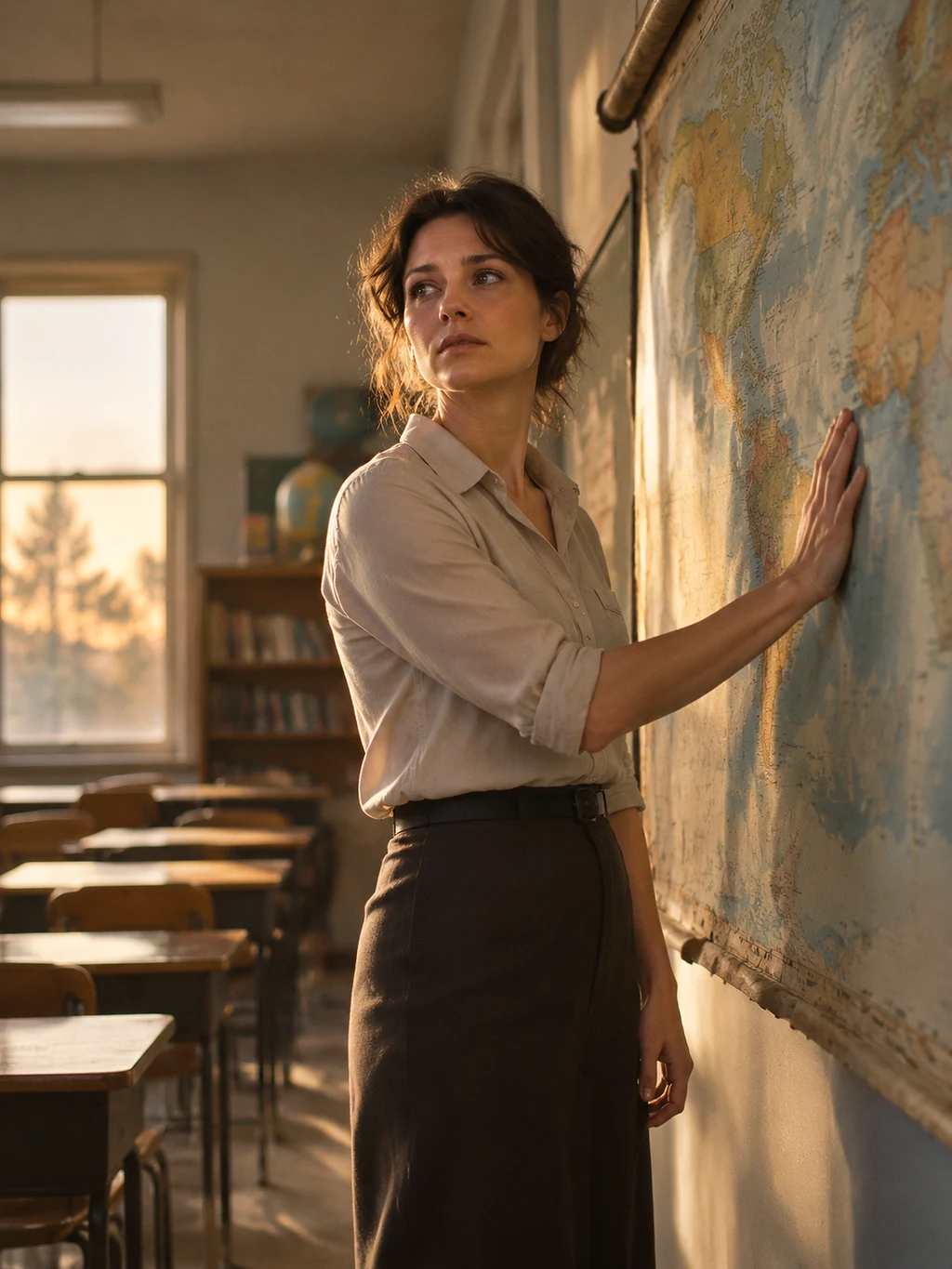
Think of that world map on the wall at school.
You looked at it for years.
On that map, Africa does not look very big.
Now look at Greenland, up in the north.
Greenland is covered in ice, and very few people live there.
On the map, Greenland and Africa look about the same size.
But the real world is not like that.
Africa is fourteen times bigger than Greenland.
How much is fourteen times?
You could put China, America, India and most of Europe inside Africa.
And when you had finished, there would still be room.
But on that map, you cannot tell at all.
Why does this happen?
Because the earth is round and a map is flat.
If you turn something round into something flat, there will always be a problem.
More than four hundred years ago, a man made a map.
His name was Mercator.
His map was made for ships.
At sea, a ship needs to keep going in one steady direction.
With his map, that is easy to do.
So for four hundred years, ships have used it.
But his map has a problem.
The closer you get to the top and the bottom, the bigger things are drawn.
Greenland is far north, so it gets drawn very large.
Africa is in the middle, so it ends up looking small.
At sea, that is not a problem.
In a school, it is.
For four hundred and fifty years, people all over the world looked at this map.
Children looked at it in school.
Adults looked at it in books, and on computers.
After looking that long, a lot of people came to feel something:
that Africa is not big.
But Africa is very big.
This time, it was African countries who spoke first.
A country called Togo led the way.
They said: we do not want to use this map any more.
They said: please, schools and governments and big companies, use the new map.
The new map is called Equal Earth.
Three mapmakers made it in 2018.
On the new map, the size of every country is the true size.
There is one thing to be clear about.
This decision is not a law.
Nobody is forced to change.
And ships and planes can still use the old map.
At sea, the old map is still the best one.
The new map is for schools, and the old map is for ships.
The two maps do two different jobs.
Think about it: when you were small, that map on the school wall — you looked at it for years.
Did it ever occur to you that it might not be quite right?
Listen again
Try it without the transcript and notice what sounds clearer.
What vocabulary does this episode teach?
词汇HSK 2. Who Mercator built it for, and who should still use it.
HSK 2. 可是真的世界,不是这样的 — the turn of the episode.
HSK 2. 在海上,这不是问题。在学校里,这就是问题了。
HSK 2. Why sailors kept it for four centuries: 用他的地图,这件事很容易。
HSK 2. Among those the resolution asks to switch: 请学校、政府和大公司。
HSK 1. Part of the fair-hearing: 船和飞机还可以用老地图。
HSK 3. The object of the whole story.
HSK 3. 世界地图 — the specific thing being replaced.
The comparison that makes the distortion visible: on the map it looks Africa-sized.
Who voted, and on what date: 九月四号,联合国开了一个会。
HSK 3. The honest caveat: 这一次的决定,不是法律。
HSK 4. Carries the central fact: 非洲比格陵兰大十四倍。
* beyond level超纲词
What grammar patterns appear in this episode?
语法A 比 B 大……倍
A is N times bigger than B. 比 introduces the thing compared against, and 倍 comes after the adjective.
非洲比格陵兰大十四倍。
越……,就越……
The more of one thing, the more of another. Used here to explain exactly how the distortion works.
越靠近上面和下面,东西就画得越大。
在……,这不是问题。在……,这就是问题了。
The same fact judged in two settings. This is the fairest sentence in the episode — it refuses to call the old map simply wrong.
在海上,这不是问题。
在学校里,这就是问题了。
Proper nouns
专有名词Sources
来源Free account
Keep learning from this story
Create a free account to keep saved words and your preferred level together.
- Keep words with their story context
- Remember your preferred level
- Build your vocabulary over time