
A Chinese podcast · Same story, 4 levels
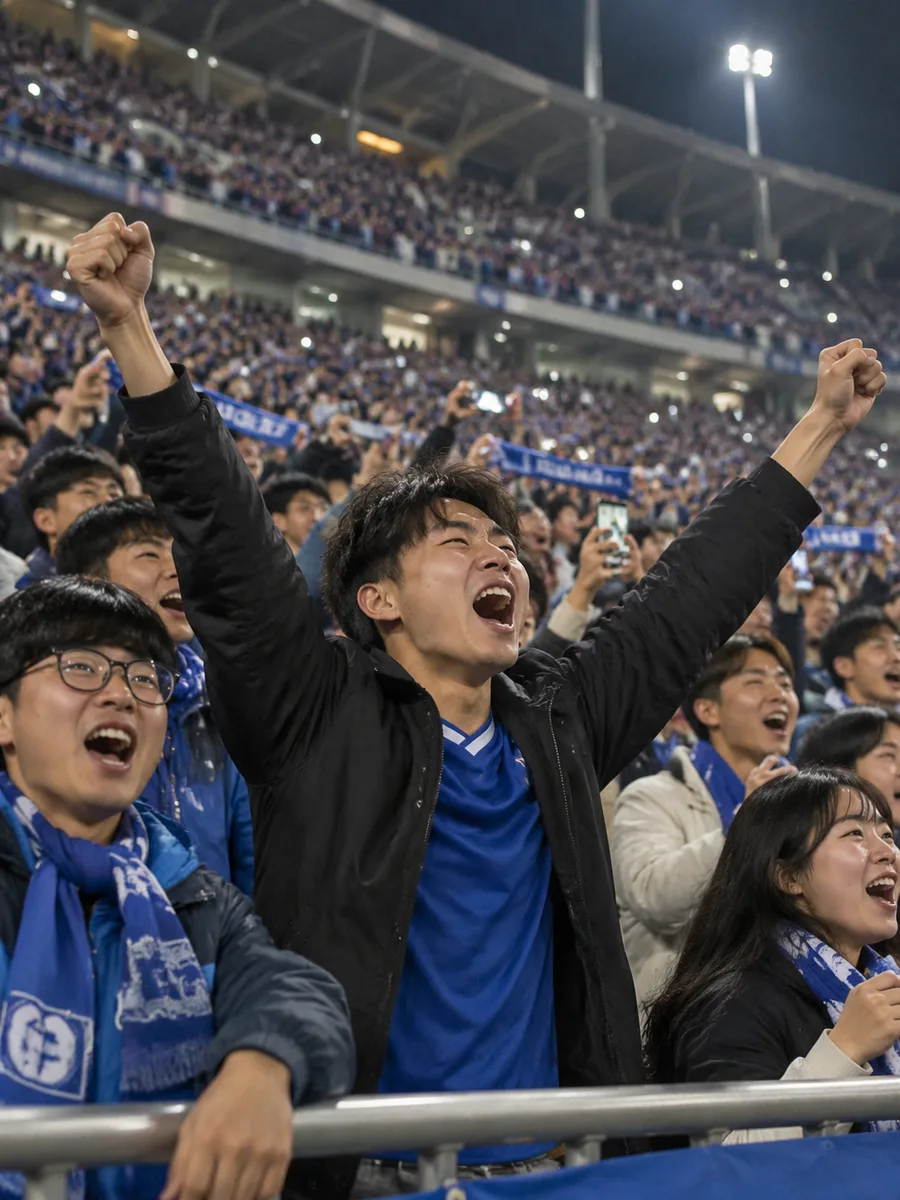
无锡队2:1击败常州队,首夺“苏超”冠军
Wuxi Beat Changzhou 2-1 to Win First Jiangsu City Football League Title Before Record 62,356 Crowd
About this story
Wuxi beat Changzhou 2-1 to win the 2026 Jiangsu City Football League final in Nanjing, with a record 62,356 fans and a 2.7% ticket lottery success rate. HSK 3 Chinese listening practice.
This is an HSK 3 Chinese listening episode that runs about 3 minutes. The full Mandarin script is shown with tap-for-pinyin and a line-by-line English translation, so you can listen and read at once — comprehensible input in the sense of Stephen Krashen's i+1 theory. It teaches 12 key vocabulary words such as 比赛、结束、赢 and walks through 6 grammar patterns, each explained in English with examples. The same news story is retold at 4 difficulty levels — use the level selector above to find the version that is challenging but still understandable for you.
Read at your level
原文Read the complete story in Chinese. Reveal pinyin and English only when you need them.
English transcript reference
62,356 people sat in the stadium in Nanjing.
They came to watch a football final.
This is an amateur match.
The players normally have to work, and only come to play on weekends.
This competition is called 'Su Chao', and 13 cities in the same province take part.
That evening, Wuxi team played Changzhou team.
When the match ended, Wuxi team won 2-1.
Wuxi team won this championship for the first time.
A total of 62,356 people came to the stands.
This competition has never had so many people come before.
China's amateur football matches have also never had so many people come.
Last year's final had 62,329 people in the stands.
This year there were only 27 more people than last year.
The extra 27 people made this year's number a new record.
Tickets for the final were very hard to buy.
People who wanted to buy tickets first signed up, then waited for the lottery.
Among those who signed up, only 2.7 percent got tickets.
Averaged over the whole competition, 9.6 percent of people got tickets.
This year's competition started on April 11th.
By the last match, a total of 204 days had passed.
All matches were scheduled on Saturdays.
In the regular season, each team had six home games and six away games.
In the regular season, Wuxi team ranked first, and Changzhou team ranked third.
In the semifinals, Wuxi team eliminated last year's champion.
Wuxi and Changzhou are both by the shore of Taihu Lake.
So everyone called this final the 'Taihu Derby'.
In the 28th minute, Wuxi team's No. 79 scored the first goal.
In the 51st minute, Wuxi team's No. 9 headed in the second goal.
This was No. 9's twelfth goal this year.
He scored the most goals this year and won the Best Scorer award.
In the 84th minute, Changzhou team's No. 36 also scored a goal.
The score became 2-1, and the opponent still wanted to score another.
Right up to the end, the score was still 2-1.
This year's players are very young, on average over 22 years old.
There are 430 players under 22 years old.
These young players made up more than half of all players.
Throughout the competition, more than 3.03 million people came to watch.
On average, each match had about 33,400 people in the stands.
Last year the average per match was 28,600 people.
After the match ended, Wuxi team's players received the trophy.
Listen again
Try it without the transcript and notice what sounds clearer.
What vocabulary does this episode teach?
词汇HSK 2. Common word for a sports match or contest. Used throughout the script: 足球比赛 (football match), 业余比赛 (amateur match).
HSK 2. Used for events or periods coming to an end. In the script: 比赛结束 (the match ended).
HSK 2. Verb meaning to win or beat. In the script: 无锡队二比一赢了 (Wuxi team won 2-1).
HSK 2. Time word for the previous year. Used in comparisons: 今年只比去年多了二十七个人 (this year there were only 27 more people than last year).
HSK 2. Verb for organizing or planning events. In the script: 所有比赛都安排在星期六 (all matches were scheduled on Saturdays).
HSK 2. Adjective describing youth. In the script: 今年的球员很年轻 (this year's players are very young).
HSK 3. Verb meaning to go beyond a certain number or limit. In the script: 超过了全部球员的一半 (exceeded half of all players).
HSK 3. Refers to the final round of a competition. In the script: 足球决赛 (football final).
HSK 2. Refers to players in sports like football or basketball. Appears in phrases like 年轻球员 (young players).
HSK 2. Used to indicate the first occurrence of something. In the script: 第一次拿到这个冠军 (won this championship for the first time).
HSK 3. Used to express an average value. In the script: 平均每一场 (on average per match).
HSK 3. The winner of a competition. In the script: 拿到这个冠军 (won this championship).
* beyond level超纲词
What grammar patterns appear in this episode?
语法是...的 (emphasis construction)
Used to emphasize a fact or situation, often with a descriptive phrase. In the script, it highlights the purpose or nature of the event.
他们是来看一场足球决赛的。
这是一场业余比赛。
比 (comparison)
Used to compare two things, meaning 'compared to'. The structure is A + 比 + B + adjective.
今年只比去年多了二十七个人。
把 (disposal construction)
Used to indicate how something is handled or dealt with. The structure is subject + 把 + object + verb phrase.
所以大家把这场决赛叫作“太湖德比”。
从...开始 (from... start)
Indicates the starting point of an event or period. Structure: 从 + time/place + 开始.
今年的比赛从四月十一日开始。
到...一共... (by... total)
Expresses that by a certain point, a total amount has been reached. Structure: 到 + time/event + 一共 + verb + amount.
到最后一场,一共过了二百零四天。
被 (passive voice)
Marks the passive voice, indicating that the subject is acted upon. Often used with a verb.
所以大家把这场决赛叫作“太湖德比”。
Proper nouns
专有名词Sources
来源Free account
Keep learning from this story
Create a free account to keep saved words and your preferred level together.
- Keep words with their story context
- Remember your preferred level
- Build your vocabulary over time