
A Chinese podcast · Same story, 4 levels
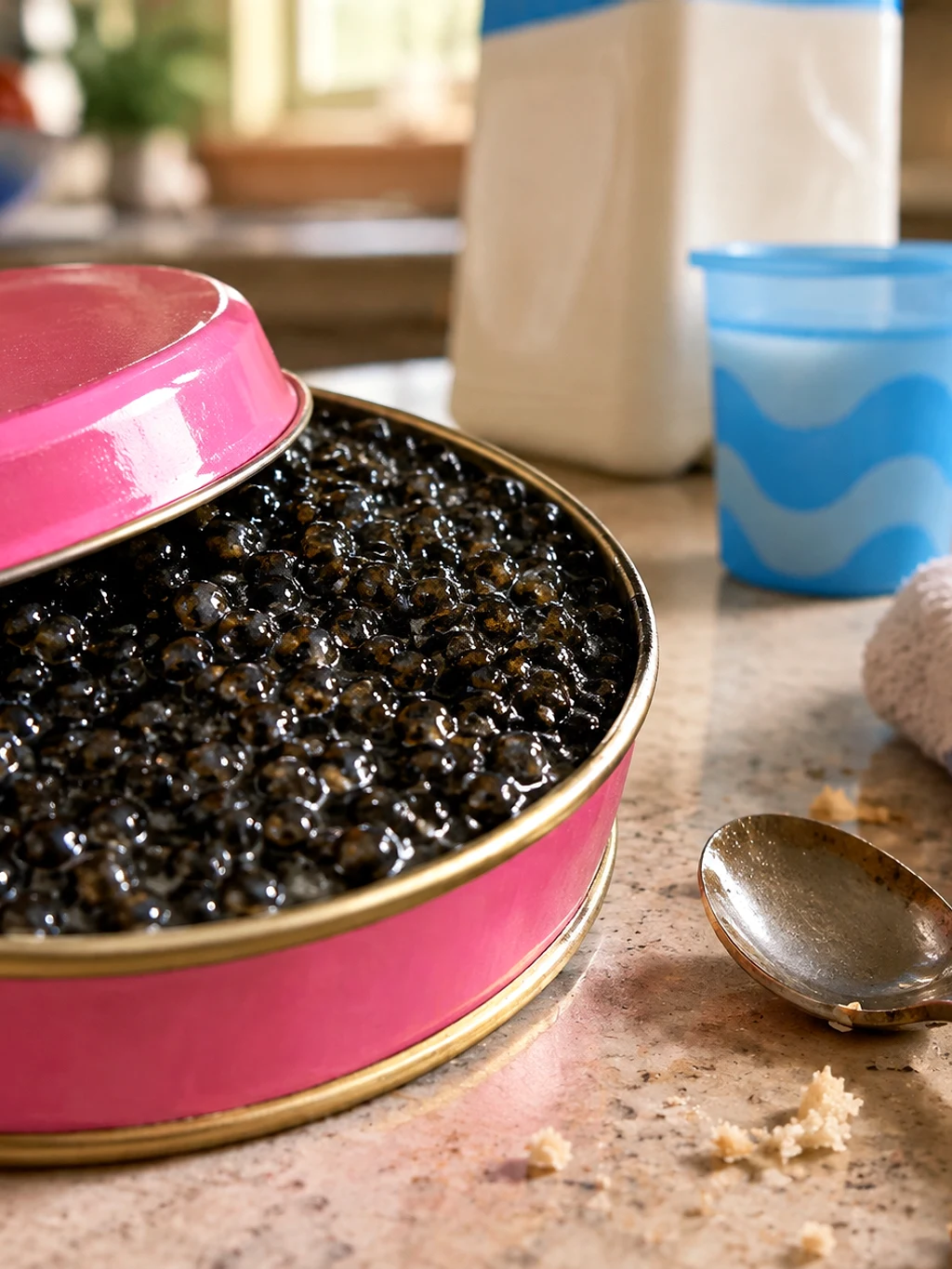
鱼子酱便宜到可以喂两岁的小孩了:一个很大的原因是中国的养鱼场
Caviar Got Cheap Enough to Feed a Toddler — and a Big Reason Is Chinese Fish Farms
About this story
A 125g tin of classic Osetra costs $495 at a Manhattan caviar house; new direct-to-consumer brands sell comparable roe for $125 to $138, in pink tins, with promo codes. The reason is supply: sturgeon predate the dinosaurs and take years to produce roe, wild catches were banned after the Soviet collapse, and over the past decade Chinese sturgeon farms have matured — giant Chinese producers now supply both the discount brands and Michelin-starred kitchens. One luxury-strategy professor says the old prices were simply convention, and the newcomers called the bluff. Chinese listening practice at four levels. HSK 1 Chinese listening practice.
This is an HSK 1 Chinese listening episode that runs about 3 minutes. The full Mandarin script is shown with tap-for-pinyin and a line-by-line English translation, so you can listen and read at once — comprehensible input in the sense of Stephen Krashen's i+1 theory. It teaches 12 key vocabulary words such as 东西、钱、饭馆 and walks through 3 grammar patterns, each explained in English with examples. The same news story is retold at 4 difficulty levels — use the level selector above to find the version that is challenging but still understandable for you.
Read at your level
原文Read the complete story in Chinese. Reveal pinyin and English only when you need them.
English transcript reference
There is a kind of food called caviar.
What is caviar?
Caviar is the eggs of a fish.
Very, very small ones, one by one.
Have you ever eaten caviar?
Probably not.
Because in the past, caviar was expensive.
Very, very expensive.
Only people with a lot of money ate it.
In a restaurant, you needed a lot of money to get even a little.
So everyone knew: caviar is a rich person's thing.
Now it is not the same.
Now caviar has got cheap.
Why has it got cheap?
China is part of this.
Let's talk about this fish.
This fish is very big.
This fish needs many years before it has eggs.
Ten years, maybe twenty.
Ten years before it has eggs, so there was very little caviar.
When a thing is scarce, the money is high.
That is exactly how caviar used to be expensive.
Later, China started farming this fish.
Chinese farmers raised them for more than ten years.
After more than ten years, China's fish had eggs.
Now China has a great deal of caviar.
China's caviar is also very good.
When there is more of a thing, the money comes down.
So now, caviar is cheap.
There is a woman, thirty-three years old.
She says: in the past I could not get caviar.
She says: in the past this thing was only for people in the know.
Now she can eat it at home too.
There is another woman, thirty-four years old.
She gave her two-year-old child a little caviar.
The child ate it and said: more, more, more.
But some people are not happy.
A man who sells expensive caviar says: that is too cheap, you should be careful.
Another person says: it used to be expensive because that is how everyone sold it.
Now some people are not selling it that way.
And only now does everyone know that caviar does not have to cost that much.
Now have a think.
Something very expensive has become cheap.
Do you buy it?
Listen again
Try it without the transcript and notice what sounds clearer.
What vocabulary does this episode teach?
词汇HSK 1. 东西少,钱就多 / 东西多了,钱就少了 — the whole economics lesson in two lines.
HSK 1. Used here to mean price, which is exactly how spoken Chinese uses it.
HSK 1. 在饭馆里,你要很多钱才能吃到一点 — where caviar used to live.
HSK 1. 只给知道的人吃 — the old circle of people "in the know".
HSK 1. 这种鱼要很多年才有子 — the fact that made caviar scarce.
HSK 1. 可是有的人不高兴 — the old sellers, and why.
Built from 鱼 + 子 + 酱 and defined straight away: 鱼子酱是鱼的子。
HSK 2. 这种鱼很大 — the sturgeon, described before it is ever named.
HSK 2. 很贵很贵 — repeated so the scale lands.
HSK 2. The opposite of 贵, and the news: 现在鱼子酱便宜了。
中国开始养这种鱼 — the single verb that explains the whole price collapse.
太便宜了,你要小心 — the old sellers' warning, quoted fairly.
* beyond level超纲词
What grammar patterns appear in this episode?
语法A 少,B 就多
When A is scarce, B goes up. Two short clauses joined by 就 state cause and effect without any economics vocabulary.
东西少,钱就多。
东西多了,钱就少了。
要……才……
It takes X before Y happens. 才 marks that the result comes late — here, years before a sturgeon has roe.
这种鱼要很多年才有子。
在饭馆里,你要很多钱才能吃到一点。
V 过 + object 吗?
Have you ever done X? 过 marks experience, which is exactly the question to ask about a food most people have never tried.
你吃过鱼子酱吗?
Proper nouns
专有名词Free account
Keep learning from this story
Create a free account to keep saved words and your preferred level together.
- Keep words with their story context
- Remember your preferred level
- Build your vocabulary over time