
A Chinese podcast · Same story, 4 levels
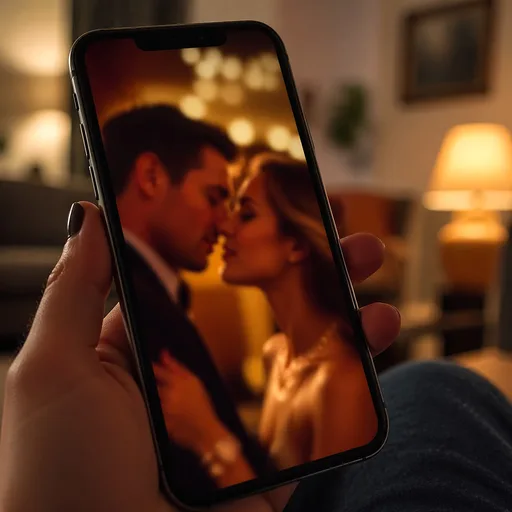
AI 短剧:手机里的小电影,不是真人演的
China Publishes 470 AI Micro-Dramas a Day
About this story
A simple story about little phone dramas in China that are no longer made by people — computers and AI make them now. HSK 1 Chinese listening practice.
This is an HSK 1 Chinese listening episode that runs about 6 minutes. The full Mandarin script is shown with tap-for-pinyin and a line-by-line English translation, so you can listen and read at once — comprehensible input in the sense of Stephen Krashen's i+1 theory. It teaches 12 key vocabulary words such as 手机、短剧、故事 and walks through 4 grammar patterns, each explained in English with examples. The same news story is retold at 4 difficulty levels — use the level selector above to find the version that is challenging but still understandable for you.
Read at your level
原文Read the complete story in Chinese. Reveal pinyin and English only when you need them.
English transcript reference
Speaking of things you watch on your phone, let me tell you something new.
Have you ever watched little movies on your phone?
The very short kind.
Only one or two minutes.
With stories, characters, and talking.
But very short.
One episode is just one or two minutes.
Then the next episode, and the next.
You just keep watching.
In one evening you watch dozens of episodes.
In China these little movies have a name.
They're called "duanju" (short dramas).
"Duan" means short.
"Ju" means movie or TV show.
So "duanju" means very short TV shows.
You may have watched them.
Many people have.
Many many people in China watch them.
They watch in the daytime.
They watch at night.
They secretly watch at work.
They watch while eating.
They watch before sleeping.
The stories of these short dramas are usually very simple.
Some are love stories.
A man loves a woman.
Or a woman loves a man.
Some are revenge stories.
Someone gets bullied.
Then they become powerful.
Then they go get revenge.
Some are time travel stories.
A modern person suddenly goes to ancient times.
Or an ancient person goes to modern times.
These stories are all very simple.
But very entertaining.
They make you unable to stop.
Episode by episode you watch.
Finish one and watch another.
Who makes these short dramas?
Before, people made them.
There were directors.
There were actors.
People who wrote stories.
People who shot videos.
Many people worked together.
But now it's different.
Now there's a new thing.
It's called "AI."
What is AI?
AI is a computer.
But a very smart computer.
It can think like a person.
It can write things.
It can draw pictures.
It can also make videos.
Now many short dramas are made by AI.
Yes, made by computers.
Computers write the stories.
Computers make the characters.
Computers make the backgrounds.
Computers make the movements.
All of it is made by computers.
How many short dramas are like this?
Many many.
New ones come out every day.
Hundreds every day.
Hundreds.
In one day.
Too fast.
People can't make them this fast.
A person can make a few at most in a day.
But computers can make hundreds in a day.
This is how powerful AI is.
Why do so many people make short dramas?
Because many people watch them.
The more people watch, the more money they make.
Companies that make short dramas can earn a lot of money.
So more and more people make them.
But there's a problem.
Sometimes, what computers make isn't real.
For example, a computer can make a celebrity you know.
But that celebrity didn't actually film this short drama.
The computer "drew" them.
Is this good?
It's not good.
Because that celebrity didn't agree.
Now the Chinese government says: you can't do this.
Before making a short drama, you have to tell the government.
Only after the government agrees can you make it.
This is to protect everyone.
So what does this story tell us?
Computers are getting more and more powerful.
They can do many things.
They can do things only people could do before.
Is this a good thing?
There are good aspects.
There are also bad aspects.
The good: making things is becoming cheaper.
Making things is becoming faster.
The bad: people who used to do these jobs might not have work anymore.
There's another problem.
How do we tell what's real and what's fake?
Before, the people you saw on TV were real people.
Now the people you see on your phone might not be real.
They might be made by computers.
This is a new world.
We're all learning how to live in this new world.
You might ask: is this a good thing or a bad thing?
I don't know either.
Maybe a bit of both.
The good: in the future you'll see more different stories.
More different characters.
The bad: we have to be careful.
Don't believe everything you see on your phone.
Some things are real.
Some are fake.
Some are made by people.
Some are made by computers.
When you watch, think about it.
Is this real?
This story tells us one thing.
The world is changing.
Changing fast.
We have to learn new things.
Otherwise we can't keep up.
Children have to learn.
Adults have to learn.
Old people have to learn.
Everyone has to learn.
Listen again
Try it without the transcript and notice what sounds clearer.
What vocabulary does this episode teach?
词汇手 (hand) + 机 (machine).
A narrative with characters and events.
电 (electric) + 脑 (brain).
Having good intelligence.
To give approval or consent.
To gain knowledge or skills.
短 (short) + 剧 (play/drama). Phone-format mini series.
The person who directs a film or show.
A person who performs in dramas.
The governing body of a country.
A famous person in entertainment.
To keep safe from harm.
* beyond level超纲词
What grammar patterns appear in this episode?
语法Proper nouns
专有名词Sources
来源Free account
Keep learning from this story
Create a free account to keep saved words and your preferred level together.
- Keep words with their story context
- Remember your preferred level
- Build your vocabulary over time