
A Chinese podcast · Same story, 4 levels
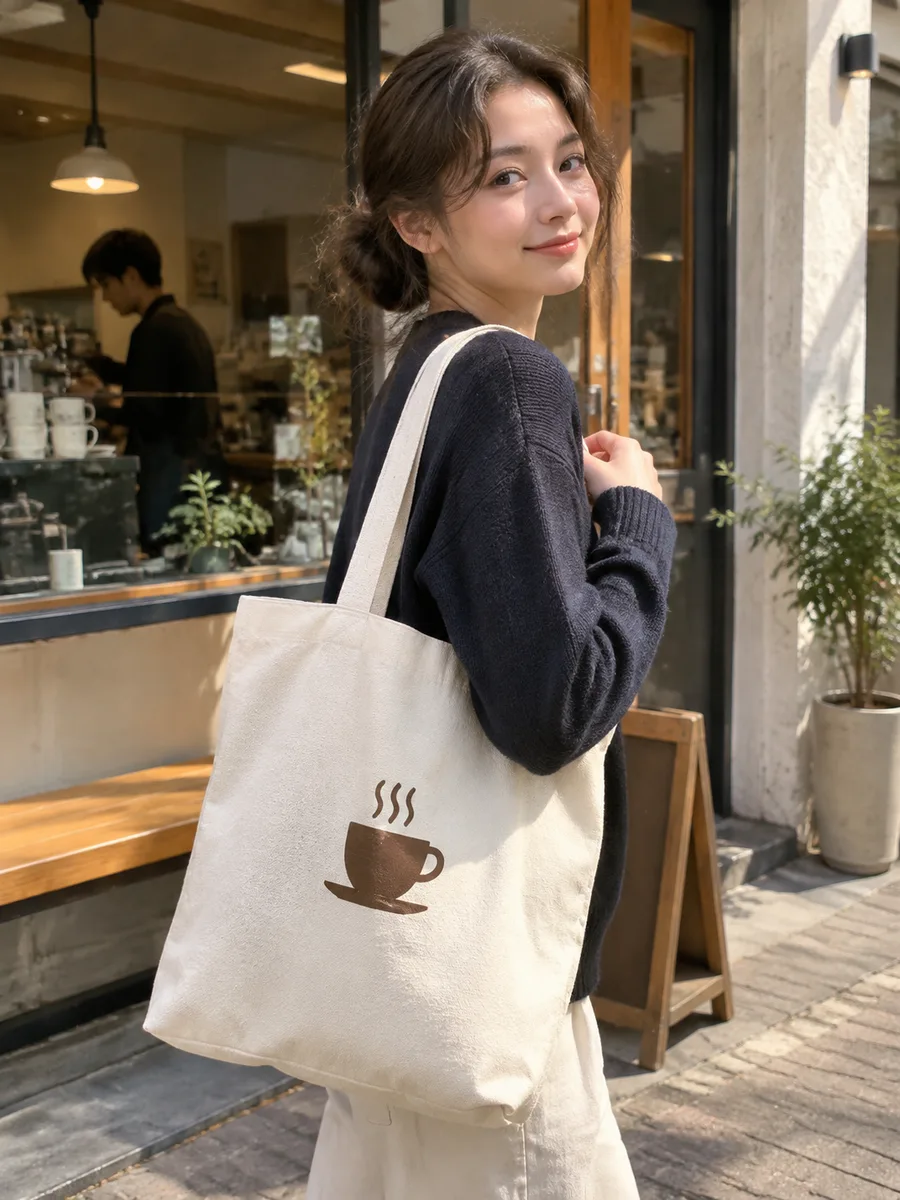
咖啡店为什么开始卖包?
Coffee Shops Turn Tote Bags Into Branding
About this story
HSK 1 Chinese listening. Small shops sell branded canvas bags, turning inexpensive merchandise into advertising and signs of belonging.
This is an HSK 1 Chinese listening episode that runs about 1 minute. The full Mandarin script is shown with tap-for-pinyin and a line-by-line English translation, so you can listen and read at once — comprehensible input in the sense of Stephen Krashen's i+1 theory. It teaches 12 key vocabulary words such as 商店、买、想 and walks through 4 grammar patterns, each explained in English with examples. The same news story is retold at 4 difficulty levels — use the level selector above to find the version that is challenging but still understandable for you.
Read at your level
原文Read the complete story in Chinese. Reveal pinyin and English only when you need them.
English transcript reference
Trader Joe's sells a small bag for less than three dollars, and many people want to buy it.
Trader Joe's is an American store, and the dollar is American money.
A bag is a thing for holding things, but this bag is very small.
Some stores say one person cannot buy many, because many people want to buy them.
People who cannot buy one see that other people are also selling the bag online, asking for twenty dollars.
This is the money the sellers want, not money that buyers have paid.
Why do people want to buy such a small bag?
On the bag, there is the store's name.
Some people like the store and also want to take the store's bag.
When you carry the bag and walk, other people also see the store's name.
In this way, the store's name is seen by many people; this is called advertising.
Advertising is a thing that lets people know what you sell.
When you carry the bag, you are also helping the store advertise.
If you like this store, will you buy this small bag?
Listen again
Try it without the transcript and notice what sounds clearer.
What vocabulary does this episode teach?
词汇HSK 1. A place where things are sold. In the script: 美国的一个商店.
HSK 1. Common verb. Opposite: 卖 (mài, to sell). In the script: 很多人想买.
HSK 1. 想 + verb means 'want to do something'. In the script: 想买.
HSK 1. Common adjective. In the script: 小袋子.
HSK 1. Used in 很多 (very many). In the script: 很多人.
HSK 1. Refers to the name of a person, store, or thing. In the script: 商店的名字.
HSK 1. A general word for objects. In the script: 放东西的东西.
HSK 1. 看 + 见 emphasizes the result of seeing. In the script: 别人也看见了.
HSK 1. In the script: 美国的钱, 想要的钱.
HSK 1. Expresses preference. In the script: 喜欢商店.
Beyond HSK 1. 袋 means bag; 子 is a noun suffix. In the script: 小袋子.
Beyond HSK 1. A notice or message that tells people about a product or store. In the script: 这叫广告.
* beyond level超纲词
What grammar patterns appear in this episode?
语法Used to identify or explain something. Here it links a noun to its category or definition.
Trader Joe's,是美国的一个商店,美元,是美国的钱。
袋子是放东西的东西,可是这个袋子很小。
因为……
Introduces a reason or cause. It answers 'why' for the previous statement.
有的商店说,一个人不能买很多,因为想买的人很多。
让 + person + verb
The causative pattern 让 means 'to let/make someone do something' or 'to cause someone to see/know'.
这样,商店的名字,让很多人看见了,这叫广告。
广告,是让人知道你卖什么的东西。
如果……,会……吗?
A conditional question: 'If ..., will ...?' 如果 introduces the condition, and 会 marks a likely future action.
如果你喜欢这个商店,你会买这个小袋子吗?
Proper nouns
专有名词Sources
来源Free account
Keep learning from this story
Create a free account to keep saved words and your preferred level together.
- Keep words with their story context
- Remember your preferred level
- Build your vocabulary over time