
A Chinese podcast · Same story, 4 levels
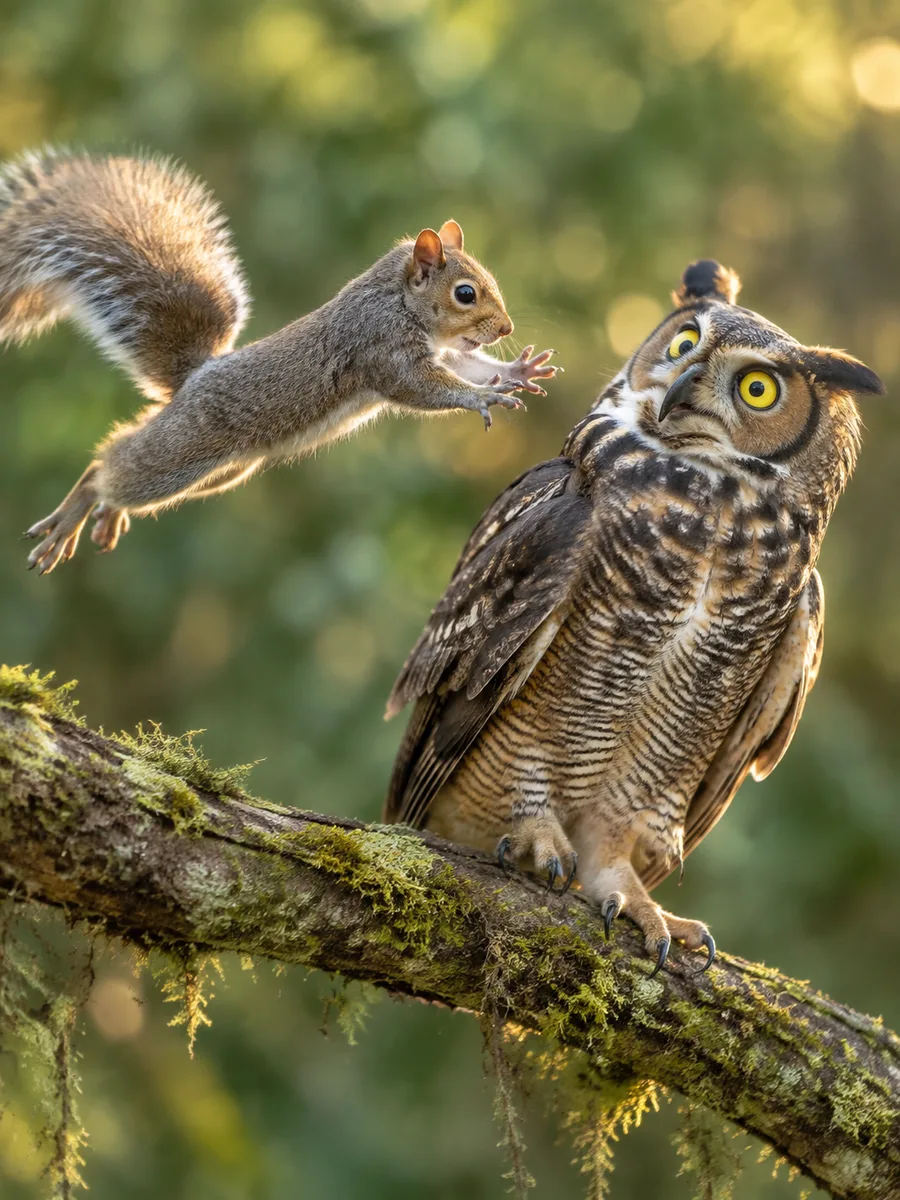
松鼠打猫头鹰、驼鹿打喷嚏:2026年最好笑的野生动物照片入围名单出炉
A Squirrel Attacks an Owl and a Moose Sneezes: The Funniest Wildlife Photos of 2026 Are In
About this story
A squirrel attacks an owl, a moose sneezes, an elephant's dust bath: the 2026 Comedy Wildlife Awards finalists. HSK 2 Chinese listening practice.
This is an HSK 2 Chinese listening episode that runs about 3 minutes. The full Mandarin script is shown with tap-for-pinyin and a line-by-line English translation, so you can listen and read at once — comprehensible input in the sense of Stephen Krashen's i+1 theory. It teaches 16 key vocabulary words such as 名字、第一、高兴 and walks through 6 grammar patterns, each explained in English with examples. The same news story is retold at 4 difficulty levels — use the level selector above to find the version that is challenging but still understandable for you.
Read at your level
原文Read the complete story in Chinese. Reveal pinyin and English only when you need them.
English transcript reference
A tiny squirrel runs over to hit a big owl.
Owls eat squirrels, but this time the squirrel isn't afraid at all.
The owl looks at the squirrel as if to say: are you kidding me?
The photo's name is exactly that: 'Are You Kidding Me?'
It's a photo in a contest that only wants funny wildlife photos.
Wildlife means animals that don't live in people's homes but live in nature.
Dogs and cats live in people's homes, so they aren't wildlife.
Squirrels and owls live in nature, so they are wildlife.
In 2026, this contest received more than 10,000 photos in total, from photographers in 112 countries.
This is the year with the most photos in the contest's history.
Now, 56 photos are still in the contest.
Let's look at a few.
The first is the squirrel that wasn't afraid of the owl, taken by an American.
The second is also a squirrel, in Germany.
This squirrel ate too much grass; its mouth is full of grass and its head looks twice as big.
The photographer said it looks like a little monster from a movie.
The third is in Canada: a moose.
A moose is a very big animal that lives in cold places.
The photographer took 3 photos.
In the first, water is running from the moose's nose.
In the second, the moose gives a huge sneeze.
In the third, the moose seems to smile, just like us after a sneeze.
The fourth is in Africa: a big elephant and a little elephant.
The big elephant is giving the little elephant a bath, but it's not using water—it's using dirt.
Elephants like putting dirt on their bodies; it's good for them.
But the little elephant in the photo doesn't look happy at all.
Why have a contest like this?
The organizers say funny photos can make more people like animals.
People who like animals will want to protect animals more.
To protect means helping animals keep living well and not disappear.
On December 8th, the contest will tell everyone whose photo is number one.
Think about it: if you went to take funny animal photos, which animal would you most want to photograph?
Listen again
Try it without the transcript and notice what sounds clearer.
What vocabulary does this episode teach?
词汇HSK 1. 这张照片的名字.
HSK 2. 第一张.
HSK 1. 好像一点也不高兴.
HSK 2. 这对它们的身体好.
HSK 2. 比赛会告诉大家.
HSK 2. 为什么要有这样一个比赛呢?
HSK 1. 电影里的一个小怪物.
HSK 1. 大象喜欢在身上放土.
住在大自然里的动物.
这张照片.
一只小小的松鼠.
一只大大的猫头鹰.
驼鹿是一种很大的动物.
打了一个大大的喷嚏.
大的大象,和小的大象.
会更想保护动物.
* beyond level超纲词
What grammar patterns appear in this episode?
语法好像在说……
As if to say….
猫头鹰看着松鼠,好像在说:你是在开玩笑吗?
X,就是 Y
Defines a word.
野生动物,就是不住在人的家里、住在大自然里的动物。
保护,就是让动物好好地生活下去,不让它们没有了。
一点也不……
Not at all.
松鼠一点也不怕。
好像一点也不高兴。
给 + someone + verb
Do something for someone.
大的大象在给小的大象洗澡
能让 + someone + verb
Can make someone….
好笑的照片,能让更多的人喜欢动物。
如果……,你最想……?
If…, what would you most want…?
如果你去拍好笑的动物照片,你最想拍什么动物?
Proper nouns
专有名词Free account
Keep learning from this story
Create a free account to keep saved words and your preferred level together.
- Keep words with their story context
- Remember your preferred level
- Build your vocabulary over time