
A Chinese podcast · Same story, 4 levels
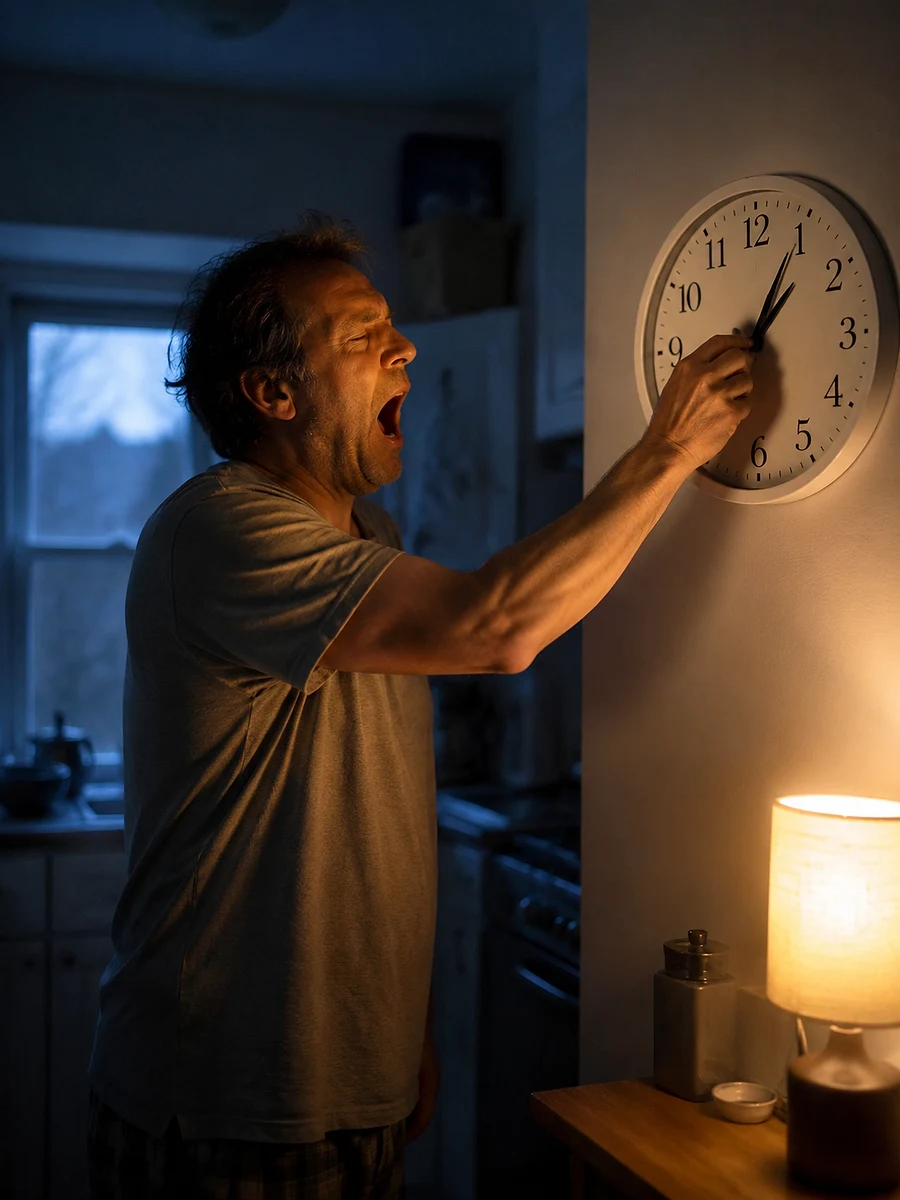
美国人一年动两回表,累!现在他们想不动了
House Votes on Permanent Daylight Saving Time
About this story
A simple beginner Chinese listening story about why Americans change their clocks twice a year, why it wears people out, and the new push to stop. HSK 1 Chinese listening practice.
This is an HSK 1 Chinese listening episode that runs about 1 minute. The full Mandarin script is shown with tap-for-pinyin and a line-by-line English translation, so you can listen and read at once — comprehensible input in the sense of Stephen Krashen's i+1 theory. It teaches 12 key vocabulary words such as 东西、喜欢、看 and walks through 3 grammar patterns, each explained in English with examples. The same news story is retold at 4 difficulty levels — use the level selector above to find the version that is challenging but still understandable for you.
Read at your level
原文Read the complete story in Chinese. Reveal pinyin and English only when you need them.
English transcript reference
In America, there's one thing a lot of people don't like.
What is it?
It's the clock.
A clock is the thing you look at to tell the time.
In America, twice a year, everyone has to change the clocks.
One time, the clock goes forward an hour.
One time, the clock goes back an hour.
Faster, then slower — it leaves a lot of people tired.
Now America is asking: what if we stop changing the clocks?
Trump says so too: fine, let's stop.
Not changing the clocks has an upside and a downside.
The good part: in the evening, it stays light outside a little longer.
Everyone likes it being bright outside in the evening.
The bad part: in the morning, it stays dark outside a little longer.
In the morning, kids have to go to school.
It's dark outside, and that's no good.
Stop changing the clocks — good, or not good?
A lot of people are thinking it over.
And you?
Where you live, does everyone change the clocks too?
Listen again
Try it without the transcript and notice what sounds clearer.
What vocabulary does this episode teach?
词汇A general word for an object or "thing": 一个东西 = one thing.
不喜欢 = to not like. 很多人都不喜欢 = a lot of people dislike it.
看几点 = look to see what time it is.
表要快一个小时 = the clock moves an hour faster (forward).
The opposite of 快. 表要慢一个小时 = the clock moves an hour slower (back).
去学校 = to go to school.
很多人都在想 = a lot of people are thinking about it.
一个小时 = one hour.
The core word of this story. 动表 = to change the clocks. Grounded here as 看几点的东西 (the thing you look at to tell time).
Here 动表 = to move the clock (change the time). 不动表了 = stop changing the clocks.
外面亮 = it is light outside. Opposite of 黑.
外面黑黑的 = it is dark outside.
* beyond level超纲词
What grammar patterns appear in this episode?
语法有一回……有一回……
Repeat 有一回 ("on one occasion") to lay two cases side by side.
有一回,表要快一个小时。
有一回,表要慢一个小时。
……,好吗?
Add 好吗?("okay?") to the end of a statement to turn it into a gentle suggestion.
我们不动表了,好吗?
A,还是 B?
还是 links two choices in a question: "A, or B?"
不动表,是好,还是不好?
Proper nouns
专有名词Free account
Keep learning from this story
Create a free account to keep saved words and your preferred level together.
- Keep words with their story context
- Remember your preferred level
- Build your vocabulary over time