
A Chinese podcast · Same story, 4 levels
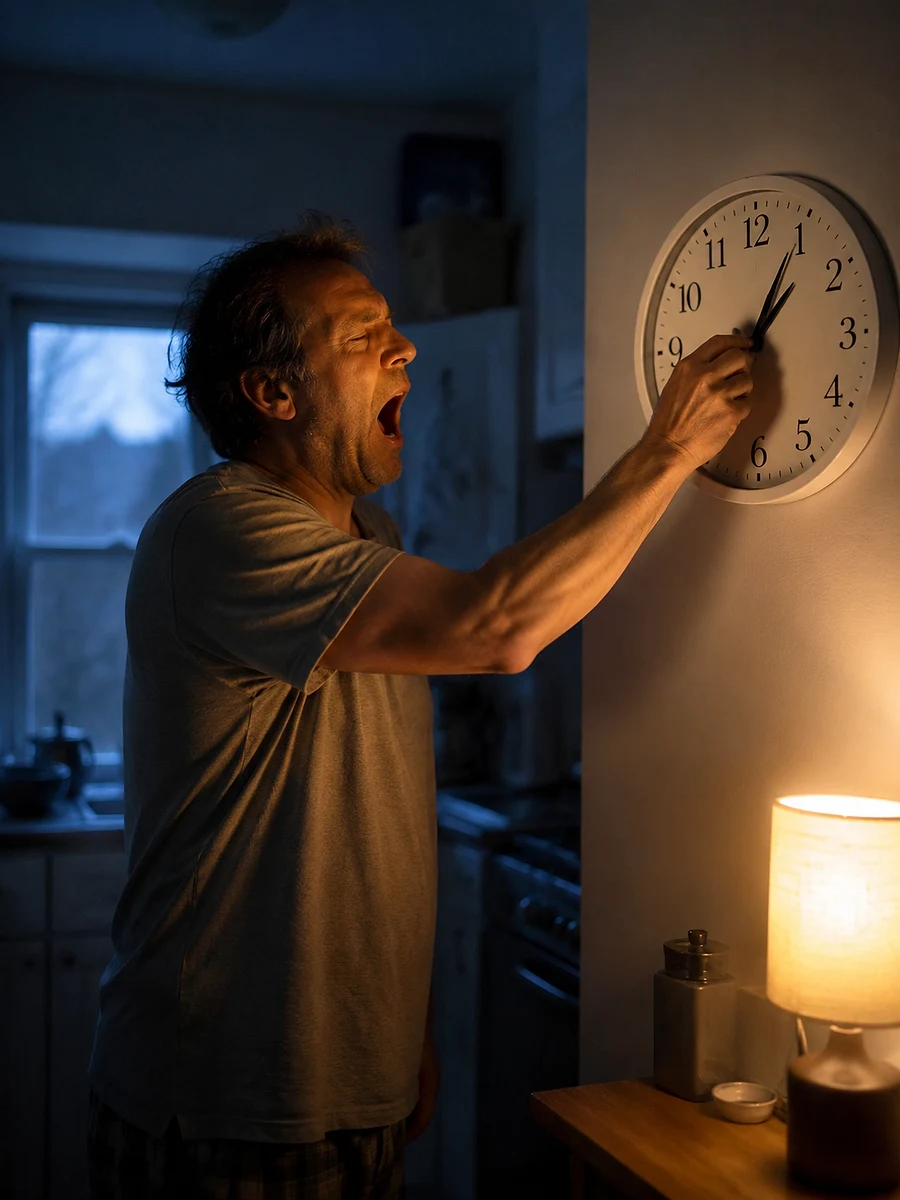
永久夏令时:美国众议院历史性投票,要不要永远不再调表?
House Votes on Permanent Daylight Saving Time
About this story
An intermediate Chinese listening story on permanent daylight saving time: the House passed it 308–117, why the body clock hates the switch, and why sleep scientists actually want the opposite. HSK 5-6 Chinese listening practice.
This is an HSK 5-6 Chinese listening episode that runs about 2 minutes. The full Mandarin script is shown with tap-for-pinyin and a line-by-line English translation, so you can listen and read at once — comprehensible input in the sense of Stephen Krashen's i+1 theory. It teaches 12 key vocabulary words such as 身体、危险、健康 and walks through 3 grammar patterns, each explained in English with examples. The same news story is retold at 4 difficulty levels — use the level selector above to find the version that is challenging but still understandable for you.
Read at your level
原文Read the complete story in Chinese. Reveal pinyin and English only when you need them.
English transcript reference
A small thing almost everyone has been through has stirred up quite a debate in America lately: should we stop changing the clocks forever?
First, some background.
Changing the clocks twice a year is called "daylight saving time." It appeared over a century ago, originally to make more use of summer daylight and, along the way, save some energy.
It sounds reasonable, but the problem is that the human body does not like being "wound forward" like this.
Each clock change is like forcibly throwing the body clock into disarray.
Studies find again and again that in the days after the switch, the numbers for heart attacks, strokes, and car crashes all show a small spike.
Add in the fact that many people already do not get enough sleep, and being jolted twice a year only piles up more resentment.
So "stop changing the clocks" has become one of the rare topics both parties can nod along to.
Just days ago came a historic step: the U.S. House brought it to a formal vote for the first time and passed it, 308 to 117.
Even the White House openly backed it.
It sounds like "no more changing the clocks" is about to become reality.
But the truly thorny part is the next question: if you stop changing them, which time do you lock in?
This bill picks "permanent daylight saving time" — using the summer setting all year round.
The upside is that it gets dark later in the evening, with plenty of daylight after work to go out for a walk.
But the price is that winter mornings would be especially dark.
Kids would wait for the school bus in the dark and adults would drive to work in the dark, which is actually more dangerous.
Interestingly, most sleep experts are on the other side.
They argue the healthiest choice is to keep "standard winter time" year-round, because that sits closest to the sun and best matches the body clock.
So you get a very awkward standoff: almost everyone agrees to "stop changing it," but the moment you ask "which time to settle on," it erupts into an argument again.
That is exactly why such a seemingly simple thing has stayed stuck for decades, never getting resolved.
Next, the bill still has to get through the Senate.
In the end, "whether to move that one hour" looks like a technical question, but what it really tests is what a society wants most among health, habit, and lifestyle.
Listen again
Try it without the transcript and notice what sounds clearer.
What vocabulary does this episode teach?
词汇人的身体 = the human body.
路上更危险 = the roads are more dangerous.
最健康的做法 = the healthiest choice.
在健康、习惯和生活方式之间 = among health, habit, and lifestyle.
一个社会到底更想要什么 = what a society ultimately wants.
看似简单的小事 = a seemingly simple little thing.
看着是个技术问题 = it looks like a technical question.
连白宫都公开支持 = even the White House openly backed it.
闹出了一场不小的争论 = it stirred up quite a debate.
永久夏令时 = permanent daylight saving time.
打乱生物钟 = to throw the body clock into disarray.
这份法案 = this bill.
* beyond level超纲词
What grammar patterns appear in this episode?
语法并不……
并 before a negative emphatically rejects an expectation: "not at all / really not".
人的身体,并不喜欢被这样"硬拨"。
等于……
等于 ("is equivalent to") frames one action as amounting to another.
每次调表,等于强行打乱一次生物钟。
正是为什么……
这也正是为什么… = "this is exactly why…", pointing back to the cause just given.
这也正是为什么,这么一件看似简单的小事,几十年来一直卡着。
Proper nouns
专有名词Free account
Keep learning from this story
Create a free account to keep saved words and your preferred level together.
- Keep words with their story context
- Remember your preferred level
- Build your vocabulary over time