
A Chinese podcast · Same story, 4 levels
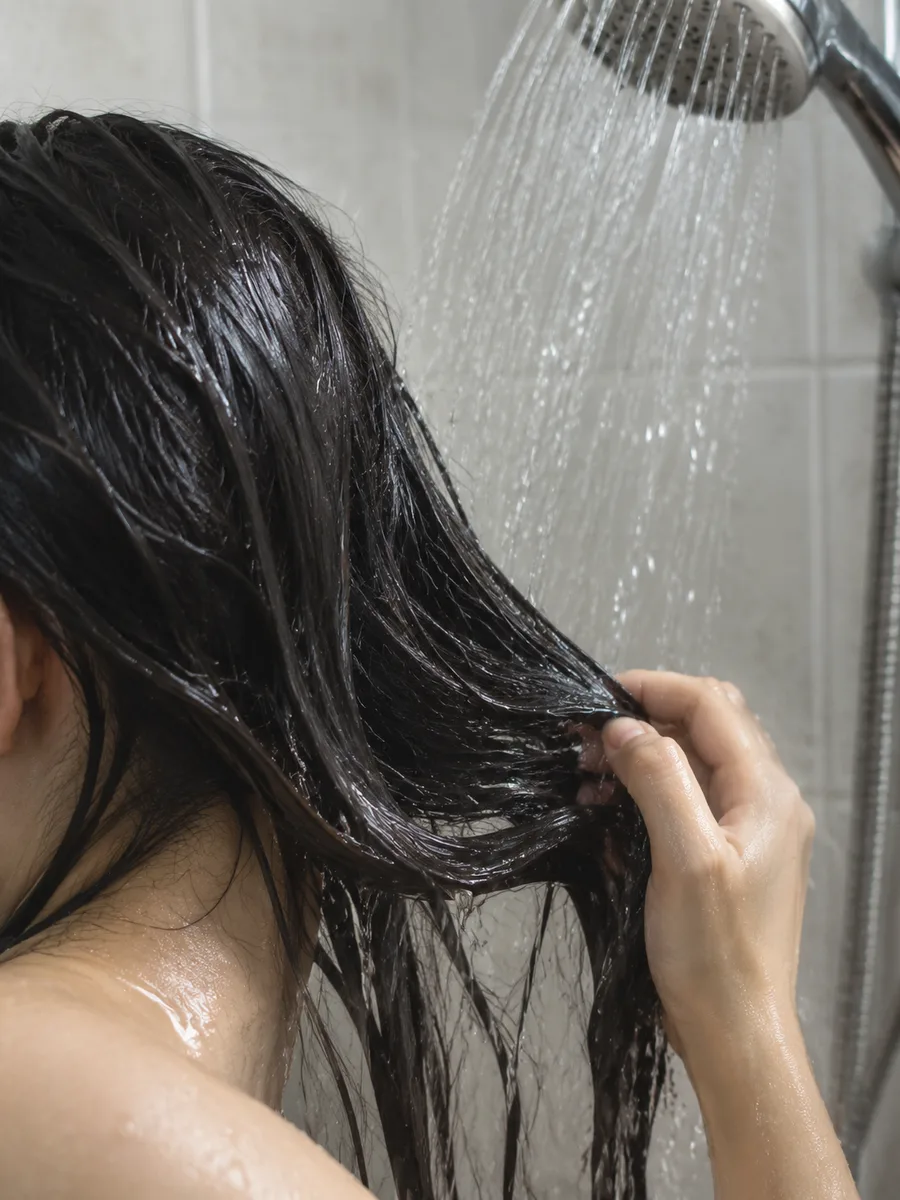
《纽约时报》请皮肤科医生查证冷水洗发神话
Dermatologists Debunk the Cold-Water Hair Rinse Myth: It Won't Boost Shine
About this story
Dermatologists including Dr. Teresa Song and Dr. Hope Mitchell debunk the viral cold-water hair rinse myth, explaining what really boosts shine. HSK 4 Chinese listening practice.
This is an HSK 4 Chinese listening episode that runs about 3 minutes. The full Mandarin script is shown with tap-for-pinyin and a line-by-line English translation, so you can listen and read at once — comprehensible input in the sense of Stephen Krashen's i+1 theory. It teaches 12 key vocabulary words such as 医生、教授、差不多 and walks through 6 grammar patterns, each explained in English with examples. The same news story is retold at 4 difficulty levels — use the level selector above to find the version that is challenging but still understandable for you.
Read at your level
原文Read the complete story in Chinese. Reveal pinyin and English only when you need them.
English transcript reference
Many people have heard that rinsing hair with cold water will make it shinier.
This claim has been around for decades and has recently been brought up repeatedly again on social media.
The reasoning sounds quite plausible: cold water can close the cuticles on the hair's surface.
Once the cuticles close, light reflects more evenly, and the hair looks shiny.
However, several dermatologists say cold water does not actually make hair shinier.
New York dermatologist Dr. Teresa Song said directly that this claim is "completely unfounded."
She said cold water probably "won't make much of a difference" to shine.
Lilia Correa Selm is an associate professor of dermatology at the University of South Florida.
She said the most suitable water temperature is lukewarm, roughly the same as body temperature.
She explained that if the water is too cold, its cleansing power decreases.
Oil, dirt, and conditioner that hasn't been rinsed out may remain on the hair.
Water that is too hot is also no good, said Jacob Beer, who works in West Palm Beach, Florida.
Hot water can dry out the scalp and even cause itching and irritation.
So where does shine actually come from?
The answer lies in the thin layer of cuticles on the surface of the hair.
Dermatologist Hope Mitchell used an analogy.
The cuticles are like overlapping shingles on a roof.
It wraps around the inside of the hair and also reflects light outward.
What we see as so-called shine is this reflection.
Fine, straight hair reflects light more evenly and looks shiny.
Thick, coarse, or curly hair scatters light, presenting a soft sheen.
So if you want shiny hair, the key is not that final blast of cold water.
Dr. Song said what really works is daily hair care habits, especially conditioner.
Beer also recommends using a silicone-based conditioner.
These products can smooth the cuticles, and shine naturally follows.
Another easily overlooked cause is friction.
Dr. Song said brushing too vigorously can damage the cuticles.
Vigorously rubbing wet hair with a towel does the same, and the hair actually becomes duller.
As for how often to wash your hair, the American Academy of Dermatology's advice depends on the individual.
People with straight hair and an oily scalp can wash once a day.
Those with dry, thick, curly, or coarse-textured hair can go two or three weeks between washes.
Many people are taken aback the first time they hear the figure of two or three weeks.
Mitchell also reminded that shiny hair does not equal healthy hair.
Some people's hair is naturally reflective.
But if the ends are split and it breaks when combed, it needs care, not more shine.
This kind of claim spreads because rinsing with cold water costs almost nothing.
And it's simple to do, and sounds harmless.
But so far, no reliable research has proven that water temperature changes hair shine.
Listen again
Try it without the transcript and notice what sounds clearer.
What vocabulary does this episode teach?
词汇HSK 2. Common measure word: 一位医生 (a doctor).
HSK 3. Used for academic titles, e.g. 副教授 (associate professor).
HSK 3. Used to indicate approximation, e.g. 差不多跟体温一样 (about the same as body temperature).
HSK 2. Appears in 没冲干净 (not rinsed clean).
HSK 3. Used in 护发产品 (hair care products).
HSK 3. Can be a noun or verb, e.g. 建议用含硅油的护发素 (recommend using a silicone-based conditioner).
HSK 3. Used in 头发健康 (hair health).
HSK 3. Common pattern: 原因是…… (the reason is...).
HSK 3. Refers to the glossy sheen of hair, skin, or surfaces. Common collocations: 有光泽 (shiny), 失去光泽 (lose luster).
HSK 3. Used in 皮肤科 (dermatology department) and 皮肤科医生 (dermatologist).
Beyond level. Technical term for the outer layer of hair made of overlapping scales.
Beyond level. 皮肤科医生 means dermatologist.
* beyond level超纲词
What grammar patterns appear in this episode?
语法一……就……
Indicates that as soon as one action happens, another follows immediately.
毛鳞片一闭合,光就反射得更整齐,头发看上去就亮。
可如果发尾分叉、一梳就断,它需要的是护理,不是更亮。
让 + someone/something + verb
Causative construction meaning 'to make/let someone or something do something'.
冷水能让头发表面的毛鳞片闭合。
热水会让头皮变干,甚至发痒、受刺激。
这类产品能让毛鳞片服帖,光泽自然就上来了。
并不 / 并不会 + verb
Emphasizes a negative, often contradicting an expectation: 'actually does not'.
冷水并不会让头发变得更亮。
头发亮并不等于头发健康。
Expresses cause and effect: 'the reason why ... is because ...'.
这类说法之所以传得开,是因为冷水冲洗几乎不花成本。
至于……
Used to introduce a new topic or shift to another aspect: 'as for ...'.
至于多久洗一次头,美国皮肤科学会的建议要分人。
看起来 / 听起来 + adjective
Expresses an impression based on appearance or sound: 'looks/sounds ...'.
而且做起来简单,听起来也没什么坏处。
Proper nouns
专有名词Sources
来源Free account
Keep learning from this story
Create a free account to keep saved words and your preferred level together.
- Keep words with their story context
- Remember your preferred level
- Build your vocabulary over time