
A Chinese podcast · Same story, 4 levels
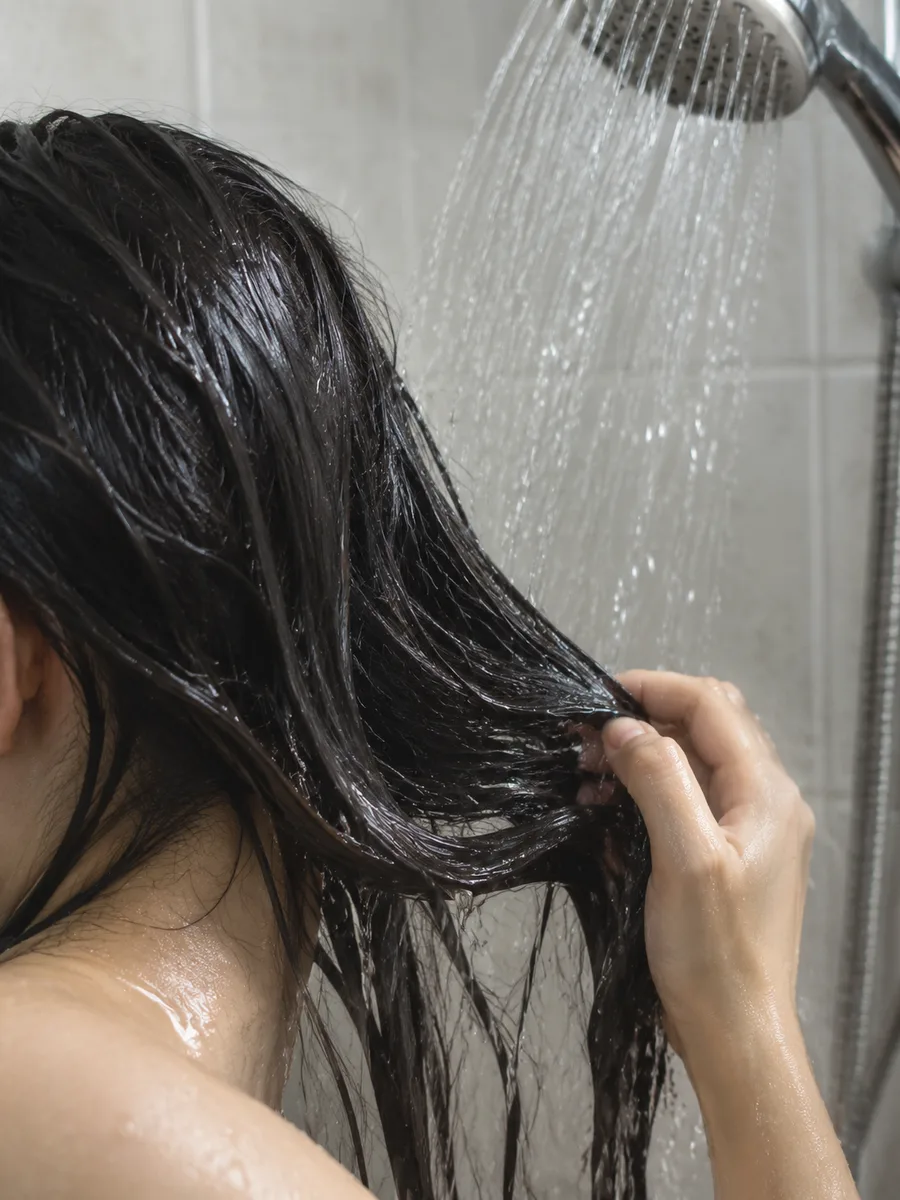
《纽约时报》请皮肤科医生查证冷水洗发神话
Dermatologists Debunk the Cold-Water Hair Rinse Myth: It Won't Boost Shine
About this story
HSK 1: Dermatologists say rinsing hair with cold water doesn't make it shiny. Learn why lukewarm water and conditioner are better for shine.
This is an HSK 2 Chinese listening episode that runs about 2 minutes. The full Mandarin script is shown with tap-for-pinyin and a line-by-line English translation, so you can listen and read at once — comprehensible input in the sense of Stephen Krashen's i+1 theory. It teaches 12 key vocabulary words such as 头发、水、医生 and walks through 6 grammar patterns, each explained in English with examples. The same news story is retold at 4 difficulty levels — use the level selector above to find the version that is challenging but still understandable for you.
Read at your level
原文Read the complete story in Chinese. Reveal pinyin and English only when you need them.
English transcript reference
Many people rinse their hair with very cold water after washing it.
They say this will make hair very shiny.
Doctors heard this and said: Not true.
People have been saying this for decades.
Recently, many people online are saying it again.
There is a doctor in the US with the surname Song.
Dr. Song's job is to look at people's hair.
She says rinsing hair with cold water is useless.
She says this statement is completely wrong.
Other doctors say this has nothing to do with water.
Doctors say the water shouldn't be too cold or too hot.
Water that is the same temperature as your body is good.
If the water is too cold, it won't wash clean.
The oil and dirt on the hair won't wash off.
If the water is too hot, it's also not good.
Hot water makes the skin on your head very dry.
The skin on your head will also feel uncomfortable.
If you want shiny hair, there is a way.
After washing your hair, use something called conditioner.
Conditioner makes hair very smooth and look shiny.
Dr. Song says it's conditioner that makes hair shiny.
Cold water cannot make hair shiny.
After washing your hair, don't rub it too hard.
Rubbing hard will damage your hair.
If hair is damaged, it won't be shiny.
Shiny hair doesn't necessarily mean your hair is healthy.
How often you wash your hair depends on your hair.
If your hair is very straight or very oily, you can wash it every day.
If your hair is very dry, thick, or very curly,
you can wash this kind of hair once every two or three weeks.
Dr. Song says if you want shiny hair, you need to take good care of it.
Washing your hair with very cold water is useless.
Listen again
Try it without the transcript and notice what sounds clearer.
What vocabulary does this episode teach?
词汇HSK 1. Common noun; appears throughout the script.
HSK 1. Used in phrases like 冷水 (cold water) and 热水 (hot water).
HSK 1. Appears as 宋医生 (Dr. Song).
HSK 1. Used in 他们说 (they say) and 医生说 (doctors say).
HSK 1. Used before adjectives, e.g., 很冷 (very cold), 很亮 (very shiny).
HSK 1. Appears in 冷水 (cold water) and 太冷 (too cold).
HSK 1. Appears in 热水 (hot water) and 太热 (too hot).
HSK 1. Used in 水跟身体一样热 (water as warm as the body).
HSK 3. Used in 头上的皮肤 (skin on the head).
Beyond HSK 4. A compound noun: 护 (protect) + 发 (hair) + 素 (element).
HSK 4. Used in 头发很滑 (hair is very smooth).
HSK 4. Appears in 用力地擦 (rub hard).
* beyond level超纲词
What grammar patterns appear in this episode?
语法跟 + Noun + 一样 + Adjective
Means 'as [adjective] as [noun]'.
水跟身体一样热,就很好。
让 + Noun + Adjective
Causative construction meaning 'to make [noun] [adjective]'.
热水会让头上的皮肤很干。
没有用
Means 'useless' or 'no use'. Used to indicate lack of effectiveness.
冷水冲头发没有用。
用很冷的水洗头发,没有用。
不一定
Means 'not necessarily'. Used to indicate uncertainty.
头发亮,也不一定就是头发好。
两三个星期
Approximate number using two consecutive numerals (两 three) + measure word.
两三个星期洗一次也可以。
Proper nouns
专有名词Sources
来源Free account
Keep learning from this story
Create a free account to keep saved words and your preferred level together.
- Keep words with their story context
- Remember your preferred level
- Build your vocabulary over time