
A Chinese podcast · Same story, 4 levels
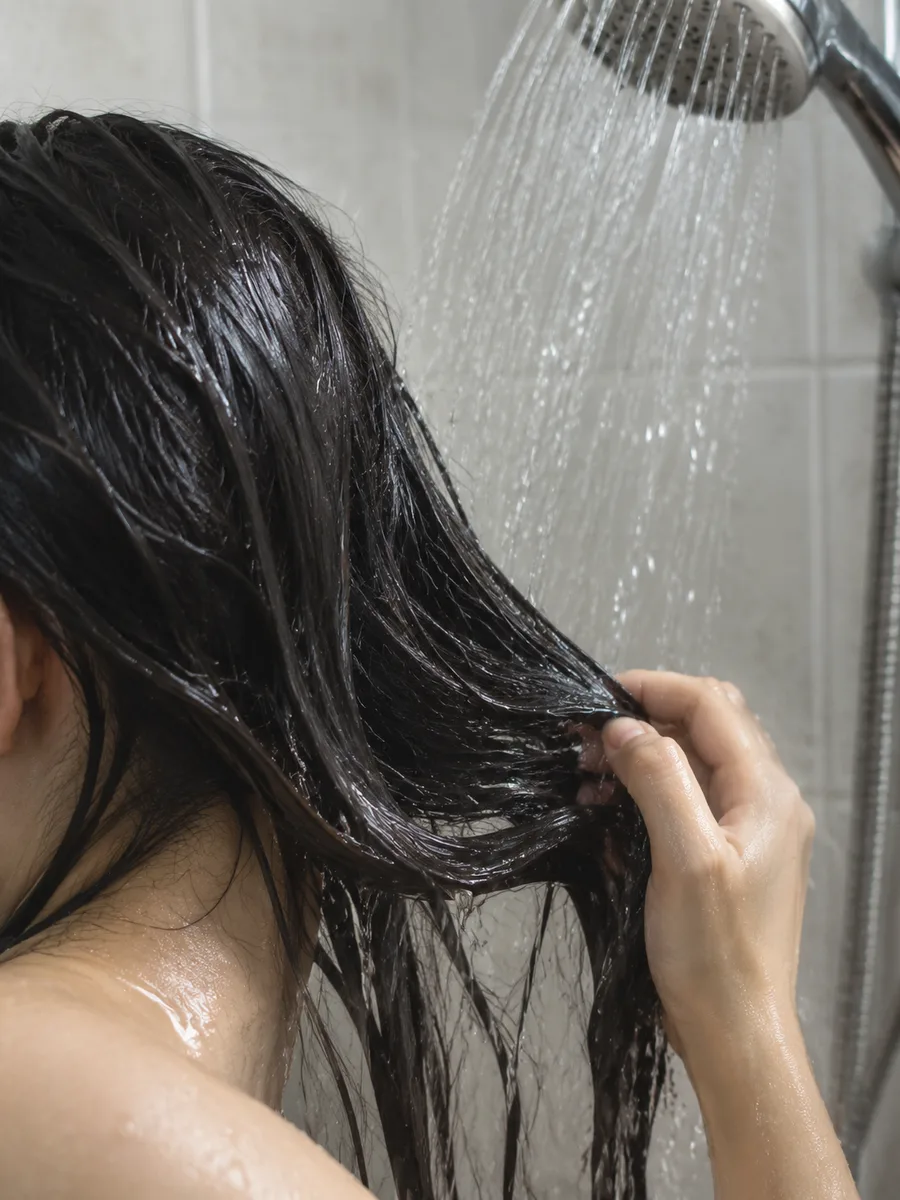
《纽约时报》请皮肤科医生查证冷水洗发神话
Dermatologists Debunk the Cold-Water Hair Rinse Myth: It Won't Boost Shine
About this story
Dermatologists debunk the viral cold water hair rinse myth, explaining why lukewarm water and conditioner—not cold water—are key to shinier hair. HSK 3 Chinese listening practice.
This is an HSK 3 Chinese listening episode that runs about 3 minutes. The full Mandarin script is shown with tap-for-pinyin and a line-by-line English translation, so you can listen and read at once — comprehensible input in the sense of Stephen Krashen's i+1 theory. It teaches 12 key vocabulary words such as 相信、最近、网上 and walks through 5 grammar patterns, each explained in English with examples. The same news story is retold at 4 difficulty levels — use the level selector above to find the version that is challenging but still understandable for you.
Read at your level
原文Read the complete story in Chinese. Reveal pinyin and English only when you need them.
English transcript reference
Many people rinse their hair with cold water after washing it.
They believe this will make their hair shinier.
Doctors who treat skin and hair are called dermatologists.
One dermatologist says this claim is wrong.
Her answer was short: "Completely wrong."
This claim has been around for decades, and many people have tried it over the years.
Recently, it has become popular online again.
Those who make this claim have a reason.
The surface of the hair has a very thin layer of small scales, just one layer.
These scales overlap one another like roof tiles.
They are on the outside of the hair, protecting the inside.
When light hits these scales, it reflects back.
The reflected light we see is the shine of the hair.
Some people think cold water can make these scales lie flat.
When the scales are flat, more light is reflected.
Another dermatologist disagrees.
She says, whether it's cold water or hot water,
there is no reliable research showing they can make hair shinier.
This doctor also says rinsing with cold water probably "won't make much of a difference."
A dermatology professor has a suggestion.
She says water that is neither too cold nor too hot is best, close to body temperature.
Water that is too cold doesn't clean well enough.
Oil and dirt on the hair may remain on the head.
Water that is too hot is also not good.
The doctor says hot water can dry out the scalp, which is the skin where hair grows.
Hot water can also make the scalp uncomfortable.
Conditioner used after washing can make these scales lie flat.
When the scales are flat, the hair looks shiny.
This doctor says what makes hair shiny is regular hair care habits.
In particular, conditioner is much more effective than cold water.
Whether you wash every two or three weeks or every day is also important.
The American Academy of Dermatology says people with straight hair and an oily scalp can wash once a day.
People with dry, thick, curly hair can wash every two or three weeks; even every two or three weeks, their hair won't be shinier.
There is one more thing that can damage hair.
Brushing too hard with a comb is bad.
Rubbing wet hair vigorously with a towel is also bad.
This can damage the small scales on the surface of the hair.
When this layer of scales is damaged, the hair loses its shine.
So, rinsing hair with cold water cannot make hair shinier.
Listen again
Try it without the transcript and notice what sounds clearer.
What vocabulary does this episode teach?
词汇HSK 3. Used as a verb; often followed by a clause. Example: 他们相信这样头发会变得更亮。
HSK 2. Time word; can be placed at the beginning of a sentence or before the verb.
HSK 2. Often used as a location noun: 在网上 (on the internet).
HSK 3. Common measure word: 一个理由 (a reason).
HSK 3. Verb; often used with 环境 (environment) or 眼睛 (eyes).
HSK 3. Can be a noun or verb. Example: 有一个建议 (have a suggestion).
HSK 3. Used for body temperature or water temperature.
HSK 2. Adjective; often used with 洗 (wash) as 洗干净 (wash clean).
HSK 3. Can be a noun or verb. Example: 可靠的研究 (reliable research).
HSK 3. Common noun; 皮肤科 (dermatology) is derived from it.
Beyond level. Compound of 皮肤 (skin) + 科 (department). 皮肤科医生 means dermatologist.
Beyond level. 护 (protect) + 发 (hair) + 素 (element/agent). Common hair care product.
* beyond level超纲词
What grammar patterns appear in this episode?
语法让 + Noun + Adjective
Causative pattern meaning 'to make someone/something do or become something'.
冷水能让这些小片变平。
热水还会让头皮不舒服。
也好,……也好
Pattern meaning 'whether it is ... or ...', used to indicate that both options are included.
冷水也好,热水也好。
Emphatic construction highlighting a fact or situation, often used to emphasize the agent or reason.
让头发亮的,是平时护发的习惯。
比 + Noun + Adjective + 得多
Comparative pattern meaning 'much more ... than'.
特别是护发素,比冷水有用得多。
Used in questions or alternatives to mean 'or' (in the sense of 'or rather').
两三个星期洗一次,还是每天洗一次,也很重要。
Proper nouns
专有名词Sources
来源Free account
Keep learning from this story
Create a free account to keep saved words and your preferred level together.
- Keep words with their story context
- Remember your preferred level
- Build your vocabulary over time