
A Chinese podcast · Same story, 4 levels
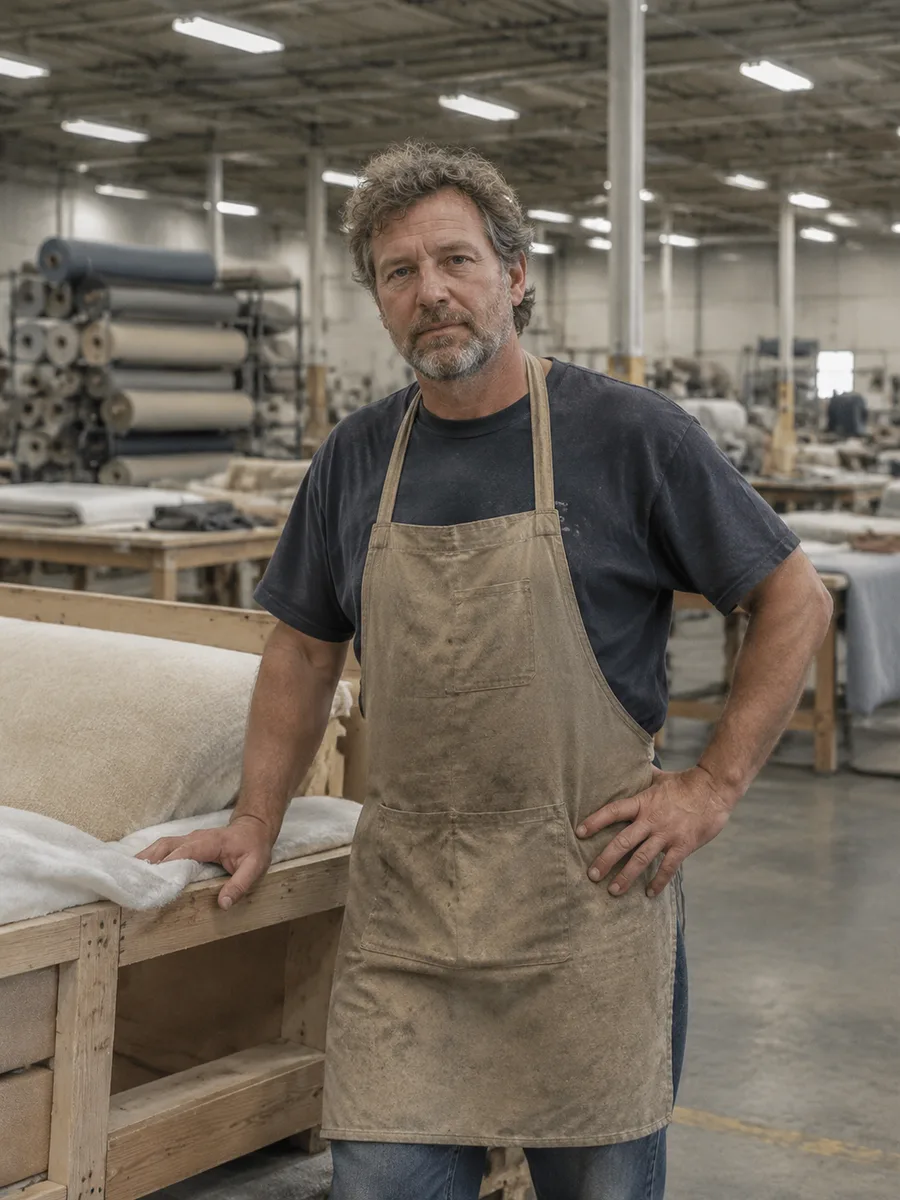
特朗普关税下,海波因特的沙发厂只开了十个月
Trump Tariffs Backfire: TOV's Zero-Dollar High Point Sofa Factory Shuts After 10 Months
About this story
HSK 2: Bruce Krinsky's High Point sofa factory closed after 10 months, cutting 45 jobs. He lost $3 million as tariffs on China and Vietnam made US production too costly.
This is an HSK 3 Chinese listening episode that runs about 3 minutes. The full Mandarin script is shown with tap-for-pinyin and a line-by-line English translation, so you can listen and read at once — comprehensible input in the sense of Stephen Krashen's i+1 theory. It teaches 12 key vocabulary words such as 工厂、开、关 and walks through 5 grammar patterns, each explained in English with examples. The same news story is retold at 4 difficulty levels — use the level selector above to find the version that is challenging but still understandable for you.
Read at your level
原文Read the complete story in Chinese. Reveal pinyin and English only when you need them.
English transcript reference
Bruce Krinsky opened a factory in High Point, North Carolina, to make sofas.
The factory was only open for ten months. On July 31, he closed it.
Once the factory closed, forty-five people lost their jobs.
During those ten months, he lost about three million dollars.
He and his wife started a company together, selling sofas.
At that time, the sofas were made in China, and each sold for nine hundred dollars.
Later, the US imposed very high tariffs on goods coming from China.
So he went to the Chinese factory that made his sofas.
He asked this factory to go to Vietnam and open a new factory.
The new factory was not far from Ho Chi Minh City and opened quickly.
There were one hundred and thirty workers in the factory.
One worker who made sofas was named Nguyen Van Hai.
He worked ten hours a day, six days a week.
His yearly salary was about eight thousand dollars.
He said the wages here were really high.
But not long after, the US proposed a forty-six percent tariff on goods from Vietnam.
Krinsky thought, then let's make them in the US.
He found a factory in High Point. To buy this factory, he didn't spend a single cent.
But making sofas in the US was too expensive.
In Vietnam, the materials for one sofa plus the money paid to workers came to about two hundred and eighty dollars.
Adding other costs, one sofa came to about six hundred and fifty-five dollars in total.
In High Point, materials and labor alone cost one thousand dollars.
Adding other costs, one sofa came to about one thousand two hundred and thirty dollars in total.
In Vietnam, one worker could make ten sofas a day.
In High Point, one worker could only make two or three a day.
Krinsky calculated that a sofa would have to sell for two thousand dollars just to break even.
He said that at two thousand dollars, a company like theirs would have no reason to stay in business.
As a result, he lost over one hundred dollars on every sofa he sold.
He said he had always voted for the current president.
He also asked, what exactly is an American business supposed to do?
There were other furniture factories in High Point, and they were still operating.
The person in charge of one of them was named George Jordan.
He said their sofas sold for three thousand to five thousand dollars.
If sofas sell for a high price, it's still possible to make money making them in the US.
But cheap sofas are very hard to make in the US.
The number of people in this industry was getting smaller and smaller: in 1990 there were ninety-one thousand, and now there are twenty-seven thousand.
After the factory closed, he moved more sofa production back to Vietnam.
About seventy percent of the sofas his company now sells are made in Vietnam.
Customs inspected seventeen shipments from Vietnam and demanded he pay one hundred and thirty-five thousand dollars.
Next year, tariffs on sofas from China and Vietnam will be even higher.
Listen again
Try it without the transcript and notice what sounds clearer.
What vocabulary does this episode teach?
词汇HSK 2. A place where goods are made. Measure word: 家 (yī jiā gōngchǎng).
HSK 1. Used for opening a shop or factory: 开工厂 (open a factory). Opposite: 关 (close).
HSK 2. To close a business or shop: 关工厂 (close a factory). Also 关门 (close the door).
HSK 1. 没有工作 means 'to be out of work'. Also used as a verb: 他工作很忙.
HSK 1. 卖沙发 (sell sofas). Opposite: 买 (buy).
HSK 1. 太贵了 (too expensive). Opposite: 便宜 (cheap).
HSK 2. 便宜的沙发 (cheap sofas). Note: 便 is pronounced pián here, not biàn.
HSK 2. 工资很高 (wages are high). Often used for monthly or yearly pay.
HSK 2. 赔钱 (lose money) is common. Opposite: 赚钱 (make money).
HSK 2. 收税 (collect tax), 很高的税 (very high tariffs).
HSK 3. 这个行业的人越来越少 (fewer and fewer people in this industry).
HSK 3. 一张沙发的材料 (materials for one sofa).
* beyond level超纲词
What grammar patterns appear in this episode?
语法The 把 construction moves the object before the verb to show what happens to it. Often used with result complements like 关 (close) or 放 (put).
他把它关了。
他把更多的沙发放回越南去做。
一 + Verb + 就 + Result
This pattern means 'as soon as [action], [result] happens'.
工厂一关,四十五个人就没有了工作。
才 + Verb
Indicates that something only happens under a certain condition or after effort; often translated as 'only then' or 'just'.
一张沙发要卖到两千美元,才不赔钱。
对 + Object + 收 + 税
Means 'to impose a tax/tariff on [object]'. 对 introduces the target.
美国对中国来的东西收很高的税。
要对越南来的东西收百分之四十六的税。
在 + Place + 做 + Object
Shows where an action takes place. 在 means 'in/at'.
在海波因特,材料和工钱就要一千美元。
Proper nouns
专有名词Sources
来源Free account
Keep learning from this story
Create a free account to keep saved words and your preferred level together.
- Keep words with their story context
- Remember your preferred level
- Build your vocabulary over time