
A Chinese podcast · Same story, 4 levels
敦煌:四百九十二个洞
Dunhuang: 492 Caves, 50,000 Manuscripts, 130 Pounds
About this story
The first Mogao cave was cut in 366; in 1907 more than 13,000 manuscripts left Dunhuang for 130 pounds. HSK 1 Chinese listening practice.
This is an HSK 1 Chinese listening episode that runs about 3 minutes. The full Mandarin script is shown with tap-for-pinyin and a line-by-line English translation, so you can listen and read at once — comprehensible input in the sense of Stephen Krashen's i+1 theory. It teaches 8 key vocabulary words such as 敦煌、莫高窟、沙漠 and walks through 3 grammar patterns, each explained in English with examples. The same news story is retold at 4 difficulty levels — use the level selector above to find the version that is challenging but still understandable for you.
Read at your level
原文Read the complete story in Chinese. Reveal pinyin and English only when you need them.
English transcript reference
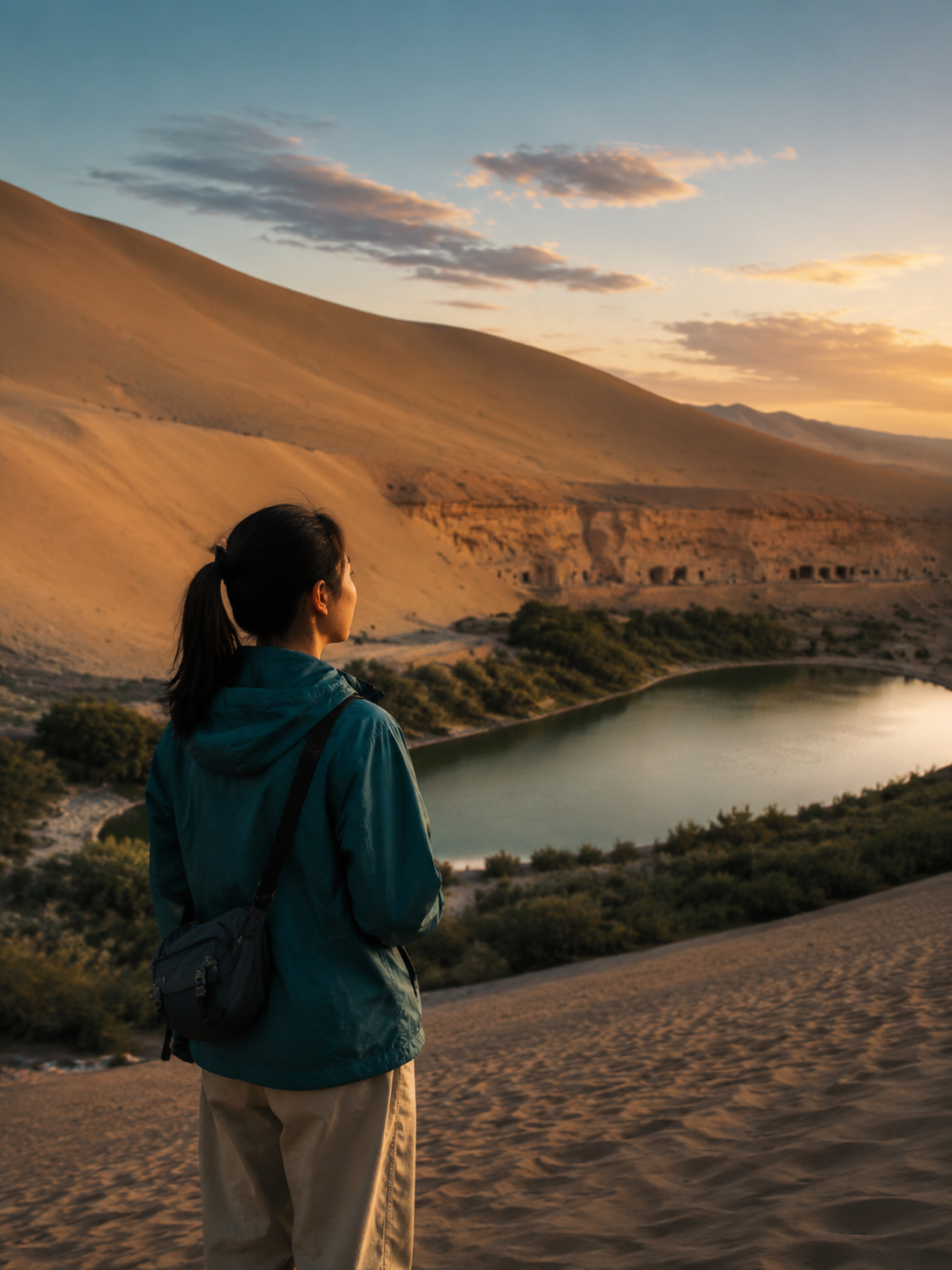
Today I'm in Dunhuang.
Dunhuang is in the desert.
There's no water in the desert.
Dunhuang has water.
Where there's water, people can live.
Long ago, many people came here.
There was water here, so they stayed here.
Today I'm going to see the Mogao Caves.
The Mogao Caves are on a mountain.
There are many caves on the mountain.
There are paintings inside the caves.
I said: how old are these caves?
A man said: there were already caves in the year 366.
I said: 366?
He said: yes, over 1,600 years ago.
He said: people after that dug them one by one, for more than a thousand years.
I said: how many caves are there now?
He said: caves with paintings, 492 of them.
I said: 492?
He said: yes.
He said: the paintings inside cover 45,000 square metres.
I went inside one cave.
The cave isn't big.
But all four walls are paintings.
There are people in the paintings, and horses too.
These paintings have been here more than a thousand years.
In the afternoon, he showed me a small room.
This room is very small.
He said: in 1900, someone found a door here.
He said: behind the door is this room.
I said: what was in the room?
He said: more than 50,000 items.
He said: all very old books and paintings.
I said: more than 50,000?
He said: yes, more than 50,000.
I said: where are these things now?
He said: not here.
He said: in 1907, a foreigner came.
He said: he took away a lot.
I said: did he pay?
He said: he did.
He said: 130 pounds.
I said: 130?
He said: yes, 130.
He took away more than 13,000 items.
I didn't say anything.
He said: now these things are in many places.
He said: if you want to see them, you have to go to many places.
Now I'm sitting in the desert.
I think: these paintings were here more than a thousand years.
Before 1900, nobody knew about that room.
After 1907, those things were no longer here.
If you saw something very old, would you want to take it away, or want it to stay here?
Listen again
Try it without the transcript and notice what sounds clearer.
What vocabulary does this episode teach?
词汇HSK 1. Where there is water, people stop.
HSK 1. 45,000 square metres of it inside the caves.
HSK 1. More than 50,000 of them were in one small room.
A town with water in the middle of the desert.
492 caves with paintings, cut over 1,000 years.
No water. That is why the water at Dunhuang mattered.
The first one was cut in the year 366.
130 of them bought more than 13,000 items in 1907.
* beyond level超纲词
What grammar patterns appear in this episode?
语法有 A,就 …
States the condition and its direct result: given A, then B.
有水,人就可以住。
多少 + measure word
Asks how many, for a number expected to be large.
我说:现在有多少个洞?
A 还是 B?
Offers two options and asks the listener to choose.
你看见一个很老的东西,你想拿走,还是想它在这里?
Proper nouns
专有名词Sources
来源Free account
Keep learning from this story
Create a free account to keep saved words and your preferred level together.
- Keep words with their story context
- Remember your preferred level
- Build your vocabulary over time