
A Chinese podcast · Same story, 4 levels
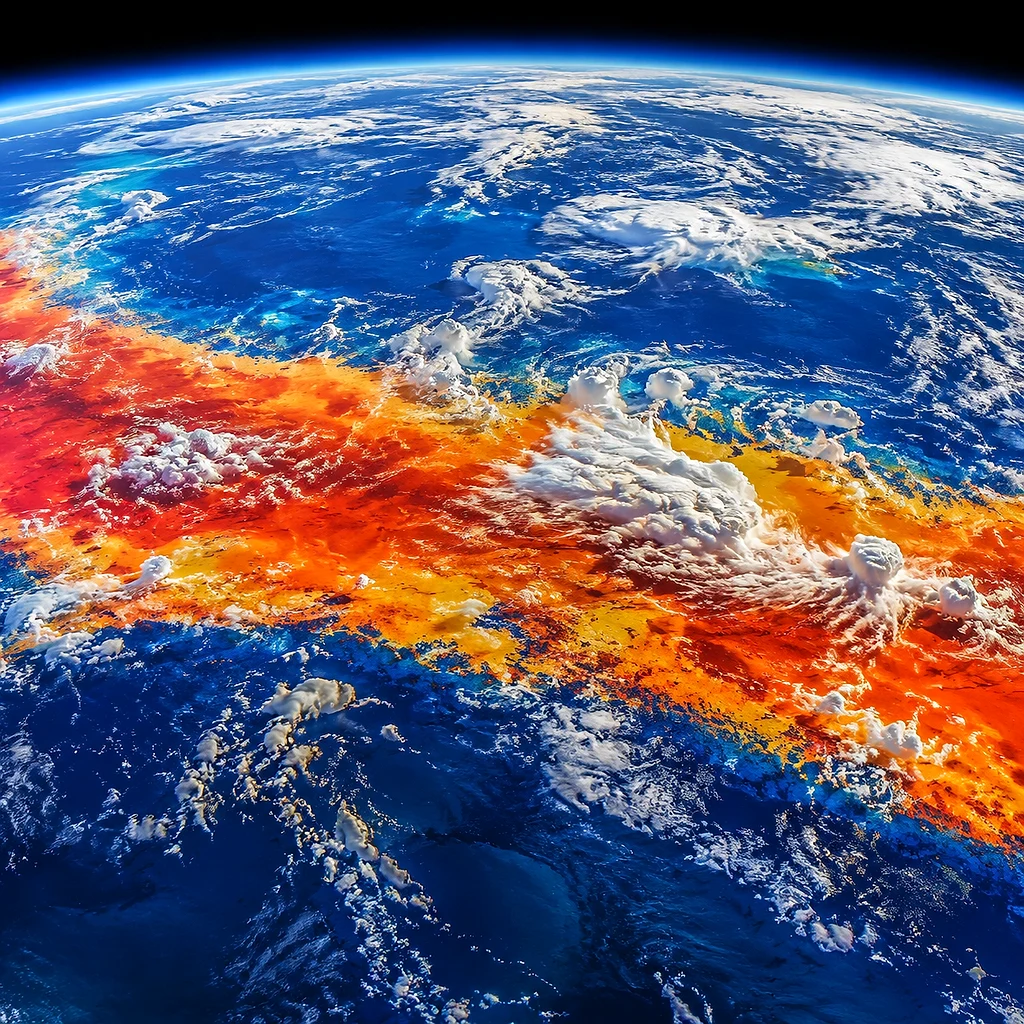
厄尔尼诺是什么?太平洋的海水一变热,全世界的天气都跟着变
Super El Niño Forecast for 2026
About this story
Super El Niño Forecast for 2026. HSK 2 Chinese listening practice.
This is an HSK 2 Chinese listening episode that runs about 4 minutes. The full Mandarin script is shown with tap-for-pinyin and a line-by-line English translation, so you can listen and read at once — comprehensible input in the sense of Stephen Krashen's i+1 theory. It teaches 14 key vocabulary words such as 天气、准备、重要 and walks through 3 grammar patterns, each explained in English with examples. The same news story is retold at 4 difficulty levels — use the level selector above to find the version that is challenging but still understandable for you.
Read at your level
原文Read the complete story in Chinese. Reveal pinyin and English only when you need them.
English transcript reference
Today, let's talk about the weather.
The weather is sometimes good, sometimes bad.
Today, we'll talk about a name related to the weather.
This name is El Niño.
Many people have heard this name.
El Niño has to do with the ocean.
In a very big ocean, the sea water gets warm.
This ocean is called the Pacific.
The Pacific is the largest ocean.
The Pacific's water is normally cold.
But every few years, the water gets warm.
When the sea water warms, the weather changes with it.
This phenomenon of warming sea water is called El Niño.
This name was given long ago by fishermen in Peru.
Because it often happens around Christmas.
So they used this name for it.
So what happens when El Niño arrives?
The biggest problem is it makes the weather in many places very strange.
Some places get a lot of rain.
Too much rain leads to floods.
For example, California may get heavy rain and flooding in winter.
But in other places, it won't rain for a long time.
Without rain, it gets dry, and crops don't grow well.
For example, parts of South America may get very dry.
Parts of Australia and Southeast Asia may get both dry and hot.
One more important thing: El Niño makes the whole Earth hotter.
The Earth is already getting hotter year by year.
Add El Niño on top, and it gets hotter still.
Scientists have been watching the Pacific's water.
This year, they found the water warming especially fast.
So they say this year's El Niño may be very strong.
It may be the strongest in decades.
A very strong El Niño like this is also called a "super El Niño."
The last time it was this strong was many years ago.
If it really happens this year, this year and next may be the hottest yet.
Besides the heat, sea levels along the coast rise a bit.
When the sea rises, coastal cities flood more easily.
Still, El Niño isn't all bad.
For instance, in some places, Atlantic hurricanes become fewer.
El Niño isn't new; it has come many times before.
But scientists can now tell earlier that it's coming.
Knowing that, we can prepare in advance.
For example, storing extra water, or watching out for floods.
You might think this is just about weather and has nothing to do with you.
Actually, that's not so.
When the weather changes, many things change with it.
For example, some foods become scarcer and more expensive.
So El Niño has to do with every one of us.
Okay, today we learned what El Niño is.
It's the warming of the Pacific's water, which shifts weather all over the world.
Listen again
Try it without the transcript and notice what sounds clearer.
What vocabulary does this episode teach?
词汇Weather. 和天气有关 = related to the weather.
To prepare. 我们可以早做准备 = we can prepare in advance.
Important. 还有一件事很重要 = one more important thing.
A problem. 最大的问题是… = the biggest problem is…
Strange. 天气变得很奇怪 = the weather turns strange.
Especially. 海水热得特别快 = the water warms especially fast.
Very. 今年的厄尔尼诺可能会非常强 = this year’s El Niño may be very strong.
The topic — the warming of the Pacific.
The Pacific Ocean, the world’s largest ocean.
A phenomenon. 海水变热这种现象 = the phenomenon of warming sea water.
A flood. 雨太多,就会有洪水 = too much rain leads to floods.
Drought. 很久不下雨,就会很干 = no rain for long means drought.
A scientist. 科学家一直在看太平洋的海水 = scientists watch the Pacific.
Super. 很强的厄尔尼诺,也叫超级厄尔尼诺 = a very strong one is called a super El Niño.
* beyond level超纲词
What grammar patterns appear in this episode?
语法因为...
"Because..." — gives a reason.
因为这种事,常常在圣诞节前后发生。
比如...
"For example..." — introduces a concrete case.
比如美国的加州,冬天可能会下很多雨。
除了...(也/还)...
"Besides / apart from..." — adds beyond the first thing.
除了热,海边的水位,也会高一点。
Proper nouns
专有名词Free account
Keep learning from this story
Create a free account to keep saved words and your preferred level together.
- Keep words with their story context
- Remember your preferred level
- Build your vocabulary over time