
A Chinese podcast · Same story, 4 levels
超级厄尔尼诺逼近 2026:一场太平洋的"深呼吸",如何牵动全球气候
Super El Niño Forecast for 2026
About this story
Super El Niño Forecast for 2026. HSK 5-6 Chinese listening practice.
This is an HSK 5-6 Chinese listening episode that runs about 5 minutes. The full Mandarin script is shown with tap-for-pinyin and a line-by-line English translation, so you can listen and read at once — comprehensible input in the sense of Stephen Krashen's i+1 theory. It teaches 16 key vocabulary words such as 天气、现象、气候 and walks through 3 grammar patterns, each explained in English with examples. The same news story is retold at 4 difficulty levels — use the level selector above to find the version that is challenging but still understandable for you.
Read at your level
原文Read the complete story in Chinese. Reveal pinyin and English only when you need them.
English transcript reference
Today I want to talk about a climate phenomenon frequently in the headlines lately — El Niño.
The name is familiar to many, but few can clearly explain what it is or why it matters.
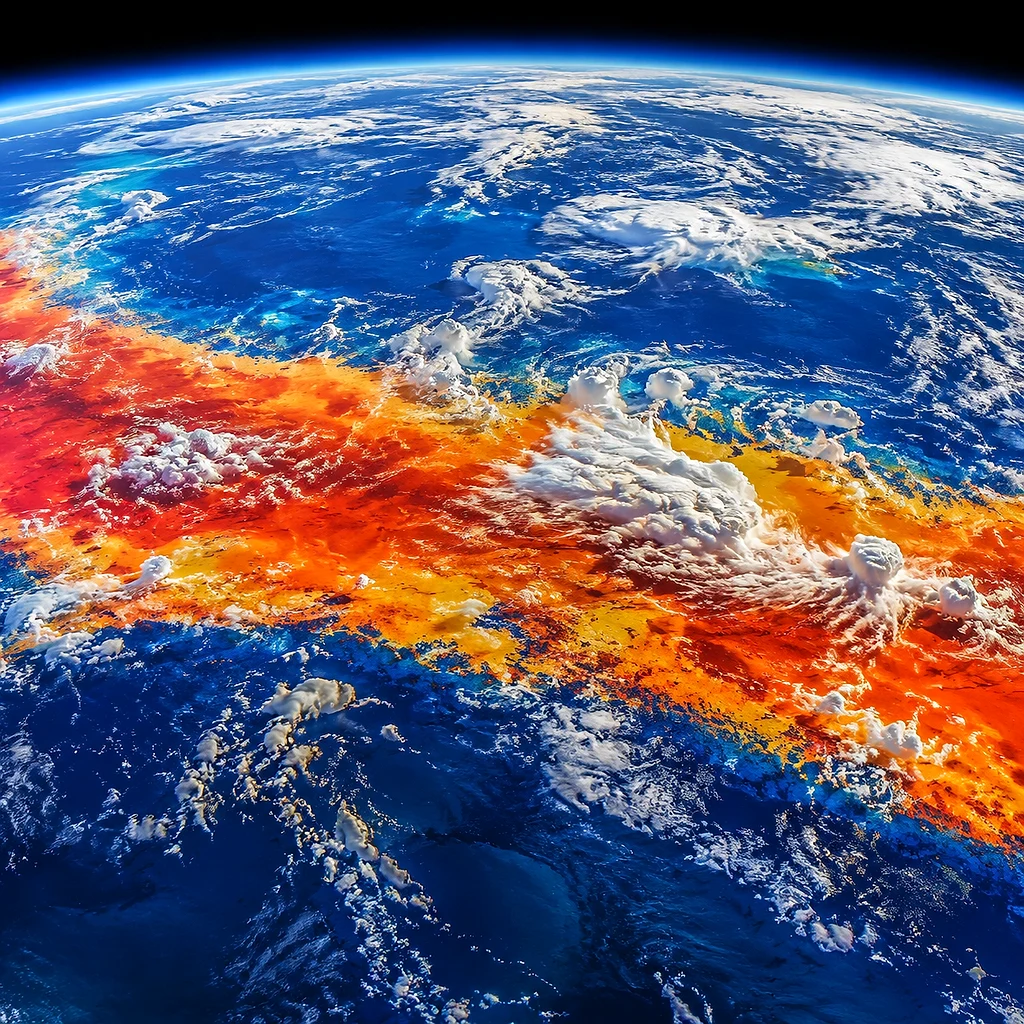
Put bluntly, El Niño is a phenomenon where the sea water near the Pacific equator warms abnormally over a vast area.
Let's start with its name — there's a story to it.
Long ago, fishermen off the coast of Peru noticed that every few years the sea would inexplicably turn unusually warm.
And this change often appeared around Christmas.
So, half in awe, they called it "the Christ child" — the origin of the word "El Niño."
So why does the sea suddenly warm?
The key is the wind.
In normal years, steady easterlies — the so-called trade winds — prevail over the Pacific, ceaselessly pushing warm water toward the western Pacific.
Meanwhile, off Peru's coast, vast amounts of frigid water well up from the deep, bringing rich fish stocks and keeping the eastern Pacific relatively cool.
But every three to seven years, these trade winds inexplicably weaken, or even reverse.
Once the wind slackens, the warm water piled in the west surges back east like an outgoing tide.
At the same time, the cold water below can no longer rise.
Between the cold and the warm, the eastern Pacific — a "global cold spot" — transforms into a warm pool.
This oceanic shift may sound small, but it's like toppling the first domino.
The warming drags the thunderstorm clusters, once concentrated over the western Pacific, thousands of kilometers eastward.
That, in turn, disturbs the high-altitude jet stream and atmospheric waves, ultimately scrambling global weather patterns beyond recognition.
In concrete weather terms, it's joy for some and grief for others.
Some regions see unusually heavy rainfall, even relentless downpours and floods.
Take California: in a strong El Niño year, the odds of winter "atmospheric rivers" double, often bringing one heavy storm after another.
Sea levels also rise temporarily by a dozen-plus centimeters; combined with storm surge, the flood risk for coastal cities climbs sharply.
In other corners of the Earth, the plot runs exactly opposite.
The Amazon, Australia, and parts of Africa may fall into prolonged severe drought, with failed harvests and frequent wildfires.
Beyond this flood-drought polarization, El Niño has a global effect: it temporarily nudges up the world's average temperature.
On its own, it can raise global temperatures by about 0.2 to 0.4 degrees.
That number sounds trivial, but the Earth is already about 1.4–1.5 degrees warmer than pre-industrial times.
Stack the two together, and this year and next may well break the record for the hottest year on record.
That's precisely why scientists are especially wary this time.
Across the major models, this year's El Niño is all but certain to reach "strong," with a considerable chance of surging to "super El Niño."
If it does, it will rank among the strongest since satellite records began.
Looking back, the super El Niños of 1982–83 and 1997–98 left deep marks worldwide: from California's torrential rains to Southeast Asia's raging wildfires,
to violent swings in global food prices.
That said, El Niño's strength and its consequences don't always line up neatly.
Take California: 1997–98 was very wet, yet 2015–16, also a super El Niño, wasn't especially rainy there.
So scientists keep cautioning: strength matters, but it's not the only variable.
Of course, it's not all bad news.
For instance, El Niño tends to suppress Atlantic hurricane activity, calming the storms in those waters considerably.
What's genuinely reassuring is that, unlike before, we can now anticipate its arrival months in advance.
Those extra months are enough for countries to prepare: reinforcing water infrastructure, stockpiling food, guarding against wildfires and floods.
To ordinary people, El Niño may sound remote, but it ultimately seeps into daily life through food prices, grocery bills, even summer electricity costs.
Seen this way, understanding El Niño is really about understanding the planet we live on.
In the end, El Niño is no fearsome beast — just an ancient, natural breath of Earth's climate system.
It's just that with each deep breath it takes, the whole world must readjust its rhythm.
Okay, that's where we'll leave El Niño today; see you next time.
Listen again
Try it without the transcript and notice what sounds clearer.
What vocabulary does this episode teach?
词汇Weather. 全球的天气格局 = global weather patterns.
A phenomenon. 一个气候现象 = a climate phenomenon.
Climate. 地球气候系统 = Earth’s climate system.
An effect. 一个全局性的影响 = a global effect.
The world. 全世界都得跟着调整 = the whole world must adjust.
A figure. 这个数字听起来不起眼 = this number sounds trivial.
A system. 地球气候系统 = Earth’s climate system.
Severe. 长时间的严重干旱 = prolonged severe drought.
The topic — the equatorial Pacific warming abnormally.
The Pacific Ocean.
The equator. 太平洋赤道附近的海水 = sea water near the Pacific equator.
The trade winds. 稳定的东风,也就是信风 = the steady easterlies, the trade winds.
A flood. 接连不断的暴雨和洪水 = relentless downpours and floods.
Drought. 长时间的严重干旱 = prolonged severe drought.
A hurricane. 压制大西洋的飓风活动 = suppress Atlantic hurricane activity.
Super. 冲上“超级厄尔尼诺” = surge to a “super El Niño.”
* beyond level超纲词
What grammar patterns appear in this episode?
语法与此同时...
"At the same time / meanwhile..." — two things happening together.
与此同时,深处的冷水也上不来了。
并不总是 / 并非全是...
"Not always / not entirely..." — qualifies an over-simple claim.
厄尔尼诺的强度和后果,并不总是简单地对等。
Proper nouns
专有名词Free account
Keep learning from this story
Create a free account to keep saved words and your preferred level together.
- Keep words with their story context
- Remember your preferred level
- Build your vocabulary over time