
A Chinese podcast · Same story, 4 levels
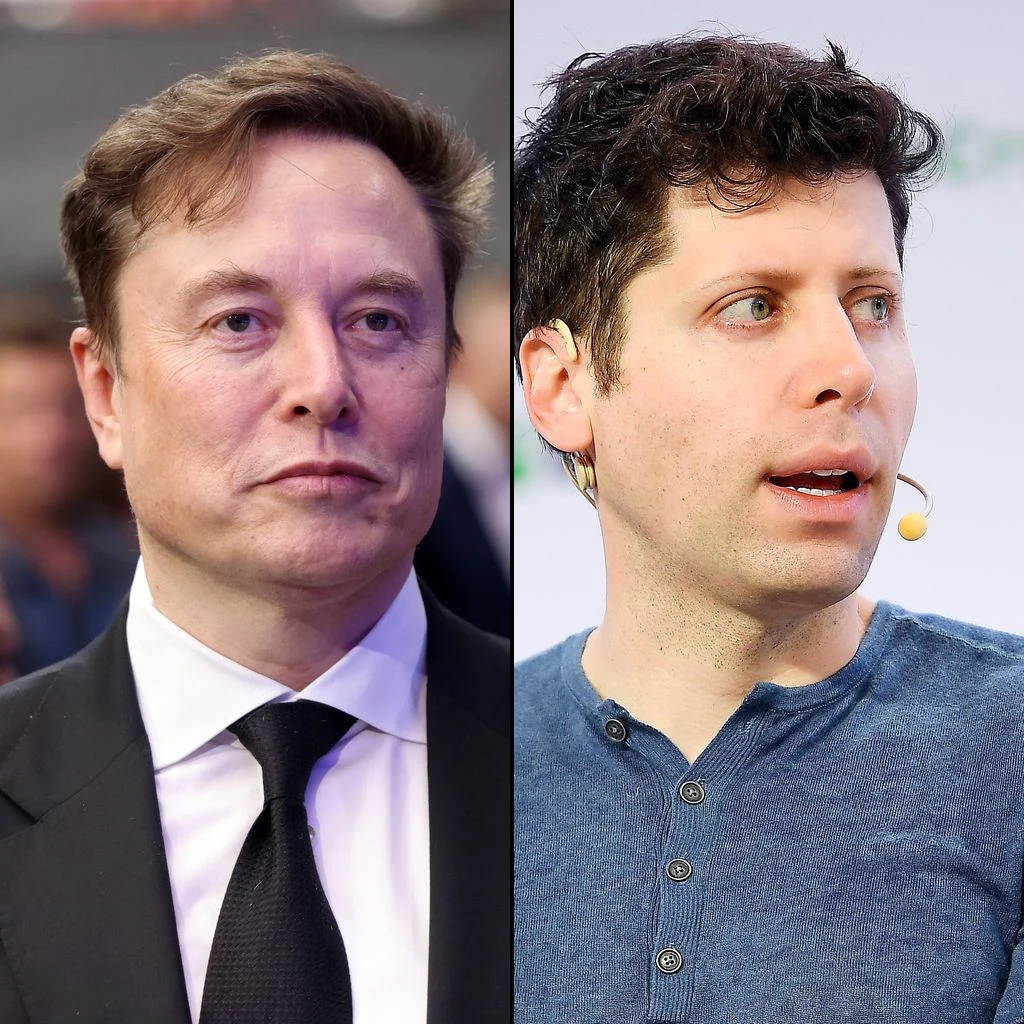
两个有钱人的新闻:马斯克输了
Two Rich Men in the News: Musk Lost
About this story
Two Rich Men in the News: Musk Lost. HSK 1 Chinese listening practice.
This is an HSK 1 Chinese listening episode that runs about 3 minutes. The full Mandarin script is shown with tap-for-pinyin and a line-by-line English translation, so you can listen and read at once — comprehensible input in the sense of Stephen Krashen's i+1 theory. It teaches 12 key vocabulary words such as 朋友、钱、想 and walks through 4 grammar patterns, each explained in English with examples. The same news story is retold at 4 difficulty levels — use the level selector above to find the version that is challenging but still understandable for you.
Read at your level
原文Read the complete story in Chinese. Reveal pinyin and English only when you need them.
English transcript reference
Today I'll tell you a news story.
It's about two Americans.
They are both very rich.
They used to be friends.
Now they are not.
The first man is called Musk.
Have you heard of him?
Musk has lots and lots of money.
He is the richest man in the world.
He makes cars.
He also makes AI.
The second man is called Sam.
Sam also makes AI.
Sam's company is called OpenAI.
Have you heard of OpenAI?
OpenAI is the company that makes ChatGPT.
These two men,
used to do OpenAI together.
That was many years ago.
Why do I say "used to"?
Because later,
they were no longer friends.
Musk is no longer at OpenAI.
He started his own AI company.
Sam is still doing OpenAI.
But Musk is not happy.
Musk says:
"OpenAI is not good.
"Sam is not good.
Musk thinks:
"I will go find a judge.
What is a judge?
A judge is a person who decides who's right.
Two people disagree,
the judge says: you're right, he's wrong.
Musk told the judge:
"OpenAI is for everyone.
"Not for one person.
"Not for one person to make lots of money.
The judge said:
"Okay.
"Let's take a look.
Yesterday,
12 people had a meeting.
They listened to Musk speak.
They also listened to Sam speak.
They looked at many things.
They thought for less than 2 hours.
They said:
"Musk,
"you came too late.
"You should have come earlier.
"Now it's already too late.
So Musk lost.
What does "lost" mean?
"Lost" means didn't win.
Musk is not happy.
Musk says:
"This isn't right.
"I'll go find a judge again.
"I won't let it end like this.
What about Sam?
Sam is very happy.
Sam says:
"Good.
"We can do AI properly now.
I read this news.
I thought:
These two people,
used to be friends,
are not now.
Both because of money,
and both because of AI.
In the future, AI will be huge.
Many people make AI.
Who is the best?
Right now no one knows.
Finally I'll ask you:
Have you used ChatGPT?
Have you heard of Musk?
Have you heard of Sam?
Of these two,
who do you like?
Think about it.
Okay.
That's all for today.
Talk tomorrow.
Listen again
Try it without the transcript and notice what sounds clearer.
What vocabulary does this episode teach?
词汇Friend. The whole story turns on Musk and Sam being 朋友 ten years ago — and not now.
Money. Both men are world-class rich; the fight is, at root, about 钱.
To think (about). 'Musk 想: I'll find a judge' — used heavily for internal reasoning.
To listen / to hear. The repeated rhetorical hook: '你听过吗?' — have you heard of him?
To say. The episode is built on quoted speech: 马斯克说, 山姆说, 法官说.
To do, to make. 做 AI, 做公司, 做车 — one of the most reused HSK 1 verbs in tech-news Chinese.
News. The story's framing word — '今天我给你说一个新闻'.
Company. OpenAI 是一个公司; Musk 自己做了一个公司. Tech-news must-know.
To lose (a contest, a case). The headline of the entire episode: 马斯克输了 — Musk lost.
To win. The opposite of 输. Sam won this round; Musk plans to appeal.
A judge. Explained inline as 'the person who decides who's right'. The episode's substitute for the more technical court vocabulary.
To sue someone, take them to court. 'Musk 告 Sam' — Musk is suing Sam. Distinct from 告诉 (gàosu, to tell).
* beyond level超纲词
What grammar patterns appear in this episode?
语法X 是 Y 的
Possessive 是…的. Used repeatedly: 'OpenAI 是给所有人的' — OpenAI is for everyone; '钱是马斯克的' — the money is Musk's. The little 的 carries all the ownership.
OpenAI 是给所有人的。
公司是山姆的。
以前 vs. 现在
Time contrast structure. 'They 以前 were friends, 现在 they are not.' The whole episode's emotional core sits on this contrast.
他们以前是朋友。现在他们不是。
马斯克以前在 OpenAI。现在他不在。
S + 不高兴
不高兴 = the polite, indirect Chinese way to say someone is angry or upset. Both Musk and Sam are described with 高兴 / 不高兴 throughout — the emotional thermostat of the story.
马斯克不高兴。
山姆很高兴。
S + 输了 / 赢了
了 marks the completion. 输了 = lost; 赢了 = won. Plus 没 + verb for the negative: 没赢 = didn't win. The episode hangs on these three words.
马斯克输了。
山姆赢了。
Proper nouns
专有名词Free account
Keep learning from this story
Create a free account to keep saved words and your preferred level together.
- Keep words with their story context
- Remember your preferred level
- Build your vocabulary over time