
A Chinese podcast · Same story, 4 levels
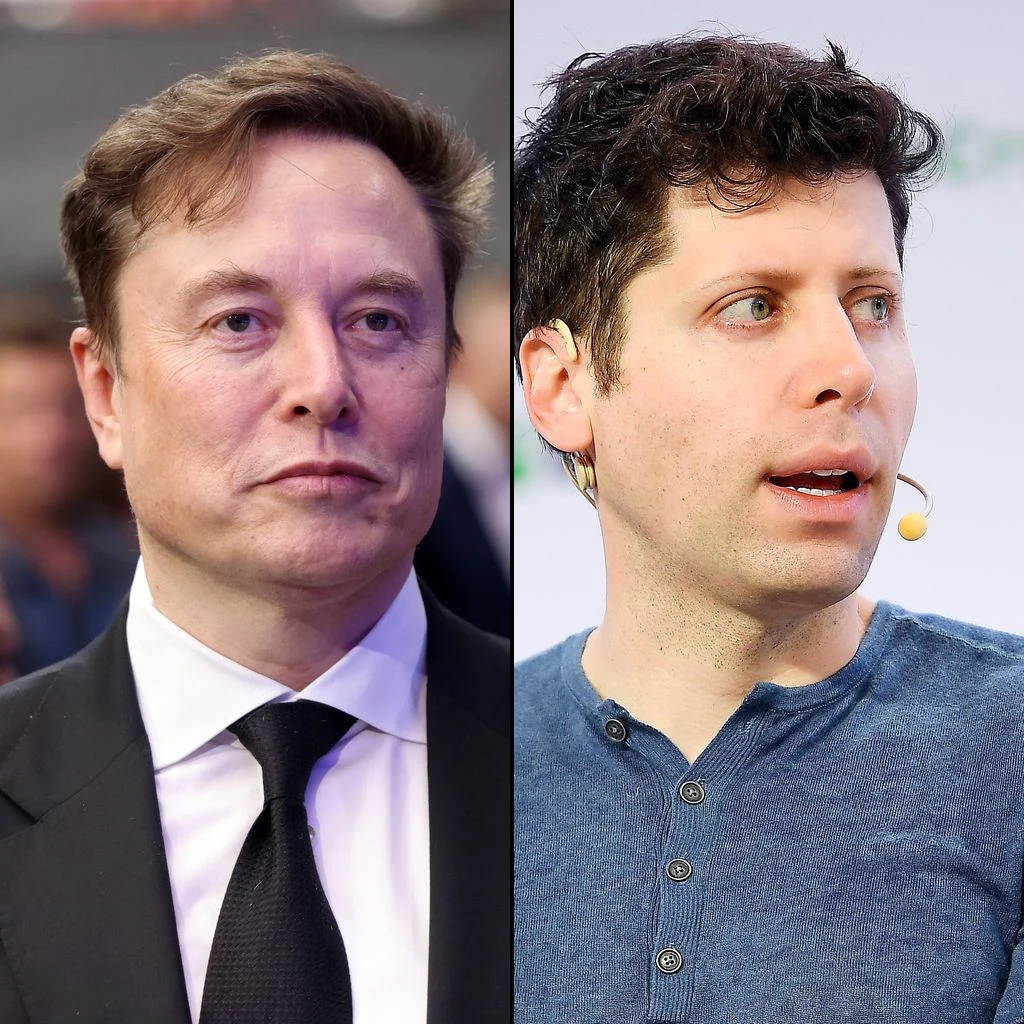
马斯克输了和 OpenAI 的官司
Musk Loses His Lawsuit Against OpenAI
About this story
Musk Loses His Lawsuit Against OpenAI. HSK 2 Chinese listening practice.
This is an HSK 2 Chinese listening episode that runs about 4 minutes. The full Mandarin script is shown with tap-for-pinyin and a line-by-line English translation, so you can listen and read at once — comprehensible input in the sense of Stephen Krashen's i+1 theory. It teaches 12 key vocabulary words such as 朋友、公司、新闻 and walks through 4 grammar patterns, each explained in English with examples. The same news story is retold at 4 difficulty levels — use the level selector above to find the version that is challenging but still understandable for you.
Read at your level
原文Read the complete story in Chinese. Reveal pinyin and English only when you need them.
English transcript reference
Today I want to tell you a news story.
It's about two very rich people.
One is called Musk.
One is called Sam.
You've definitely heard of Musk.
He is the richest man in the world.
He makes electric cars,
also makes rockets,
also makes AI.
What about Sam?
Sam runs OpenAI.
That's the company that makes ChatGPT.
Sam is the boss of OpenAI.
These two,
used to be friends.
They started OpenAI together.
That was back in 2015.
At that time,
they thought:
when we make AI,
it isn't for money.
It's for everyone to use.
So we'll make a non-profit company.
But later,
their ideas became different.
Musk thought:
OpenAI should belong to everyone.
No one person should make tons of money.
Sam thought:
making AI needs lots and lots of money.
We have to let the company earn money,
so we can keep going.
The two of them argued.
In the end,
Musk left OpenAI.
He started his own AI company.
But Musk was still unhappy.
Last year,
Musk went to court.
He sued Sam.
He sued OpenAI.
He said:
"OpenAI shouldn't be making money.
"OpenAI should belong to everyone.
"Sam shouldn't do this.
This was a very big news story.
The whole world was watching.
Because these two,
are both among the richest men.
Both do AI.
The court had 12 people come look at it.
These 12 people,
are not judges.
They are ordinary people.
They listened to Musk speak,
and listened to Sam speak.
Yesterday,
they thought for less than two hours.
Then they said:
"Musk,
"you came too late.
"If you'd come earlier,
"we might have listened to you.
"But now it's already too late.
That is to say:
Musk lost.
But Musk doesn't want it to end this way.
Musk said:
"I will go to court again.
"This isn't fair.
What about Sam?
Sam said:
"I'm very happy.
"We can do AI properly now.
This story,
isn't over.
Musk will go to court again.
It may take a long time.
But reading this news,
I thought:
AI is a new thing.
Who will make the best AI?
Who will take everyone's money?
These are all big questions.
Musk and Sam,
both want to be number one.
Neither wants to lose.
In the future AI will be even bigger.
The people who make AI,
will also be more.
The people who argue,
will also be more.
Finally,
I'll ask you one question:
If you ran an AI company,
how would you do it?
Would you earn money,
or give it to everyone?
Think about it.
Okay.
That's all for today.
Talk tomorrow.
Listen again
Try it without the transcript and notice what sounds clearer.
What vocabulary does this episode teach?
词汇Friend. The premise: Musk and Altman were 朋友 in 2015, partners building OpenAI together. Now they're opponents in court.
Company. OpenAI is the world's #1 AI 公司. Musk left, founded his own AI 公司 (xAI).
News story. The episode opens by framing the court verdict as 一个新闻.
To feel, to think (subjective). The episode uses 觉得 to distinguish what each side believed: 马斯克觉得… 山姆觉得… — same situation, opposite views.
To leave (a place, a group). Musk 离开了 OpenAI — the moment in 2018 that set up everything that followed.
To tell (someone something). Distinguish from 告 (to sue) — sounds similar but very different meaning.
A court (of law). The destination of the whole story: 马斯克去了法院.
To lose. The headline outcome: 马斯克输了. Pairs with 赢 (yíng, to win).
To earn / make money. Compound: 赚 (earn) + 钱 (money). The core dispute is whether OpenAI was supposed to 赚钱 or not.
Boss, owner. Sam is the 老板 of OpenAI. Common word the moment you talk about who runs a company.
To argue (loudly). 两个人就吵了 — and the two of them quarreled. The verb version of an internal corporate fight.
Fair. Musk's reaction to losing: '这不公平。' This isn't fair. The single word the loser of any modern lawsuit reaches for.
* beyond level超纲词
What grammar patterns appear in this episode?
语法以前 X,现在 Y
Standard 'used-to-vs-now' contrast. The episode hangs on it: 以前是朋友,现在不是 — used to be friends, now they're not. A clean way to mark a relationship arc.
以前是朋友,现在不是。
他以前在 OpenAI,现在不在。
X 觉得 + clause
觉得 + clause = a subjective opinion. The episode uses parallel 觉得 sentences to show the same fact seen two ways — Musk 觉得 X, Sam 觉得 not-X.
马斯克觉得 OpenAI 应该是大家的。
山姆觉得做 AI 需要很多钱。
为了 + Noun / V
为了 marks a goal. 'We did this 为了 X.' The episode uses it for the founding ideal — 不是为了钱 (not for money) — and the dispute, in one phrase, is about how true that still is.
不是为了钱。
是给所有人用的。
X 不可以 / X 不应该
不可以 = forbidden / not allowed; 不应该 = shouldn't (moral). Musk's whole legal argument lives in this register: 你们不应该这样做.
山姆不可以这样做。
OpenAI 不应该赚钱。
Proper nouns
专有名词Free account
Keep learning from this story
Create a free account to keep saved words and your preferred level together.
- Keep words with their story context
- Remember your preferred level
- Build your vocabulary over time