
A Chinese podcast · Same story, 4 levels
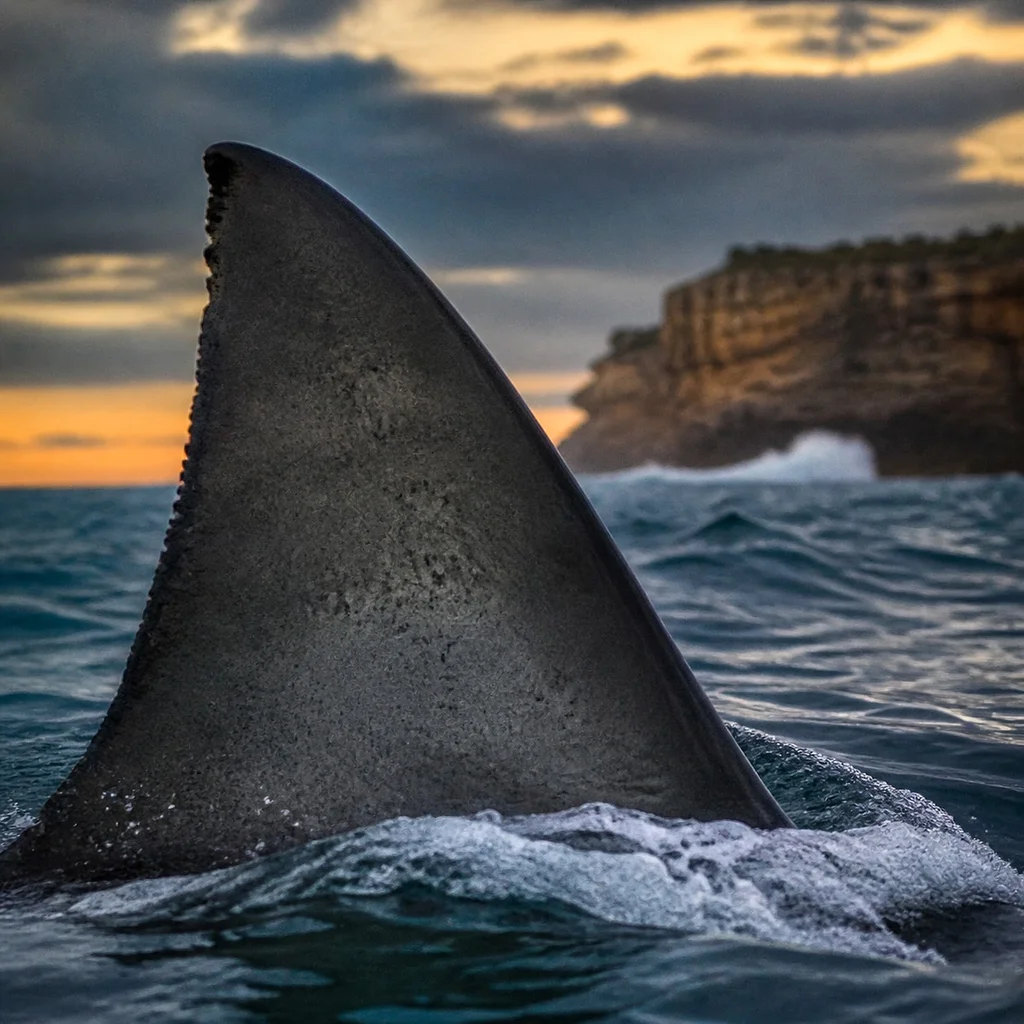
一条死鲸鱼,让悉尼四个海滩都关了
Sperm Whale Carcass Closes Four Sydney Beaches
About this story
A dead sperm whale washes up at Era Beach and shuts four Sydney beaches in Royal National Park, including Garie. HSK 3 Chinese listening practice.
This is an HSK 3-4 Chinese listening episode that runs about 7 minutes. The full Mandarin script is shown with tap-for-pinyin and a line-by-line English translation, so you can listen and read at once — comprehensible input in the sense of Stephen Krashen's i+1 theory. It teaches 18 key vocabulary words such as 新闻、概念、原因 and walks through 7 grammar patterns, each explained in English with examples. The same news story is retold at 4 difficulty levels — use the level selector above to find the version that is challenging but still understandable for you.
Read at your level
原文Read the complete story in Chinese. Reveal pinyin and English only when you need them.
English transcript reference
Recently in Australia there's been a strange piece of news.
A dead whale has shut down four beaches in Sydney.
Here's what happened.
Last Saturday, someone found a very large whale on the shore.
This whale was already dead.
It was eight meters long, twenty-five tons heavy.
Just think about it: how much is twenty-five tons?
About as heavy as thirty cars.
Very, very heavy.
This kind of whale is called a "sperm whale."
It's that very, very large kind of whale.
Sperm whales live in deep waters.
How it died, no one knows.
But after it died at sea, the seawater pushed it onto the shore.
This shore is called Era Beach.
Era Beach is just south of Sydney — about an hour's drive.
There's a big park there called "Royal National Park."
Normally the scenery is great, and lots of people love to visit.
But right now, four beaches in the park are closed.
You can't go in the water, and you can't surf.
The four beaches are: Era, Garie, Wattamolla, and Burning Palms.
Why are they closed?
There are two reasons.
The first reason is sharks.
A dead whale has a lot of meat.
The smell of meat travels far in water.
Sharks have an extremely keen sense of smell.
So as soon as they smell it, they all come over.
What kind of sharks have come?
Great white sharks, and bull sharks.
The kind everyone considers most dangerous.
And it's not one or two — it's many.
Park staff say: there are now lots of big sharks in the water.
For people to go in is too dangerous.
So they're telling everyone: absolutely do not go in the water.
Don't swim, don't surf, don't even put a foot in the water.
The second reason is the whale itself.
A dead whale stinks.
And a whale this big stinks really, really badly.
That smell can be detected hundreds of meters away.
But the real trouble isn't the smell.
The real trouble is: there will be gas in the whale's belly.
Why is there gas?
Think about it — once a whale dies, there are lots of bacteria in its body.
The bacteria break the meat down bit by bit.
While breaking it down, they release lots of gas.
The gas can't get out, so it slowly stays in the belly.
The belly gets bigger and bigger, more and more inflated.
Like one really, really big balloon.
Sometimes, when there's too much gas, it goes "pop" and bursts open.
It really can explode.
So the staff say: don't walk too close.
Stand back a bit, just take a look.
Actually, exploding whales aren't anything new.
They've happened in many countries before.
The most famous one was in the United States, decades ago.
Back then, a big dead whale also washed up on shore.
People didn't know what to do.
Someone came up with a "great idea" — use dynamite.
They put dynamite next to the whale, and "boom."
They thought that solved it.
The result?
The whale was blown into many pieces.
Lots of pieces flew very, very far.
Some even flew into a parking lot and hit cars.
After that, everyone learned:
You can't deal with a dead whale that way.
Back to this whale in Sydney.
Now the staff are being more careful.
Their plan is: first push the whale back into the sea.
Let the seawater carry it away.
Then use a boat to take it to a special place for processing.
But this isn't simple.
Why?
Because that whale is on rocks.
Vehicles can't drive in.
You can only walk in.
And for this kind of thing, you have to watch the weather and the tide.
So it could take several days.
There's a staff member at the park named Neilly.
He has a lot of experience with this kind of thing.
He says: many people will find this scene scary.
But really, this is just how nature looks.
The whale dies, the sharks eat.
After the sharks finish, the whale goes back into nature.
He says, this is a very natural thing.
By the way, there's a special phenomenon in the ocean called a "whale fall."
A "whale fall" is when a whale dies and slowly sinks to the seafloor.
Its meat and its bones feed many, many small animals.
This kind of "feeding" can last for decades.
One dead whale can make life in a patch of sea very rich.
So a whale's death is really another kind of life.
Sounds beautiful, doesn't it?
Back to the whale on that beach.
There's another person in charge of beach safety, named Pearce.
He says: these next few days, please don't go in the water just for fun.
There really are big sharks in the water.
Some people have seen them, said the sharks are huge.
If you go in, you might not come back.
So listen.
There's also one more important point:
Even if you don't go in the water, don't walk too close either.
Why?
Because dead whales carry bacteria.
Those bacteria can make people sick.
Some bacteria jump from animals to humans, and that becomes a problem.
So the best thing is: stand far back and look.
Don't touch.
Don't climb.
Don't take photos up close.
Right now, this is still ongoing.
The dead whale is still on that beach.
The sharks are still swimming around in the water.
The four beaches are still closed.
People don't know how many more days this will take.
But everyone has come to understand one thing:
The death of a whale isn't just its own affair.
It affects the whole sea.
It affects the animals in the sea, and it affects the people on the shore.
Whales are the biggest animal in the ocean.
Even their death is a big deal.
That's the news this week.
One eight-meter-long dead whale.
Four closed beaches.
Many big sharks.
And a slowly-expanding belly.
It sounds like a story, but it's real.
And it's happening right now on a beach in Australia.
Listen again
Try it without the transcript and notice what sounds clearer.
What vocabulary does this episode teach?
词汇HSK 4. 一个奇怪的新闻 = a strange news story. The episode's framing word.
HSK 5. 二十五吨是什么概念 = how much is 25 tons (literally 'what concept is 25 tons')? A common rhetorical hook.
HSK 4. 原因有两个 = there are two reasons. Used to lay out the structure of an explanation.
HSK 4. 太危险 = too dangerous. Opposite is 安全 (safe).
HSK 5. 工作 (work) + 人员 (personnel). The neutral term for an employee on duty (e.g., park staff).
HSK 4. 处理这件事 = handle this matter. The professional verb for taking care of a situation properly.
HSK 4. 他们的计划是 = their plan is. Both verb and noun.
HSK 4. 有经验 = have experience. Neilly is described as 对这种事情很有经验.
HSK 3. 影响整个海 = affects the whole sea. Both verb and noun.
HSK 4. 大自然 = nature. 自然的事情 = a natural event. Neilly's framing.
Beyond. 抹香 (a fragrance/whale-oil reference) + 鲸 (whale). Glossed inline: 那种很大、很大的鲸鱼.
Beyond. 鲸 (whale) + 落 (fall). The episode glosses it inline: 鲸鱼死了以后,慢慢沉到海底.
HSK 6. 细 (fine) + 菌 (fungus/germ). The episode glosses by function: 细菌会把肉一点一点分解掉.
HSK 6. 分 (divide) + 解 (untie). Used both for chemical decomposition and for breaking a problem into parts.
HSK 5. 鼻子非常灵 = an extremely keen nose. Common in 灵敏 (acute) and 灵感 (inspiration).
Beyond. 炸 (explode) + 药 (substance/drug). Featured in the famous 1970 Oregon whale-blast story.
HSK 4. 停 (stop) + 车 (car) + 场 (lot). The Oregon whale's flying chunks landed in one.
Beyond. 潮 (tide) + 水 (water). 涨潮 = high tide, 退潮 = low tide. The removal plan depends on it.
* beyond level超纲词
What grammar patterns appear in this episode?
语法把 + Object + Verb + Result (disposal)
Disposal construction. The object is fronted with 把 so the verb can carry a result/disposal.
海水把它推到了海边。
他们打算先把鲸鱼推回大海。
细菌会把肉一点一点分解掉。
X 越来越 + Adj
'More and more X.' Describes a state changing continuously in one direction.
肚子越来越大,越来越鼓。
因为 ... 所以 ... / 因为 alone
Cause-effect connector. Either half can be omitted in colloquial speech.
所以鲨鱼一闻到,就都过来了。
因为那条鲸鱼在石头上。
因为死的鲸鱼会有细菌。
X 一 + Verb1, 就 + Verb2
'As soon as A, then B.' Conditional/sequential pattern: the second action follows immediately from the first.
鲸鱼一旦死亡 …
所以鲨鱼一闻到,就都过来了。
有时候,气太多了,就会"砰"地爆开。
就算 / 即便 + clause, 也 + clause
Concessive: 'even if X, still Y.'
就算不下水,也不要走太近。
看起来 X,其实 Y
Hedge frame: 'on the surface X, actually Y.' Sets up a reveal that the deeper truth is different.
他说:这种事情看起来可怕。
但是其实是自然的事。
不只是 X,也 / 还 Y
'Not only X, also Y.' Adds a parallel point.
一条鲸鱼的死,不只是它一个人的事。
影响海里的动物,也影响海边的人。
Proper nouns
专有名词Free account
Keep learning from this story
Create a free account to keep saved words and your preferred level together.
- Keep words with their story context
- Remember your preferred level
- Build your vocabulary over time