
A Chinese podcast · Same story, 4 levels
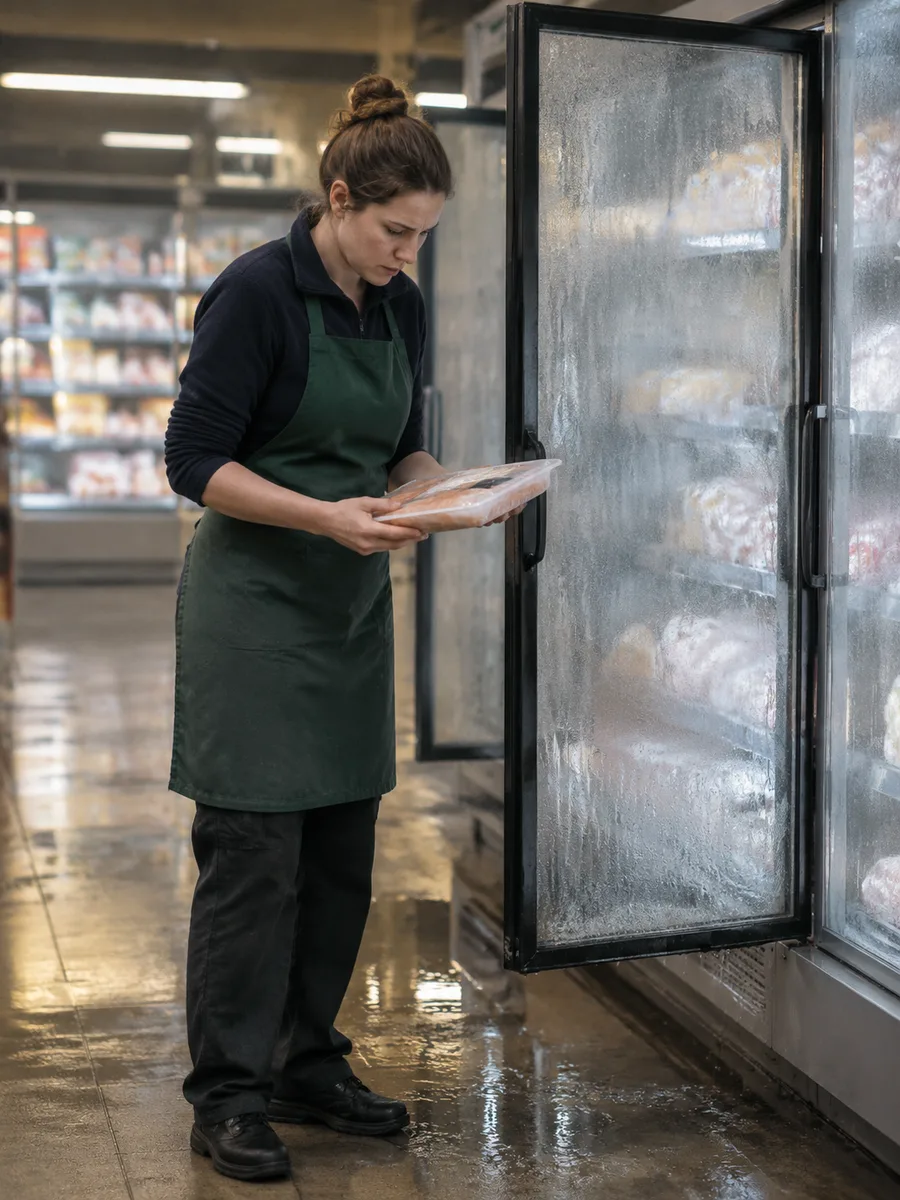
欧洲几百家超市的冰箱,半夜被人加热
Someone Heated Europe's Supermarket Fridges
About this story
Supermarket fridges in France and other European countries were switched to heat overnight in suspected cyberattacks. Who did it is disputed. HSK 2 Chinese listening practice.
This is an HSK 2 Chinese listening episode that runs about 2 minutes. The full Mandarin script is shown with tap-for-pinyin and a line-by-line English translation, so you can listen and read at once — comprehensible input in the sense of Stephen Krashen's i+1 theory. It teaches 12 key vocabulary words such as 东西、水果、冷 and walks through 4 grammar patterns, each explained in English with examples. The same news story is retold at 4 difficulty levels — use the level selector above to find the version that is challenging but still understandable for you.
Read at your level
原文Read the complete story in Chinese. Reveal pinyin and English only when you need them.
English transcript reference
In the evening, the supermarket closed.
There was nobody in the supermarket, and the fridges were still working.
A fridge is a place to keep things to eat, and it is very cold inside.
Meat, milk and fruit are all kept in the fridge.
Things do not go bad when they are kept somewhere very cold.
One evening in October, something went wrong with the fridges in several hundred supermarkets in France.
It stopped being cold in the fridges, and little by little they got hot.
In some fridges it got as hot as fifty degrees.
Fifty degrees is hotter than the hottest summer.
The next morning, the supermarket workers came to work.
They opened the fridges, and inside the meat had gone bad, the milk had gone bad, and the fruit had gone bad too.
These things could not be eaten, and could not be sold either.
The supermarkets did not want any of the spoiled things.
The meat, milk and fruit all went bad in one night.
A fridge does not do this by itself.
Someone far away did it with a computer.
Supermarket fridges today can all go online.
Supermarket workers can use a computer at home to see whether the fridge is cold.
This is very convenient.
But bad people can also find these fridges on the internet.
These fridges are very old, and the bad people got in very quickly.
The bad people did not come to the supermarket, and they did not take anything away.
On the internet they told the fridges that there was no need to be cold now.
So the fridges were hot for a whole night.
When the fridges got hot, the things inside went bad.
In November the same thing happened to supermarkets in other countries.
In supermarkets in many countries in Europe, the fridges got hot at night.
People say different things about who did it.
France says it knows which country's people did it.
Other countries say they still need to check.
To this day, nobody has come out and said "I did it."
Now Europe's supermarkets are doing one thing.
They are making the old fridges stop going online.
If an old fridge is not online, bad people cannot find it.
The fridges that had trouble were all supermarket fridges.
You can take a look too: what in your home can go online?
Listen again
Try it without the transcript and notice what sounds clearer.
What vocabulary does this episode teach?
词汇HSK 1. 吃的东西 means things to eat.
HSK 1. Used in 肉、牛奶、水果.
HSK 1. 冷不冷 asks whether it is cold.
HSK 1. 热了 means it got hot.
HSK 1. Used in 用电脑做的.
HSK 1. Used in 冰箱还在工作.
HSK 1. Used in 不能吃了.
HSK 2. Measure word 家: 几百家超市, several hundred supermarkets.
HSK 1. 肉坏了 means the meat went bad. 坏人 means a bad person.
HSK 1. Used in 里边的肉坏了.
HSK 1. Literally cow milk.
The key word. 冰 is ice and 箱 is a box. The script explains it: 冰箱是放吃的东西的地方,里边很冷.
* beyond level超纲词
What grammar patterns appear in this episode?
语法A 比 B 还 + Adjective
A is even more so than B.
五十度,比最热的夏天还热。
也 + Verb
Also. 也 comes before the verb.
这些东西不能吃了,也不能卖了。
坏人没有来超市,也没有拿走东西。
Adjective + 不 + Adjective
Asks or states whether something is so or not.
超市的人在家里用电脑,就能看到冰箱冷不冷。
A,就 B
就 links a condition to its result.
老冰箱不上网,坏人就找不到它。
冰箱热了,里边的东西就坏了。
Proper nouns
专有名词Sources
来源Free account
Keep learning from this story
Create a free account to keep saved words and your preferred level together.
- Keep words with their story context
- Remember your preferred level
- Build your vocabulary over time