
A Chinese podcast · Same story, 4 levels
广西出了一件事:什么是地震?
A 5.2 Earthquake Hit Guangxi: Did You Feel It?
About this story
A 5.2 Earthquake Hit Guangxi: Did You Feel It? HSK 1 Chinese listening practice.
This is an HSK 1 Chinese listening episode that runs about 3 minutes. The full Mandarin script is shown with tap-for-pinyin and a line-by-line English translation, so you can listen and read at once — comprehensible input in the sense of Stephen Krashen's i+1 theory. It teaches 12 key vocabulary words such as 看、跑、家 and walks through 4 grammar patterns, each explained in English with examples. The same news story is retold at 4 difficulty levels — use the level selector above to find the version that is challenging but still understandable for you.
Read at your level
原文Read the complete story in Chinese. Reveal pinyin and English only when you need them.
English transcript reference
Did you sleep well last night?
The people in Guangxi didn't.
Where is Guangxi?
Guangxi is in southern China.
Guangxi is big.
There are many people.
Last night,
something happened in Guangxi.
What happened?
An earthquake.
What is an earthquake?
An earthquake is when "the ground moves."
The ground moved,
the tables at home moved too.
The cups at home moved too.
The beds moved too.
People were asleep,
people all woke up.
People ran outside.
This earthquake wasn't small.
It was magnitude 5.2.
What is 5.2?
Not big,
not small either.
The date was May 18.
It was 0:21 in the early morning.
That's after midnight.
At that time,
many people were sleeping.
The center was Liuzhou.
Liuzhou is a big city in Guangxi.
Liuzhou has many people.
During the earthquake,
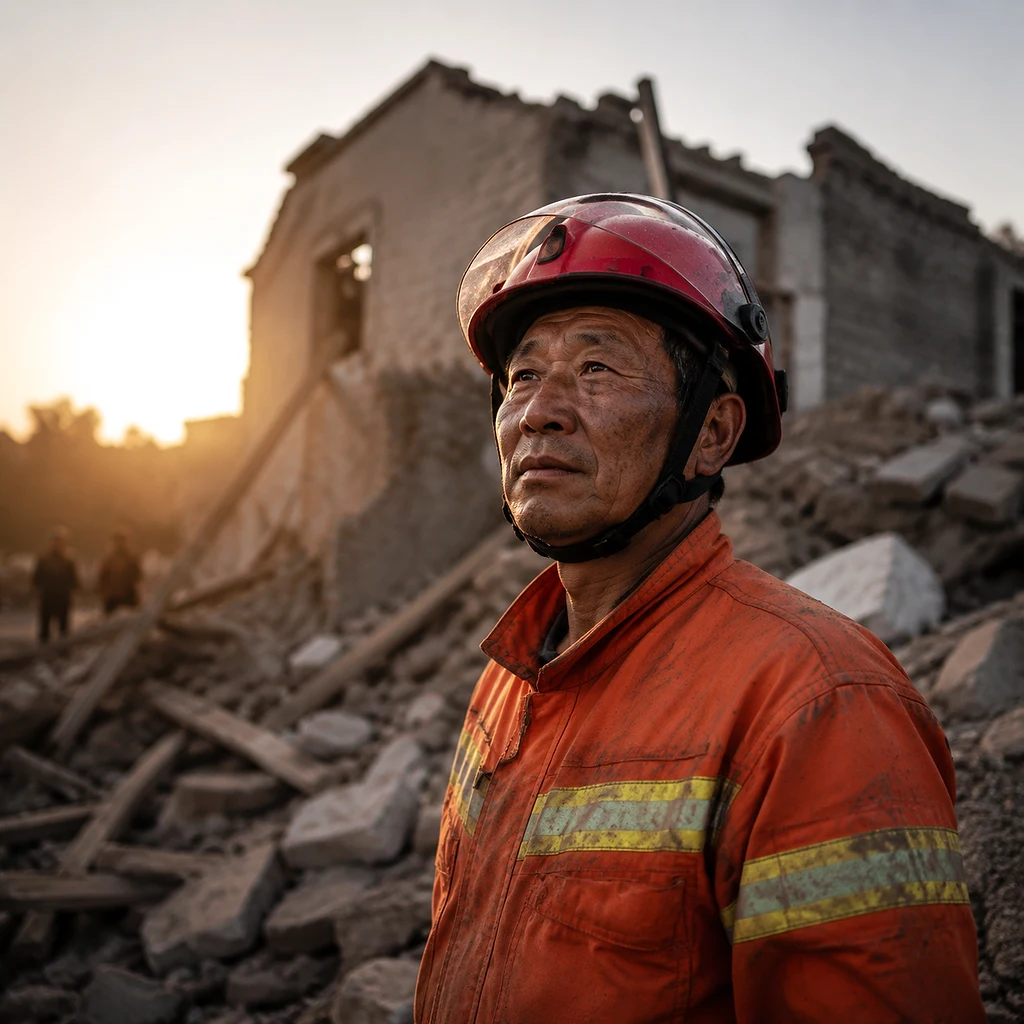
some houses fell.
A house falling means
the house is gone.
Some people were inside the houses.
They couldn't get out.
Many people came to help.
Doctors came.
Other people came too.
They thought:
"We have to get the people inside out.
What about other places in Guangxi?
Other places in Guangxi shook too.
Nanning shook.
Guilin shook.
Hong Kong too.
Hong Kong shook a little.
But this earthquake
wasn't huge.
What we heard:
3 people are missing.
4 people are not doing well.
Some houses
didn't fall,
but they're not good now.
The doors aren't good.
The people of Guangxi
were very scared last night.
Many people didn't go home.
They stayed outside.
They stayed together.
They talked.
They waited.
Wait for what?
Wait until morning.
When morning came,
they went home to look.
Some homes were okay.
Some homes were not.
The homes that weren't okay,
they can't go back to.
Other people in Guangxi
are all helping.
Other places in China
are all watching.
Everyone is thinking:
"Are the people of Guangxi okay?
I watched the news.
I also thought:
"People of Guangxi,
"please be okay.
This is a news story,
and a real event.
I'm telling you,
because I want you to know.
Finally,
I'll ask you a question:
Are there earthquakes where you live?
Have you ever seen an earthquake?
When an earthquake comes,
what do you do?
Think about it.
Okay.
That's all for today.
Talk tomorrow.
Listen again
Try it without the transcript and notice what sounds clearer.
What vocabulary does this episode teach?
词汇To look or watch. Used in '看新闻' (watch the news) and '回家看' (go home to look at the damage).
To run. People in Liuzhou 跑出去 (ran outside) when the ground shook — what humans instinctively do during an earthquake.
Home (the place); family (the people). Both senses appear: 不能回家 (can't go home) and 找家里的人 (looking for family).
Doctor. 医生来了 — doctors came to help the injured. One of the few HSK 1 professions.
Big. Used throughout to describe magnitude: '不大' (not big), '柳州是一个大城市' (Liuzhou is a big city).
To think (about), to want to, to miss. The episode uses two senses: 大家都想 (everyone is thinking / hoping) and 你想一下 (think about it for a moment).
Earthquake. The headword of the episode. Compound: 地 (ground) + 震 (to shake / tremble). Defined inline as 地动了 (the ground moved).
News. 'I watched the news' = 我看了新闻. HSK 2 — your gateway word for hearing about events anywhere in the world.
A city. Liuzhou is described as '广西的一个大城市'. Compound: 城 (city walls) + 市 (market).
House, building. The story turns on which 房子 fell and which didn't. HSK 2 but used constantly.
To fall over, collapse. 房子倒了 = the house fell. Crucial earthquake vocabulary.
To be afraid. 很怕 (very scared) — the universal experience during an earthquake. The polysyllabic form 害怕 is HSK 3, but 怕 alone is used in everyday speech.
* beyond level超纲词
What grammar patterns appear in this episode?
语法X 也 Verb
也 = 'also.' Goes between subject and verb, never before subject. The episode stacks 也 to spread the action: 桌子也动了, 杯子也动了, 床也动了 — the tables also moved, the cups also moved, the beds also moved.
桌子也动了。
南宁也动了。桂林也动了。
X 了的时候
的时候 = 'when, at the time of.' Common HSK 1 connector for setting the time of a story. The episode uses it for the moment of disaster: 地震的时候 — when the earthquake happened.
地震的时候,有的房子倒了。
地震来了的时候,你怎么做?
出不来
Resultative verb with negation: Verb + 不 + direction. 出 (out) + 来 (come) = come out; insert 不 between → can't come out. The episode uses it for the people trapped under collapsed houses: 他们出不来了.
他们出不来了。
门不太好,我开不开。
等到 + Time/Event
等 = wait; 到 = arrive at / until. Pairs naturally: 等到早上 = wait until morning. The whole night of the earthquake is captured in this phrase — people couldn't go home, so they waited outside until 等到早上.
等到早上。
到了早上,他们回家看。
Proper nouns
专有名词Free account
Keep learning from this story
Create a free account to keep saved words and your preferred level together.
- Keep words with their story context
- Remember your preferred level
- Build your vocabulary over time