
A Chinese podcast · Same story, 4 levels
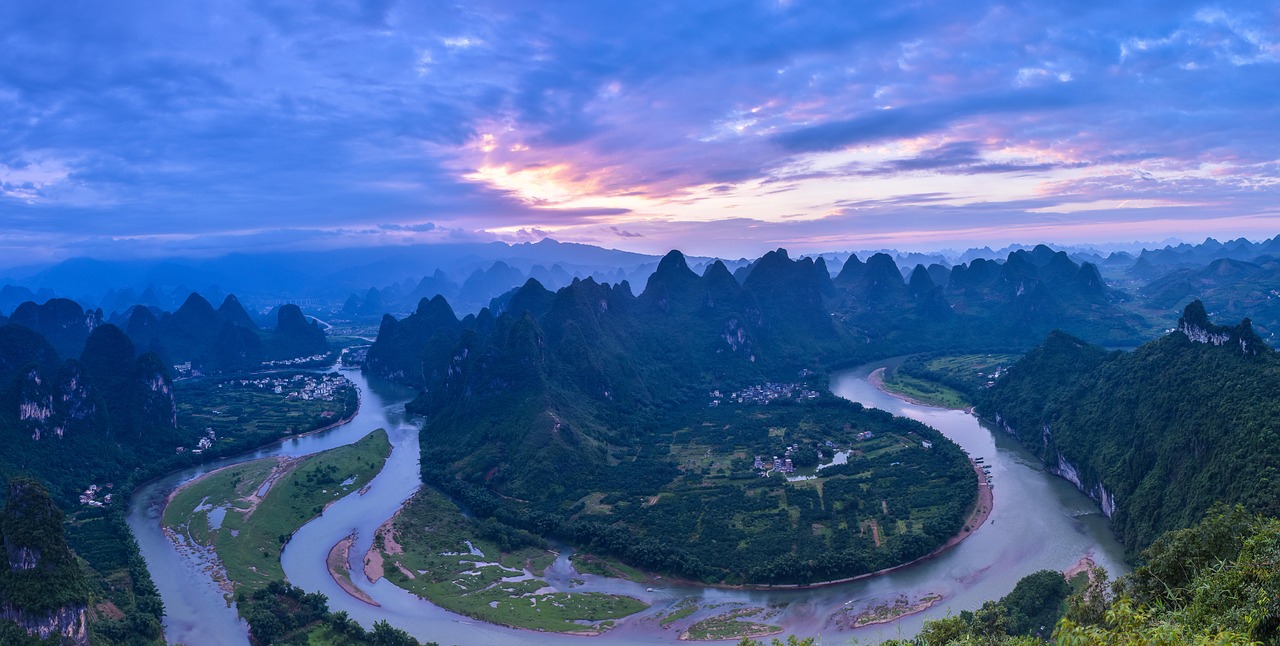
桂林:水没有吃完的山
Guilin: What the Water Didn't Finish Eating
About this story
Guilin was a sea 300 million years ago. Learn how water ate the rock, why the 20-yuan note shows this river, and how birds catch fish here. HSK 1 Chinese listening practice.
This is an HSK 1 Chinese listening episode that runs about 4 minutes. The full Mandarin script is shown with tap-for-pinyin and a line-by-line English translation, so you can listen and read at once — comprehensible input in the sense of Stephen Krashen's i+1 theory. It teaches 8 key vocabulary words such as 山、石头、海 and walks through 3 grammar patterns, each explained in English with examples. The same news story is retold at 4 difficulty levels — use the level selector above to find the version that is challenging but still understandable for you.
Read at your level
原文Read the complete story in Chinese. Reveal pinyin and English only when you need them.
English transcript reference
Today I'm in Guilin.
Guilin has a lot of hills.
The hills in Guilin look good.
One hill, one hill, all of them separate.
I say to someone from Guilin: where did these hills come from?
He says: three hundred million years ago, there were no hills here.
I say: no hills?
Then what was there?
He says: this was the sea.
I say: the sea?
He says: yes, three hundred million years ago, this was the sea.
There were a lot of very small things in the sea.
These small things made stone down below.
Over very many years, there was more and more stone.
Later, the water went down.
The water went down, and the stone was on top.
I say: so the stone is the hills?
He says: not yet.
He says: when there's water, the water eats this stone bit by bit.
I say: water can eat stone?
He says: it can — very slowly, but it can.
For seventy million years, the water kept eating.
The stone it didn't finish eating is the hills you see today.
I look at these hills.
I think: what I'm looking at isn't hills.
What I'm looking at is what the water didn't finish eating.
Today I take a boat.
The boat goes to Yangshuo.
Eighty-three kilometres.
Hills in front, hills behind too.
I look at one hill, and there's another.
A man on the boat says: look at that hill.
The bottom of that hill is in the water.
He says: this hill is called Elephant Trunk Hill.
He says: a lot of hills in Guilin have names.
Whatever a hill looks like, that's what people call it.
I look at a twenty-yuan note.
On the back of the twenty-yuan note there are hills, and water.
He says: this is this place, right here.
I say: the hills on the money — I saw them today.
In the afternoon, I see a man.
He's on a very small boat.
There are two birds on the boat.
The birds go into the water, the birds come up, and there's a fish.
The man takes the fish.
I say: how come the bird doesn't eat the fish?
He says: there's a small thing here on the bird.
Small fish can go down; big fish can't.
I say: is this new?
He says: not new.
He says: a thousand years ago, people fished like this.
I say: are there still a lot of people fishing like this now?
He says: very few.
He says: there are fewer fish in the water.
He says: fishing like this, there's little money in it too.
He says: the person you saw today is mostly doing it for people to look at.
I say: will it be gone one day?
He says: I don't know.
I look at the hills, I look at the water, and at that man and his two birds.
Hills three hundred million years old.
A way of fishing a thousand years old.
Me, today.
All on this one stretch of water.
Do you want to see the hills, or do you want to see those two birds?
Listen again
Try it without the transcript and notice what sounds clearer.
What vocabulary does this episode teach?
词汇HSK 1. The thing that made the whole landscape by taking rock away.
HSK 1. The 20-yuan note carries this exact stretch of river on its back.
HSK 1. 坐船 — the 83-kilometre boat to Yangshuo.
HSK 1. The episode turns on what you are actually seeing.
What is left after seventy million years of water dissolving the rock.
Made on the seabed by tiny sea creatures 300 million years ago.
What Guilin was before there were any hills at all.
The cormorant that dives for fish and cannot swallow the big ones.
* beyond level超纲词
What grammar patterns appear in this episode?
语法可以 / 不可以
States what is and isn't possible.
小鱼可以下去,大鱼不可以。
…,就是 …
就是 identifies one thing as being exactly another.
没有吃完的石头,就是今天的山。
A 像什么,就叫什么
Two question words linked by 就 — whatever it resembles is what it's called.
山像什么,人就叫什么。
Proper nouns
专有名词Free account
Keep learning from this story
Create a free account to keep saved words and your preferred level together.
- Keep words with their story context
- Remember your preferred level
- Build your vocabulary over time