
A Chinese podcast · Same story, 4 levels
桂林:三千米的石头
Guilin: What the Water Didn't Finish Eating
About this story
Limestone 3,000 metres thick, 70 million years of rain, and the fact that 'Guilin's landscape is finest under heaven' was written in 1201 for eleven exam graduates. HSK 2 Chinese listening practice.
This is an HSK 2 Chinese listening episode that runs about 5 minutes. The full Mandarin script is shown with tap-for-pinyin and a line-by-line English translation, so you can listen and read at once — comprehensible input in the sense of Stephen Krashen's i+1 theory. It teaches 8 key vocabulary words such as 石灰岩、峰林、峰丛 and walks through 3 grammar patterns, each explained in English with examples. The same news story is retold at 4 difficulty levels — use the level selector above to find the version that is challenging but still understandable for you.
Read at your level
原文Read the complete story in Chinese. Reveal pinyin and English only when you need them.
English transcript reference
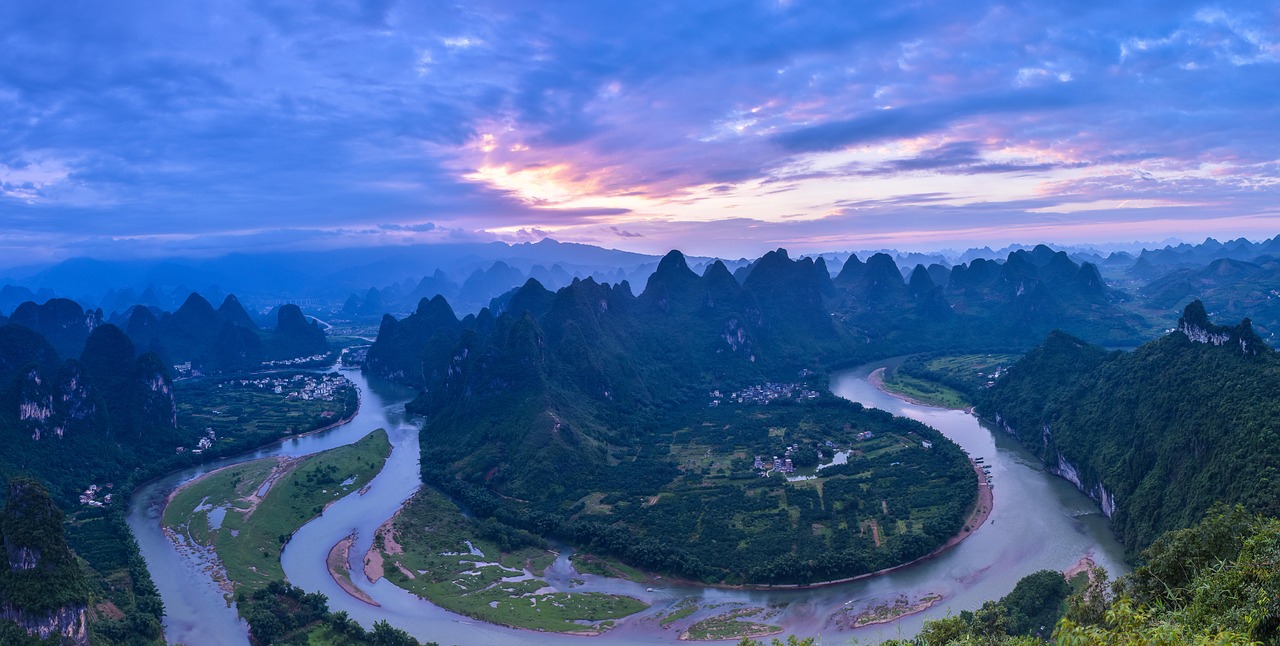
On my first day in Guilin, I saw the hills right away.
Guilin has a lot of hills.
These hills aren't like other hills.
One hill, one hill, all separate.
I asked my friend: who made these hills?
She said: nobody made them.
She said: the water made them.
The water took some things away.
What it didn't take away is these hills.
I said: when was this?
She said: three hundred million years ago, this was the sea.
I said: this was the sea?
She said: yes.
There were a lot of very small things in the sea.
Many years later, they became stone down below.
This stone is called limestone.
The limestone under Guilin is three thousand metres thick in places.
I said: three thousand metres?
She said: yes.
Later the sea was gone, and the stone came out.
Then it rained.
Rainwater can dissolve this stone bit by bit.
For seventy million years, the rain kept dissolving it.
Where it dissolved, you get flat ground.
Where it didn't dissolve is the hills you see today.
I said: so the hills I'm looking at are what the water didn't take.
She said: yes.
Guilin has two kinds of hills.
One kind stands separately, one by one — those are called fenglin, peak forest.
One kind is joined at the base and separate on top — those are called fengcong, peak cluster.
My friend said: there's a line a lot of Chinese people know.
She said: Guilin's landscape is the finest under heaven.
I said: is that a new line?
She said: it's over eight hundred years old.
It was written in 1201, by a man surnamed Wang.
He didn't write it for tourists.
That year, eleven people in Guilin passed the exam.
He wrote that line for those eleven people.
The next day, I took a boat to Yangshuo.
From Guilin to Yangshuo is eighty-three kilometres.
The boat takes four hours.
There was fog in the morning.
A man on the boat said: it looks best when there's fog.
I asked why.
He said: without fog, what you see is rock.
With fog, what you see is distance.
The near hills are dark, the far ones pale, the furthest the same colour as the sky.
Partway along, he told us to look at one hill.
The bottom of that hill reaches into the water, like an elephant drinking.
He said: this is Elephant Trunk Hill, the face of Guilin.
Further on there's another hill, called Nine Horses Fresco Hill.
He said: there are nine horses in the markings on the cliff.
A lot of people look for ages and can't find nine.
I only found three.
He said: never mind, this isn't an exam.
As the boat neared Yangshuo, he had us take out a twenty-yuan note.
The back of the twenty-yuan note is this stretch of hills and water.
This spot is called Yellow Cloth Reflection.
A lot of people hold the money up against the real hills to take a picture.
I took one too.
In the afternoon I saw an old man.
He was standing on a very small bamboo raft with two black birds on it.
The birds are called cormorants.
The bird goes into the water, and when it comes up there's a fish in its beak.
The old man takes the fish and gives the bird a small one.
I asked: why doesn't the bird eat it itself?
He said: there's a ring around the bird's neck.
Small fish can get through; big fish can't.
I said: is this method new?
He said: it's over a thousand years old.
People were fishing like this back in the Song dynasty.
I said: does anyone still make a living from it now?
He said: almost nobody.
There are fewer fish in the river, and you aren't allowed to fish freely any more.
Young people all go to Guangdong to work.
Me being here today is for tourists to photograph.
I didn't know what to say.
He said: don't feel bad about it.
He said: I can do this; my son can't.
But my son can pilot a boat, and that's fine too.
In the evening I thought again about the morning fog.
Stone three hundred million years old, a bird a thousand years old, and one old man today.
All on these eighty-three kilometres of water.
When you go somewhere famous, do you want to see it looking most like the photo, or to know how it got there?
Listen again
Try it without the transcript and notice what sounds clearer.
What vocabulary does this episode teach?
词汇HSK 2. Eleven men passed it in Guilin in 1201, and got a famous poem for it.
HSK 2. Used throughout for the specific spots on the river.
HSK 1-2. Why the young people left for Guangdong.
HSK 2. The furthest hills are the same colour as the sky.
Three thousand metres thick under Guilin in places.
Towers standing completely separate on flat ground.
Joined at the base, splitting into summits above.
The fishing bird, in use here for over a thousand years.
* beyond level超纲词
What grammar patterns appear in this episode?
语法可以 + verb
Says what something is able to do.
雨水可以一点一点化这些石头。
不是 … 的
是…的 frames a fact about how or for whom something was done.
他不是写给游客的。
像 + noun + 在 + verb
Compares a shape to something caught mid-action.
那个山的下面伸到水里,像一只大象在喝水。
Proper nouns
专有名词Free account
Keep learning from this story
Create a free account to keep saved words and your preferred level together.
- Keep words with their story context
- Remember your preferred level
- Build your vocabulary over time