
A Chinese podcast · Same story, 4 levels
美国跑者靠健身房跑步机训练,首次跑马拉松就夺冠
A Runner Trains on a Gym Treadmill and Wins His First Marathon
About this story
A young Ohio runner trains on a gym treadmill, covers the machine's display, and wins his first marathon. HSK 2 Chinese listening practice.
This is an HSK 2 Chinese listening episode that runs about 1 minute. The full Mandarin script is shown with tap-for-pinyin and a line-by-line English translation, so you can listen and read at once — comprehensible input in the sense of Stephen Krashen's i+1 theory. It teaches 12 key vocabulary words such as 跑、快、第一 and walks through 4 grammar patterns, each explained in English with examples. The same news story is retold at 4 difficulty levels — use the level selector above to find the version that is challenging but still understandable for you.
Read at your level
原文Read the complete story in Chinese. Reveal pinyin and English only when you need them.
English transcript reference
In the United States there is a young man named Weini.
He is twenty-five years old and lives in Ohio.
He likes running and runs very fast.
This April, he ran a marathon for the first time.
A marathon is running a very, very long way.
He got first place.
It was the first time an American ran a marathon, and his time was the fastest.
Many people who want to run fast have to go to faraway places and spend a lot of money.
Weini is different.
He runs at the gym next to his home.
A gym is a place where many people exercise together.
He pays about twenty-five dollars each month.
He runs on a treadmill.
A treadmill is a machine in the gym.
A person runs on it, but the person does not move forward.
Why?
Because in winter it is very cold outside and very warm inside.
The treadmill keeps him running steadily, neither fast nor slow.
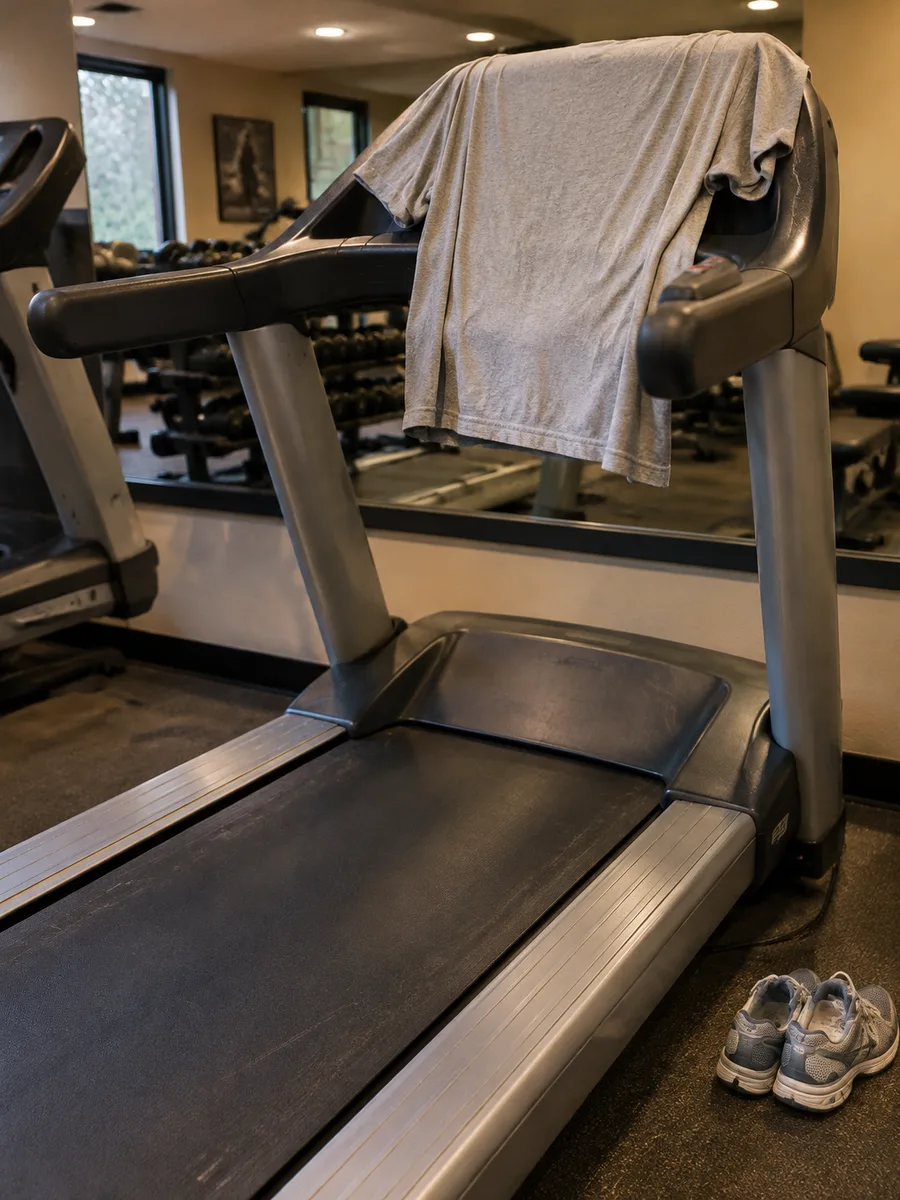
When he runs, he uses clothing to cover the words on the machine.
This way, he does not look at them and just keeps running.
While he runs, he listens to music and calls a friend.
The gym also gave him one year for free.
Think about it: what exercise can you do at home?
Listen again
Try it without the transcript and notice what sounds clearer.
What vocabulary does this episode teach?
词汇HSK 1. A basic verb; in this script it appears in 跑步 (to run/jog) and 跑马拉松 (to run a marathon).
HSK 1. Used as an adjective or complement, as in 跑得很快 (runs very fast).
HSK 1. Used for ranking, as in 得了第一名 (got first place).
HSK 2. Used in the pattern 一边……一边…… to show two actions happening at once.
HSK 2. A general word for physical activity; appears in 做运动 (do exercise).
HSK 2. Used to talk about locations, as in 很远的地方 (a faraway place).
A place where people exercise; 健身 means to keep fit, 房 means room.
A machine for running indoors; 跑步 (running) + 机 (machine).
A long-distance running race; a loanword from English.
A state in the United States; 州 means state.
A verb meaning to cover something so it cannot be seen; 盖 (cover) + 住 (complement indicating completion).
Describes pleasant warmth, often used for weather or indoor temperature.
* beyond level超纲词
What grammar patterns appear in this episode?
语法Used to define or explain what something is, often in a simple descriptive sentence.
马拉松,是跑很长很长的路。
健身房,是很多人一起做运动的地方。
跑步机,是健身房里的一个机器。
一边……一边……
Indicates two or more actions happening simultaneously: 'while doing ..., also doing ...'.
他一边跑,一边听音乐,一边给朋友打电话。
让 + Person + Verb Phrase
The causative pattern 'make/let someone do something'.
跑步机让他不快不慢,一直跑。
Proper nouns
专有名词Sources
来源Free account
Keep learning from this story
Create a free account to keep saved words and your preferred level together.
- Keep words with their story context
- Remember your preferred level
- Build your vocabulary over time