
A Chinese podcast · Same story, 4 levels
美国跑者靠健身房跑步机训练,首次跑马拉松就夺冠
A Runner Trains on a Gym Treadmill and Wins His First Marathon
About this story
A 25-year-old Ohio runner trains on a treadmill at a $24.99-a-month gym and wins the Glass City Marathon in Toledo. HSK 5-6 Chinese listening practice.
This is an HSK 5-6 Chinese listening episode that runs about 4 minutes. The full Mandarin script is shown with tap-for-pinyin and a line-by-line English translation, so you can listen and read at once — comprehensible input in the sense of Stephen Krashen's i+1 theory. It teaches 12 key vocabulary words such as 训练、速度、成绩 and walks through 4 grammar patterns, each explained in English with examples. The same news story is retold at 4 difficulty levels — use the level selector above to find the version that is challenging but still understandable for you.
Read at your level
原文Read the complete story in Chinese. Reveal pinyin and English only when you need them.
English transcript reference
Spending twenty-four dollars and ninety-nine cents a month, he trained in an ordinary gym to become a marathon champion.
In Ohio, USA, there is a twenty-five-year-old young man named Vinnie Mauri.
He lives near a small city called Youngstown.
Mauri arranged his own training and only recently signed a contract to become a professional athlete.
The place where he trains is just an ordinary gym near his home.
Every month, he spends twenty-four dollars and ninety-nine cents to buy a membership card.
Usually, the place where he runs is the treadmill in the gym.
A treadmill has a moving belt; a person runs on the belt, and their position basically does not change.
This April, Mauri took part in the Glass City Marathon in Toledo.
A marathon is a long-distance run of 42.195 kilometers.
Mauri finished first, with a time of two hours, five minutes, and fifty-four seconds.
At the time, this result broke the record for that race, and it was also the fastest time for an American runner's first marathon.
Many people were very surprised when they heard this news.
Because most strong marathon runners spend a lot of money hiring coaches, and they also go to very high mountains to train.
Mauri did not spend this money; he just ran in the gym.
Mauri says he likes training near home and does not need to move somewhere else.
When he trains, he often runs into former middle school classmates at the gym.
Why does Mauri run on a treadmill?
He says Ohio winters are very cold, it is very cold outside, and the treadmill lets him run all year round.
The surface of a treadmill is a little softer than a road, so the impact on the body is a bit smaller.
Running on a treadmill also does not require turning, which is good for his hip; he had injured that area before.
There is another important point: the speed of a treadmill is fixed, and like a metronome, it helps him keep a steady pace.
Mauri used to have a problem when running: he liked running too much, and once he got excited he would run too fast and too much, so his body was easily injured.
The treadmill helped him control this habit.
His former coach said that Mauri sometimes sent him messages saying that he had run outside today and had sped up a little again.
Mauri himself also knows that during regular training, he needs the treadmill to keep his speed under control.
However, Mauri's training volume on the treadmill is not small at all.
This June, he ran a complete marathon on the treadmill, taking about two hours and twenty minutes.
Recently, he also ran forty-five miles, about seventy-two kilometers, on a treadmill in two sessions within one day.
To prepare for the Chicago Marathon, about seventy percent of his training mileage was completed on the treadmill.
The Chicago Marathon is a very big race in the United States, held in October this year.
Mauri says the weather in the gym is always good.
Running on a treadmill for a long time can be very boring, and Mauri has a method.
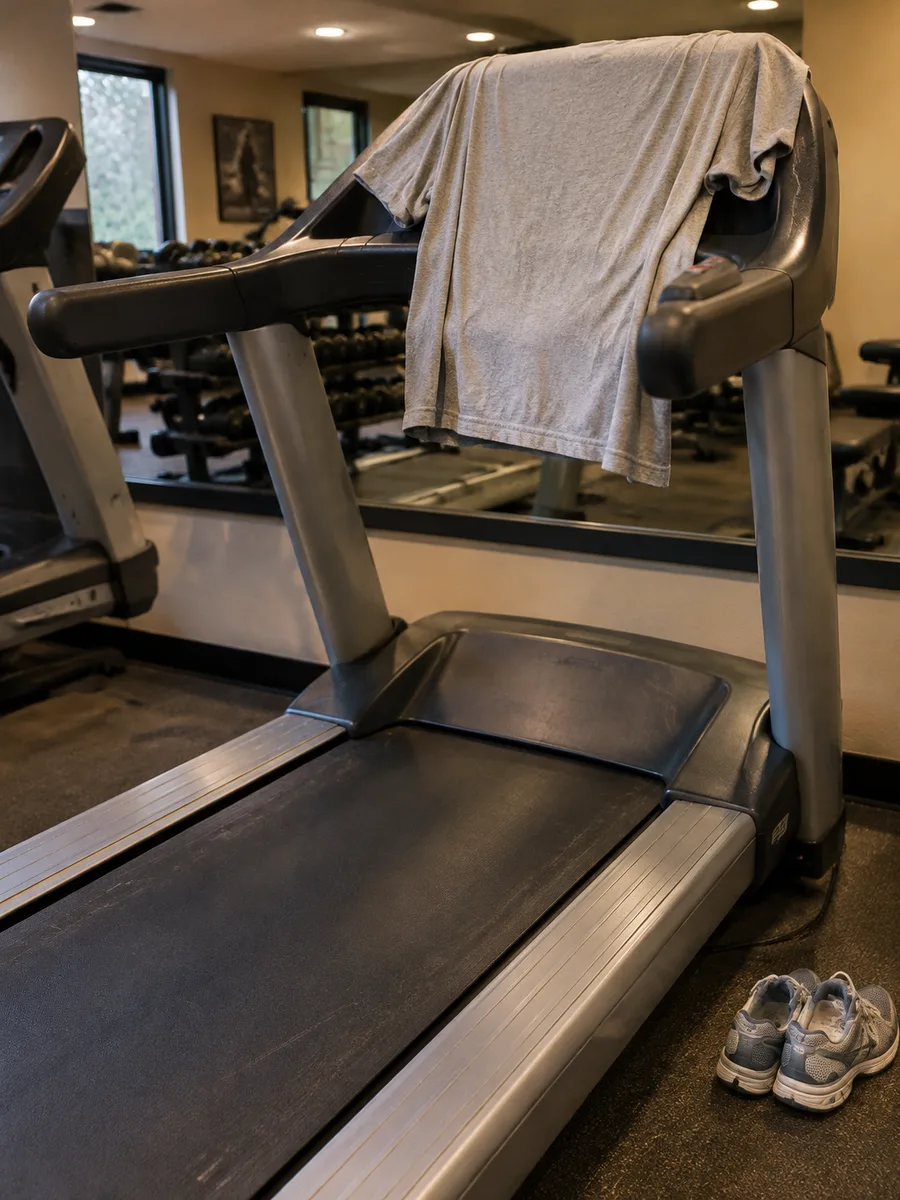
After he sets the speed, he uses a T-shirt to cover the treadmill screen, so he will not always want to adjust the speed.
He says that after covering the screen, this can help him clear his mind.
To pass the time, while running, he watches videos, listens to music, listens to comedy, or watches golf matches.
In addition, he also likes talking on the phone with friends while running.
One of his friends says that Mauri sometimes runs at a very fast speed for fifty minutes while still chatting on the phone.
Recently, Mauri just became a professional athlete; he signed a contract with a sports brand called ASICS.
After he won that marathon, he also received a gift: the gym gave him a one-year free membership.
This gift was not expensive, but for him it was very practical.
When the report was written, Mauri was preparing for the Chicago Marathon.
An October 10 report wrote that he was preparing to take part in the Chicago Marathon.
Mauri's training method is very different from the common high-altitude training.
Some people go to high mountains, some people hire coaches, and Mauri chose the treadmill in the gym.
These benefits are Mauri's own training experience.
He just found a method that suits him, and then kept persisting.
Think about it: if you were preparing for a long-distance run, where would you choose to train?
Listen again
Try it without the transcript and notice what sounds clearer.
What vocabulary does this episode teach?
词汇HSK 5. A key content word in this script, used for athletic training: 安排训练 (arrange training), 训练量 (training volume), 训练方法 (training method).
HSK 5. Used repeatedly about treadmill speed: 速度是固定的 (the speed is fixed), 调速度 (adjust the speed), 保持稳定的速度 (keep a steady pace).
HSK 4. In sports contexts it means a race result or finishing time: 成绩是两小时五分五十四秒 (the time was 2:05:54).
HSK 3. Used for sports events: 芝加哥马拉松,是美国一个很大的比赛 (the Chicago Marathon is a very big race in the US).
HSK 3. Common pattern: 为了准备…… (in order to prepare for...), 正在准备…… (is preparing for...).
HSK 3. Used for locations: 训练的地方 (the place where he trains), 搬到别的地方去 (move to another place).
Beyond HSK 5. A core story word: 普通健身房 (ordinary gym), 健身房里的跑步机 (the treadmill in the gym).
Beyond HSK 5. The central object of the story: 在跑步机上跑 (run on a treadmill), 跑步机的屏幕 (the treadmill screen).
Beyond HSK 5. A transliterated sports term: 跑马拉松 (run a marathon), 芝加哥马拉松 (Chicago Marathon).
Beyond HSK 5. Related to the gym membership: 买一张会员卡 (buy a membership card), 免费会员 (free membership).
Beyond HSK 5. Used in a simile: 它像节拍器一样 (it is like a metronome), helping him keep a steady pace.
Beyond HSK 5. Body-part word: 对他的胯部有好处 (good for his hip), 他以前那里受过伤 (he had injured that area before).
* beyond level超纲词
What grammar patterns appear in this episode?
语法在 + Place + 里/上 + Verb
Expresses where an action takes place. 在 introduces the location, often followed by 里 or 上 depending on the noun.
每个月花二十四点九九美元,他在普通健身房里练成了马拉松冠军。
毛里没有花这些钱,他就在健身房里跑。
今年六月,他在跑步机上跑了一个完整的马拉松,用了大约两小时二十分。
Emphasizes a detail such as place, time, or manner in a past event. It often highlights the circumstances of an action.
他训练的地方,就是家附近的一家普通健身房。
平时,他跑步的地方,是健身房里的跑步机。
还有一点很重要:跑步机的速度是固定的,它像节拍器一样,让他保持稳定的速度。
对 + Person/Thing + 有好处
Means 'is good for' someone or something. The opposite is 对……有害处 or 对……不好.
在跑步机上跑,也不用转弯,这对他的胯部有好处,他以前那里受过伤。
一边……一边……
Means doing two actions at the same time: 'while doing A, also doing B'.
此外,他还喜欢一边跑,一边给朋友打电话。
Proper nouns
专有名词Sources
来源Free account
Keep learning from this story
Create a free account to keep saved words and your preferred level together.
- Keep words with their story context
- Remember your preferred level
- Build your vocabulary over time