
A Chinese podcast · Same story, 4 levels
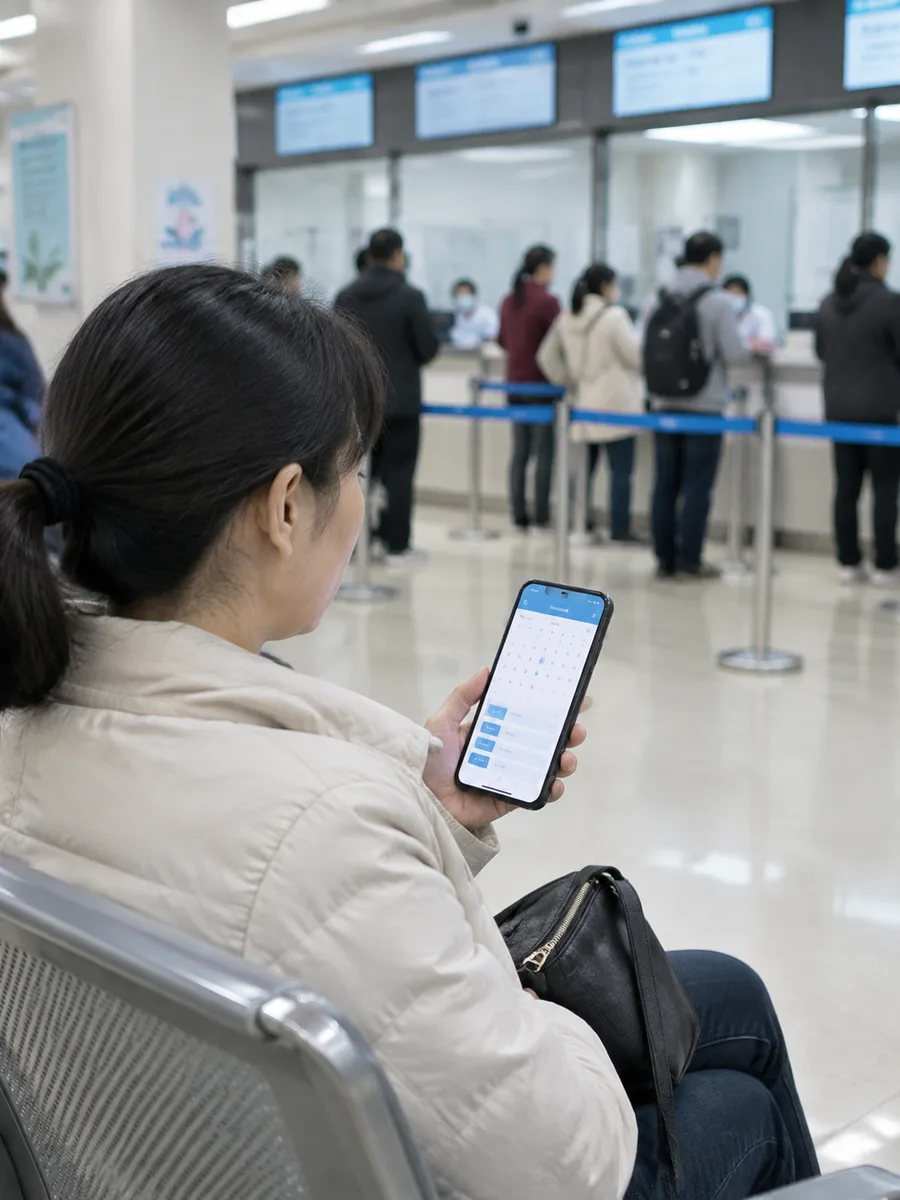
帮女友挂号,怎么最后被判刑?
Hospital Booking Bots Lead to Convictions
About this story
HSK 1-2 Chinese listening. Booking software helped a girlfriend see a doctor, then paid bookings and an overloaded hospital system led to convictions.
This is an HSK 2 Chinese listening episode that runs about 2 minutes. The full Mandarin script is shown with tap-for-pinyin and a line-by-line English translation, so you can listen and read at once — comprehensible input in the sense of Stephen Krashen's i+1 theory. It teaches 12 key vocabulary words such as 医生、医院、电脑 and walks through 4 grammar patterns, each explained in English with examples. The same news story is retold at 4 difficulty levels — use the level selector above to find the version that is challenging but still understandable for you.
Read at your level
原文Read the complete story in Chinese. Reveal pinyin and English only when you need them.
English transcript reference
To help his girlfriend see a doctor, he wrote software, but later, both of them were sentenced.
The report calls him Zhou Ming and calls his girlfriend Wang Lin; these two names are not their real names.
Zhou Ming could write software, which is something that makes a computer work.
Wang Lin often went to the hospital to see a doctor, but there were very few expert appointment slots.
Registration means asking the hospital to give you a number; with a number, you can see a doctor.
The software Zhou Ming wrote clicked the computer very quickly, so Wang Lin could get an appointment and see a doctor.
At first, they registered appointments for people they knew and did not charge money; later, more people came to them, so they charged fees.
Charging fees means asking others to give money; Zhou Ming used software to register appointments and got money.
Another three people also each had software and all used software to find appointment slots.
Many software programs all searched for appointment slots very quickly, and later the hospital's computers could not work normally.
The hospital's computers could not work, and other people could not register either; this is called a system breakdown.
The court said the two people did something wrong and sentenced them.
Zhou Ming must go to prison for twelve months; prison is a place where people who do wrong must live.
Wang Lin was sentenced to ten months, but received a one-year suspended sentence, so she does not have to go to prison right away.
A suspended sentence means not going to prison for now, but during this year she must obey the court.
If you want to see a doctor but have no appointment number, would you pay someone to use software to register for you?
Listen again
Try it without the transcript and notice what sounds clearer.
What vocabulary does this episode teach?
词汇HSK 1. A common noun for a medical doctor; appears in 看医生, 'to see a doctor.'
HSK 1. Place where people see doctors; used in 去医院看病.
HSK 1. Literally 'electric brain'; used for the hospital's computers and the software.
HSK 1. Used in 女朋友, 'girlfriend,' and 认识的人, 'people they knew.'
HSK 1. Used in 让电脑工作, 'make the computer work,' and 不能正常工作, 'cannot work normally.'
HSK 1. Used when saying the names Zhou Ming and Wang Lin are not real names.
Beyond HSK 1-2. A computer program; central to the story about writing software to register appointments.
Beyond HSK 1-2. Hospital registration to get a number so you can see a doctor.
Beyond HSK 1-2. Used when they began charging people money for appointment registration.
Beyond HSK 1-2. A legal term meaning a court gives someone a punishment.
Beyond HSK 1-2. A place where people who do wrong must live as punishment.
Beyond HSK 1-2. A sentence not served in prison immediately, but the person must obey the court.
* beyond level超纲词
What grammar patterns appear in this episode?
语法为了 + purpose, subject + verb phrase
为了 introduces a purpose, meaning 'in order to.' The main clause follows.
为了让女朋友看医生,他写了软件,可是后来,两个人都被判刑。
是 + noun phrase, meaning 'A is B'
The verb 是 links a subject to a noun phrase that identifies or explains it.
挂号是请医院给你一个号,有了号,可以看医生。
收费是请别人给钱,周铭用软件挂号,得到了钱。
缓刑就是先不去监狱,但是这一年要听法院的话。
但是 + contrasting clause
但是 marks a contrast, like 'but' or 'however.'
王琳常去医院看病,但是专家的号很少。
王琳被判十个月,但是得到一年缓刑,不用马上去监狱。
你要看医生,但是没有号,你会花钱请别人用软件挂号吗?
所以 + result clause
所以 introduces a result or conclusion, often paired with a cause before it.
周铭写的软件,点电脑很快,所以王琳能挂上号,看医生了。
Proper nouns
专有名词Sources
来源Free account
Keep learning from this story
Create a free account to keep saved words and your preferred level together.
- Keep words with their story context
- Remember your preferred level
- Build your vocabulary over time