
A Chinese podcast · Same story, 4 levels
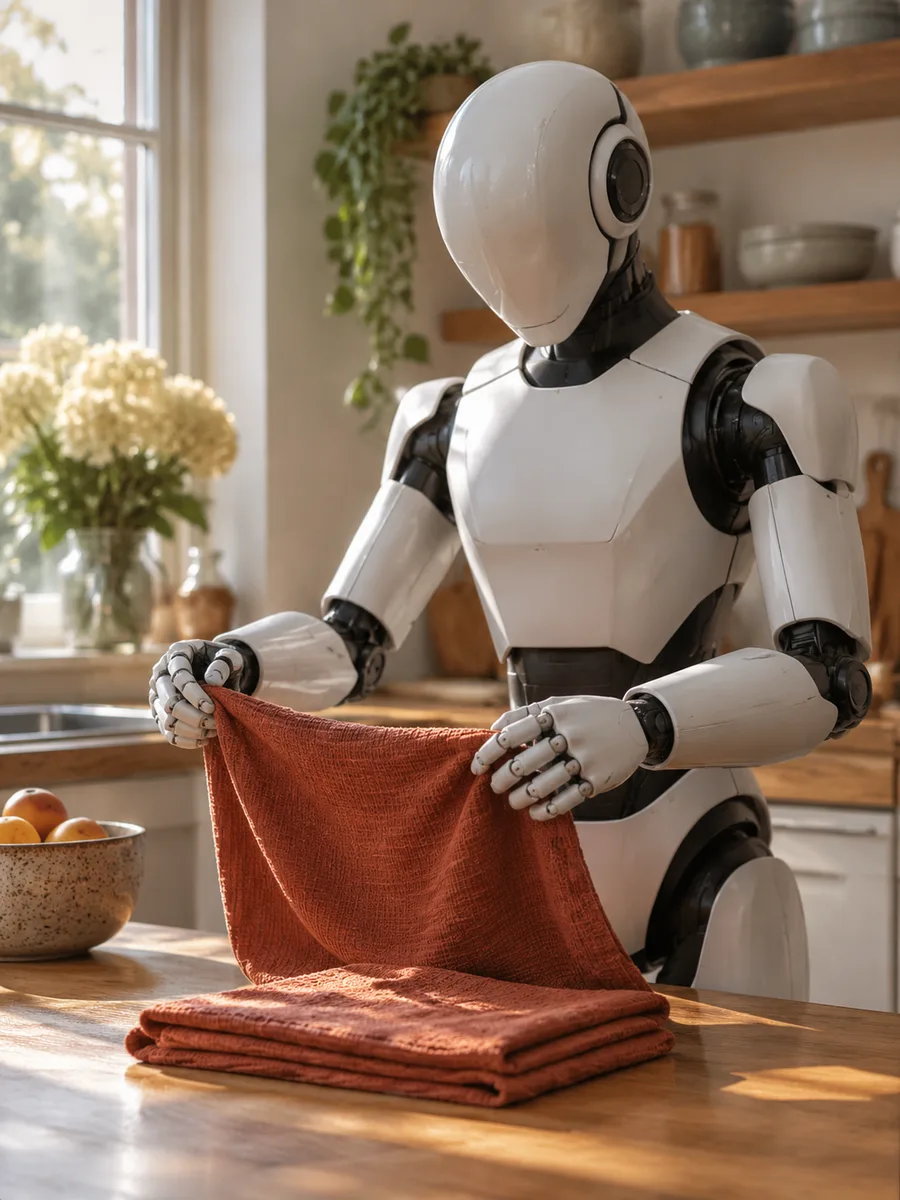
一家中企人形机器人两年降价七成,它们将先走进谁的家
Cheaper Humanoid Robots Could Enter Homes First
About this story
As AI improves humanoid robots and one Chinese firm's prices fall 72%, experts weigh the impact on homes, jobs, and wages. HSK 2 Chinese listening practice.
This is an HSK 2 Chinese listening episode that runs about 2 minutes. The full Mandarin script is shown with tap-for-pinyin and a line-by-line English translation, so you can listen and read at once — comprehensible input in the sense of Stephen Krashen's i+1 theory. It teaches 12 key vocabulary words such as 以后、便宜、明白 and walks through 4 grammar patterns, each explained in English with examples. The same news story is retold at 4 difficulty levels — use the level selector above to find the version that is challenging but still understandable for you.
Read at your level
原文Read the complete story in Chinese. Reveal pinyin and English only when you need them.
English transcript reference
Today's robots are learning very fast.
A robot is a machine that looks like a person and can do things.
Right now, doing things around the house is still very hard for robots.
However, things may soon be different in the future.
Robots may be able to do many things in the future.
That is because the people who build robots are letting AI help them.
With AI, robots can understand what people say.
When you speak to it, it can understand.
In the future, a robot's hands and body will be able to help people do things.
At the same time, robots are also getting cheaper.
Some robots have become much cheaper.
Robots may soon enter everyone's daily life.
Some people think robots will come into homes first.
In five to fifteen years, there may be one million robots in the United States.
They can first do housework at home.
Housework means washing dishes, doing laundry, and cooking.
Doing housework every day is very tiring.
Many people do not really like doing housework.
Few people say no to having a robot help with housework.
In the future, people may do much less housework.
Later on, robots will also go to work in other places.
They may go to work in factories.
A factory is a place where many workers make things.
They may also go to work in hospitals.
In the future, robots might even be able to care for older people.
However, not everyone welcomes robots.
For some jobs, people may prefer real humans to do them.
For example, when listening to music, people may prefer real human performers.
In the future, people may still be needed to watch over robots as they work.
So today's robots are learning very fast.
Robots are also getting cheaper.
They may first do housework at home.
Later on, they may also go to work in factories and hospitals.
Robots are arriving fast, so everyone needs to get ready now.
Listen again
Try it without the transcript and notice what sounds clearer.
What vocabulary does this episode teach?
词汇HSK 2. Anchors every prediction about robots' future roles (以后可能很快就不一样了).
HSK 2. Describes falling hardware prices in 机器人也在变便宜.
HSK 2. Shows AI language comprehension in 你跟它说话,它能明白.
HSK 2. Links faster AI learning with falling hardware prices (同时,机器人也在变便宜).
HSK 2. Appears in 机器人也许还能照顾老人 (robots might also care for elderly people).
HSK 2. Used in 不是所有人都欢迎机器人 (not everyone welcomes robots).
HSK 2. Closes the script in 大家现在就要准备 (everyone needs to get ready now).
HSK 1. Refers to a robot's physical form in 机器人的手和身体.
Hedge adverb used in 也许还能照顾老人 and 也许还要人看着机器人工作.
Story keyword defined in the script as 像人一样、能做事的东西.
Story keyword defined in the script as 洗碗、洗衣服和做饭.
Story keyword defined in the script as 很多工人做东西的地方.
* beyond level超纲词
What grammar patterns appear in this episode?
语法Verb + 得 + 非常 + Adjective
Degree complement describing how an action is performed (学得非常快 = learning very fast).
现在的机器人,学得非常快。
有了 + Noun,……
Expresses a new capability enabled by possessing something ('with X, ...').
有了AI,机器人能听懂人说话。
不是所有人都……
Partial negation meaning 'not everyone does X'.
不过,不是所有人都欢迎机器人。
像 + Noun + 一样
Draws a similarity ('like / just like X').
机器人是像人一样、能做事的东西。
Proper nouns
专有名词Sources
来源Free account
Keep learning from this story
Create a free account to keep saved words and your preferred level together.
- Keep words with their story context
- Remember your preferred level
- Build your vocabulary over time