
A Chinese podcast · Same story, 4 levels
八十岁的卢拉,第四次当上巴西总统
Lula Wins Brazil's Presidency at 80 — A Comeback Over Flávio Bolsonaro by 52% to 48%
About this story
An easy story about Lula da Silva, 80, beating Flavio Bolsonaro 52% to 48% in Brazil's runoff after trailing by 2 million votes in the first round. HSK 3 Chinese listening practice.
This is an HSK 3 Chinese listening episode that runs about 4 minutes. The full Mandarin script is shown with tap-for-pinyin and a line-by-line English translation, so you can listen and read at once — comprehensible input in the sense of Stephen Krashen's i+1 theory. It teaches 12 key vocabulary words such as 身体、事情、开始 and walks through 8 grammar patterns, each explained in English with examples. The same news story is retold at 4 difficulty levels — use the level selector above to find the version that is challenging but still understandable for you.
Read at your level
原文Read the complete story in Chinese. Reveal pinyin and English only when you need them.
English transcript reference
On the evening of October 4th, many people said: Lula has no chance.
The results of the first vote came out.
Lula had two million fewer votes than Bolsonaro.
At that time, Lula was eighty years old and in poor health.
He had had surgery on his head.
So he always wore a hat.
Many people saw the hat.
They thought: this old man is too old.
Bolsonaro had more votes.
Many people felt that Bolsonaro would win.
After 1985, Brazil had elections.
No one had lost the first round and still won the second.
But in three weeks, things were different.
First, Lula did not want the hat anymore.
His surgery had gone well, and his head was better.
He was eighty years old, but he was not afraid anymore.
Brazilians saw his face.
Many people said: he is not that old.
Second, Lula started making videos with a phone.
Lula had not had a phone before.
Now, he speaks on the phone every day.
Many people watch his videos.
A person named Janones helped him.
Janones is forty-two years old and is a congressman.
He found many people on the phone.
In two weeks, ten million people came.
They showed Lula's videos to their friends.
In three weeks, Lula had many more friends.
Bolsonaro spent a lot of money on the phone.
Before the first vote, he spent two million dollars.
Lula only spent five hundred thousand dollars.
Lula's money was less, but many people watched his videos.
Third, the government gave Brazilians many things.
The government gave poor people fifteen percent more money.
The government also made companies work one day less.
On Saturdays and Sundays, riding the bus was free.
The government also gave one million people one thousand dollars.
Brazil's presidents often give things before elections.
But Lula gave especially a lot.
Many people do not like the Workers' Party.
Lula is a person from the Workers' Party.
But many people like the things Lula gave.
Bolsonaro also had many problems.
Some people said he had ties to the militias in Rio.
Militiamen are not good people.
On October 23rd, the two people went on television one last time.
On television, Bolsonaro said a name wrong.
A mother was very unhappy.
Her daughter had died.
Many women were also unhappy.
They voted for Lula.
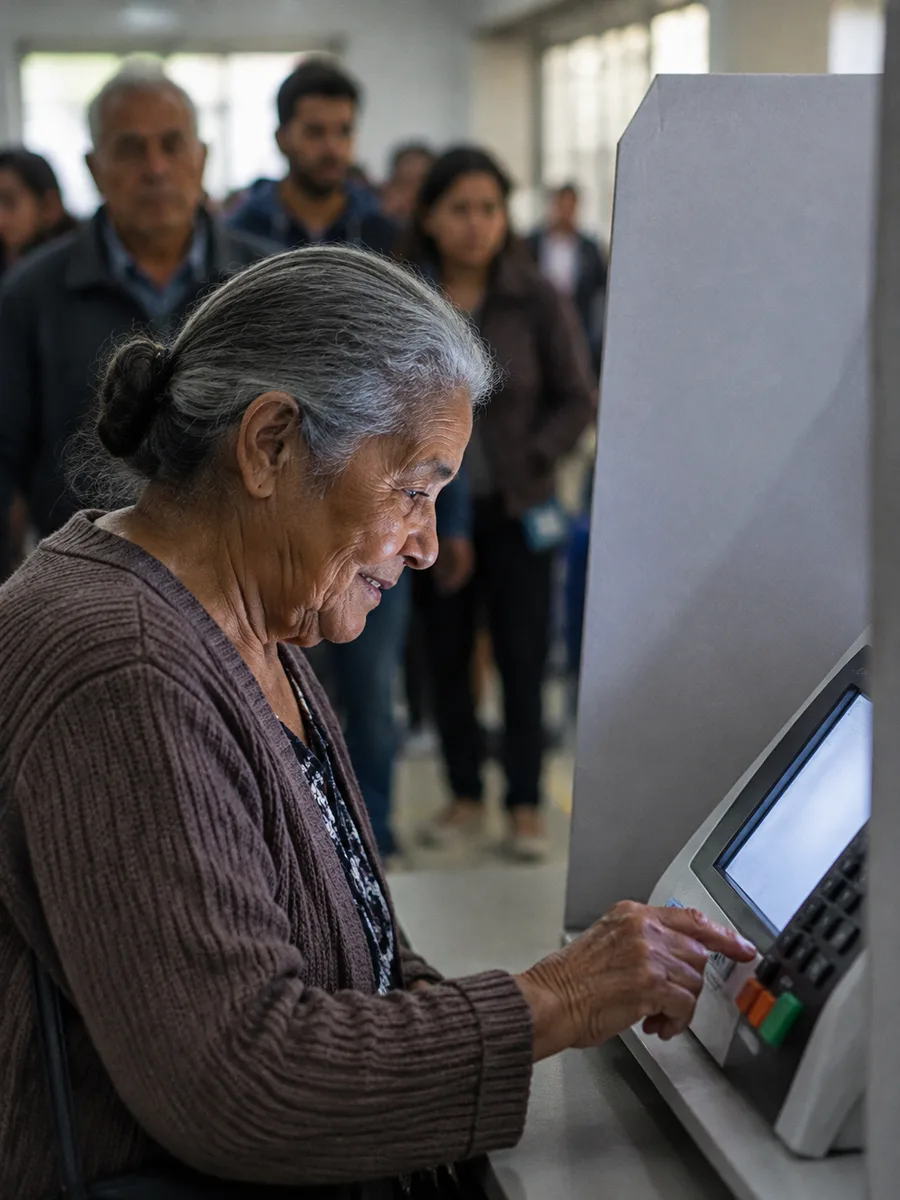
On October 25th, Brazilians went to vote again.
Fifty-two percent of people wanted Lula.
Forty-eight percent of people wanted Bolsonaro.
Lula won this election.
Many people were very surprised.
Bolsonaro was unhappy.
He said: this election has problems.
But the result was just fifty-two to forty-eight.
Lula has a lot of work to do.
Brazil's economy is not good.
Bolsonaro's family members are also in Congress.
Many people do not like Lula.
Lula is eighty years old, and he cannot be president again.
He may not do this job well.
An eighty-year-old person lost the first time.
The second time, he won.
He did not wait.
He changed.
Brazilians saw it.
Now, many people ask: can he do this job well?
Listen again
Try it without the transcript and notice what sounds clearer.
What vocabulary does this episode teach?
词汇HSK 2. 身体不好 means 'in poor health'.
HSK 2. 事情不一样了 means 'things were different'.
HSK 2. 开始用手机做视频 means 'started making videos with a phone'.
HSK 2. 帮助了他 means 'helped him'.
HSK 1. 把视频给朋友看 means 'show the videos to friends'.
HSK 2. 让公司少工作一天 means 'made companies work one day less'.
HSK 2. 坐公共汽车不要钱 means 'riding the bus is free'.
HSK 2. 有很多问题 means 'has many problems'.
HSK 2. 没有机会了 means 'has no chance left'.
HSK 2. 投票的结果 means 'the result of the vote'.
HSK 2. 做过手术 means 'has had surgery'.
HSK 2. 这个老人太老了 means 'this old man is too old'.
* beyond level超纲词
What grammar patterns appear in this episode?
语法比 + Noun + Adjective (comparison)
The 比 structure compares two things: A 比 B + adjective means 'A is more [adjective] than B'.
卢拉比博索纳罗少两百万票。
没有人 + Verb Phrase + 还能 + Verb Phrase
没有人 means 'nobody'; 还能 means 'still be able to'. Together: 'no one has done X and still been able to do Y'.
没有人输了第一次,还能赢第二次。
Noun + 以前 / 以后
以前 means 'before' and 以后 means 'after'; they follow a time or event to mark the period before or after it.
一九八五年以后,巴西有了选举。
第一次投票以前,他花了两百万美元。
卢拉以前没有手机。
让 + Person + Verb Phrase (causative)
让 means 'to let/make someone do something'; the person follows 让 and then the action.
政府还让公司少工作一天。
把 + Object + Verb Phrase (disposal construction)
把 moves the object before the verb to show what is done to it; the verb usually has a result or direction complement.
他们把卢拉的视频给朋友看。
Adjective + 了 (change of state)
Adjective + 了 marks a change: something has become a new way. 不一样了 = 'has become different'.
但是,三个星期里,事情不一样了。
他的手术做好了,他的头好了。
百分之 + Number
百分之 means 'percent'; it comes before the number, unlike English 'percent' after it.
百分之五十二的人要卢拉。
政府给穷人的钱多了百分之十五。
可以 / 能 + Verb (ability and possibility)
可以 and 能 both express ability or possibility; 不能再做 means 'cannot do (it) again'.
卢拉八十岁了,他不能再做总统。
现在,很多人问:他可以做好这个工作吗?
Proper nouns
专有名词Sources
来源Free account
Keep learning from this story
Create a free account to keep saved words and your preferred level together.
- Keep words with their story context
- Remember your preferred level
- Build your vocabulary over time