
A Chinese podcast · Same story, 4 levels
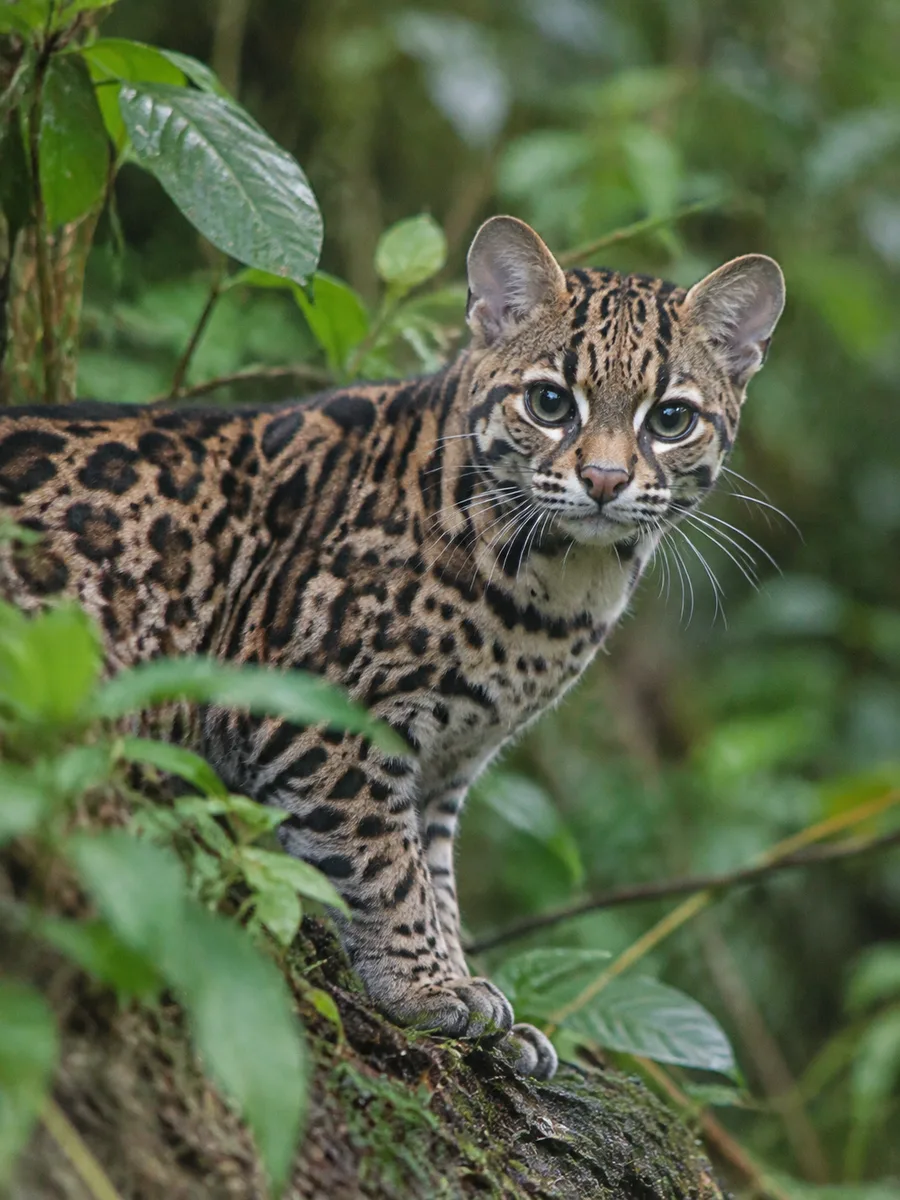
一百年才被发现的新猫
New Wild Cat Species Discovered in Bolivia After 100 Years — The Tilcayo Tiger Cat
About this story
A simple story about the Tilcayo tiger cat, a new wild cat species found in Bolivia after 100 years — only two are known. HSK 3 Chinese listening practice.
This is an HSK 3 Chinese listening episode that runs about 4 minutes. The full Mandarin script is shown with tap-for-pinyin and a line-by-line English translation, so you can listen and read at once — comprehensible input in the sense of Stephen Krashen's i+1 theory. It teaches 12 key vocabulary words such as 喜欢、觉得、朋友 and walks through 7 grammar patterns, each explained in English with examples. The same news story is retold at 4 difficulty levels — use the level selector above to find the version that is challenging but still understandable for you.
Read at your level
原文Read the complete story in Chinese. Reveal pinyin and English only when you need them.
English transcript reference
There is a small cat living in a home.
The family likes this cat very much.
They think this is a house cat.
Friends also say this is a house cat.
But this cat is not a house cat.
This is a new cat.
A new cat means a cat that scientists do not know.
Scientists say that for a hundred years, people had not discovered a new cat.
The last time was 1923.
Now it is 2026.
So this is a very big deal.
No new cat for a hundred years, so people are very happy.
Why are people very happy?
Because people waited a hundred years.
People waited a hundred years before seeing this new kind of cat.
A hundred years is many, many years.
In these hundred years, no one discovered a new cat.
At first, people did not know this was a new cat.
Then scientists came.
They looked at this cat.
They also looked at 38 other cats.
These 38 cats came from many countries.
They looked at the genes of these cats.
Scientists found that this cat's genes are different from other cats.
This cat and other cats have been separate for 1.4 million years.
Being separate for 1.4 million years is a very, very long time.
So scientists know: this is a new cat.
This cat's name is Tilcayo.
Tilcayo is the name of this cat in Bolivia.
In Bolivia, people call this cat Tilcayo.
This cat is very small.
This cat is only 46 centimeters and 3 pounds.
This is smaller than a house cat.
This cat's fur has black spots and is very pretty.
This cat's ears are round.
This is a very rare cat.
This cat lives in the mountains of Bolivia.
This cat's home is in the mountains.
Bolivia is a country.
This cat is only in Bolivia.
In other countries, people have not seen this cat.
Because this cat lives in the mountains, it is hard for people to see it.
Now, people know two of these cats.
One is male, one is female.
When the male was very small, a person saw him on the road.
This person let him live in their home.
He lived in this home for over a year.
Then, this person sent him to an animal protection place.
Now, he is 10 years old and lives in this place.
He has lived in that place for many years.
The people there like him very much.
The female, some people hit her.
Her body was not well.
Then, people rescued her.
People let her return to the mountains.
Now, she lives in the mountains.
Scientists say this cat is in danger.
There are only two in the world.
People do not know how many there are.
Scientists say this cat may soon be gone.
If this cat is gone, people will not be able to see it.
So scientists want to protect this cat.
They also want to protect the mountains where this cat lives.
They want to see where this cat lives.
They want to know how many of these cats there are.
If a kind of cat only has two in the world, what would you do?
Listen again
Try it without the transcript and notice what sounds clearer.
What vocabulary does this episode teach?
词汇HSK 1. Used as 很喜欢 (like very much).
HSK 1. Expresses an opinion: 觉得 + clause.
HSK 1. Common noun; plural with 们 (朋友们).
HSK 2. Adverb before adjectives: 非常高兴 (very happy).
HSK 2. Question word asking for reason.
HSK 2. Often paired with 所以 (so).
HSK 2. Used in 等了一百年 (waited a hundred years).
HSK 2. Used as 开始,人们不知道… (At first, people didn't know…).
HSK 2. Used in 发现新的猫 (discover a new cat).
HSK 2. Used in 很多国家 (many countries).
HSK 3. Used in 保护动物 (protect animals) and 保护这种猫 (protect this cat).
HSK 3. Compound of 科学 (science) + 家 (specialist).
* beyond level超纲词
What grammar patterns appear in this episode?
语法Emphasizes a fact or classification. Used to state that something belongs to a category.
这是一只家里的猫。
这是新的猫。
才 + Verb
Indicates that something happens only after a long wait or under specific conditions.
人们等了一百年,才看见这种新的猫。
比 + Noun + Adjective
Comparison: A is more [adjective] than B.
这比家里的猫小。
只有 + Number + Measure Word
Emphasizes a small quantity: only…
这种猫只有46厘米,3磅。
世界上只有两只。
让 + Person + Verb
Causative: to let/make someone do something.
这个人让他在家里住。
人们让她回到山里。
已经 + Verb + 了
Indicates an action or state that has already been achieved.
这种猫和别的猫,已经分开一百四十万年了。
Proper nouns
专有名词Sources
来源Free account
Keep learning from this story
Create a free account to keep saved words and your preferred level together.
- Keep words with their story context
- Remember your preferred level
- Build your vocabulary over time