
A Chinese podcast · Same story, 4 levels
尼安德特人:为什么只剩下我们?
What Happened to the Neanderthals? Why Homo Sapiens Is the Only Human Species Left
About this story
A simple story about the Neanderthals — why they disappeared and why we are the only kind of human left today. HSK 3 Chinese listening practice.
This is an HSK 3 Chinese listening episode that runs about 4 minutes. The full Mandarin script is shown with tap-for-pinyin and a line-by-line English translation, so you can listen and read at once — comprehensible input in the sense of Stephen Krashen's i+1 theory. It teaches 12 key vocabulary words such as 觉得、奇怪、地方 and walks through 6 grammar patterns, each explained in English with examples. The same news story is retold at 4 difficulty levels — use the level selector above to find the version that is challenging but still understandable for you.
Read at your level
原文Read the complete story in Chinese. Reveal pinyin and English only when you need them.
English transcript reference
We always think that humans have always been like they are now.
There is only one kind of human in the world.
Isn't that strange?
A long time ago, it wasn't like this.
A hundred thousand years ago, there were many kinds of humans in the world.
In very cold places lived the Neanderthals.
In other places, other people also lived.
They were also smart.
They could also do many things.
We are also a kind of human.
At that time, humans looked very different.
But they were all called humans.
In the end, the other people all disappeared.
Today, there is only us.
Why did this happen?
For a long time, people had a simple explanation.
People said: We are the best.
Our heads are big.
Our things are good.
The other people were not good.
So they disappeared.
In the 1980s, many people believed this explanation.
One scientist said, the others were all no good.
We are still here because we are good.
But new discoveries came.
Some scientists found many things in the mountains.
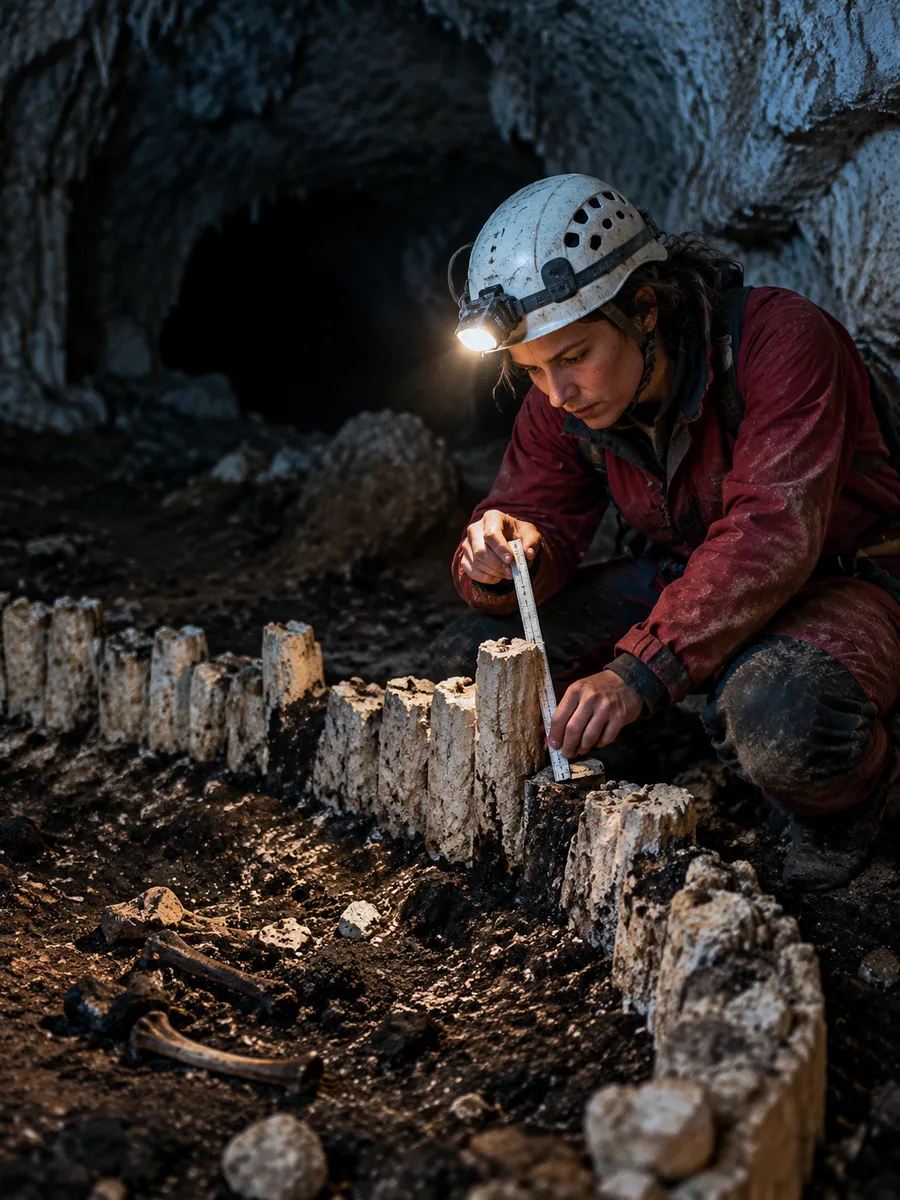
We can still see their bones.
We found their bones.
The bones are very old, but they are still there.
They knew how to use fire.
Fire is very hot.
Fire can also cook food.
The cave was very cold.
Fire made the cave very hot.
They could draw things in caves.
In the caves there are people they drew.
They also took care of sick people.
A hundred and seventy thousand years ago, they were already in caves.
In the caves there are things they made.
They could think together.
They could also do things together.
So they were not simple.
The Neanderthals were in the world for four hundred thousand years.
In 2010, some people looked at Neanderthal genes.
Genes are what mom and dad give us.
Strangely, in many people's genes, there are still their genes.
These genes are not many, but they are very important.
So the Neanderthals are still here.
They and our ancestors had children.
Our ancestors were also human.
For almost seven thousand years, the two kinds of people kept having children.
These seven thousand years started fifty thousand years ago.
So today, we have them in our bodies.
But they, as a kind of people, still disappeared.
Why?
Some people say it was because of the weather.
At that time, the weather suddenly became very cold.
Some people say it was because there were too few people.
There were very few of them.
When there are few people, it is easy to disappear.
Some people say it was because of us.
There were more of us.
Our things were also better.
Some other people say it was luck.
Luck is something we cannot think of.
With good luck, people stay.
With bad luck, people disappear.
They were not stupid at all.
They could think.
They could make things.
They also took care of people.
But they disappeared.
Was it luck, or another reason?
Scientists are still looking.
Over a million years, there were many kinds of humans.
People like us have only been around for three hundred thousand years.
Today, there are eight billion people in the world.
There is only one kind of human.
Listen again
Try it without the transcript and notice what sounds clearer.
What vocabulary does this episode teach?
词汇HSK 2. Used to express an opinion: 我们总觉得 (we always think).
HSK 2. Used in 这不是很奇怪吗?(Isn't this strange?).
HSK 2. Used with 很冷: 很冷的地方 (very cold places).
HSK 2. 很多人相信这个说法 (many people believed this explanation).
HSK 2. 他们知道怎么用火 (they knew how to use fire).
HSK 2. 他们会一起想 (they could think together).
HSK 2. 身体里有他们 (have them in our bodies).
HSK 2. 是因为天气 (because of the weather).
HSK 2. Common noun: 世界上 (in the world).
HSK 2. Time word: 很久以前 (a long time ago).
HSK 2. Describes people: 他们也很聪明 (they were also smart).
HSK 2. 人的样子很多 (people looked very different).
* beyond level超纲词
What grammar patterns appear in this episode?
语法只有 + Noun
Expresses 'only' with a noun: 只有一种人 (only one kind of person).
世界上只有一种人。
今天,只有我们。
只有一种人。
Expresses ability or learned skill: 他们会做很多事 (they could do many things).
他们也会做很多事。
他们知道怎么用火。
他们会一起想。
因为 + Clause
Expresses reason: 因为我们好 (because we are good).
我们还在,因为我们好。
有的人说,是因为天气。
有的人说,是因为人太少。
Expresses a gradual change: 天气突然变得很冷 (the weather suddenly became very cold).
那时候,天气突然变得很冷。
在 + Place + 有 + Noun
Expresses existence in a place: 山洞里有他们画的人 (in the caves there are people they drew).
山洞里有他们画的人。
山洞里有他们做的东西。
Proper nouns
专有名词Sources
来源Free account
Keep learning from this story
Create a free account to keep saved words and your preferred level together.
- Keep words with their story context
- Remember your preferred level
- Build your vocabulary over time